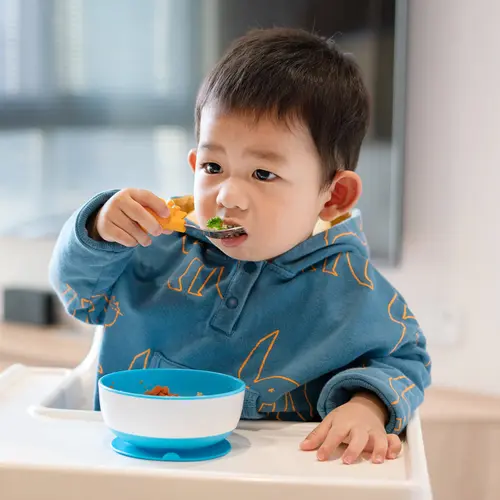

Preschoolers are active, spirited tykes. And while they're generally adorable and fun, it's perfectly normal for 3, 4, and 5-year-olds to be opinionated -- especially about eating.
Here's some advice from the experts on how to avoid preschool food fights.
What's On the Menu?
"Preschoolers can eat what the rest of the family eats," says Melinda Johnson, MS, RD, a pediatric nutrition expert and spokesperson for the American Dietetic Association. That's provided family meals feature a variety of healthy foods, in moderation.
Depending on their age, an active preschooler's energy needs rival those of some grown women. While there's no need to track a youngster's calorie consumption, it is important to make calories count.
A young child's eating plan should consist mostly of healthy foods, such as lean meats, poultry, seafood, eggs, and legumes; whole grains, such as whole-wheat bread and cereals; at least two servings of dairy foods daily; and fresh or lightly processed fruits and vegetables.
There is room for treats, but it's limited, says Kathy Mitchell, MD, a practicing pediatrician at Harvard Vanguard Medical Associates in Watertown, Mass.
"Keep junk foods like cookies and candy out of the house to reduce temptation," she advises. "But don't go overboard. Kids can become intensely attracted to forbidden foods."
Make Time for Meals
Regular family meals provide opportunities for good nutrition, and much more. Dining together encourages proper table manners and fosters language development and conversational skills. When you minimize distractions by turning off the TV and turning on the answering machine, you show your child that mealtime is reserved for savoring healthy food and nurturing meaningful relationships.
While the ritual of regular meals is comforting to kids, dining with preschoolers can be chaotic and messy. Expect spills and some sloppy eating as your youngster hones their self-feeding skills. Refrain from being a "clean freak" to minimize mealtime stress.
"Being too strict about neatness at the dinner table may cause your little one to feel bad about knocking over his milk or getting food on his clothes," Johnson says.
Monkey See, Monkey Do
Want your child to accept baked potatoes instead of fries, and to prefer milk to sugary soft drinks? Then you must, too.
"Studies show that children adopt their parents' eating habits starting early in life," Johnson says. "Don't expect your child to eat better than you do."
Little ones love to imitate adults, and they will mimic your eating habits, whether they are good or in need of improvement. Capitalize on a youngster's natural curiosity by substituting healthier foods at the dinner table. Chances are, they'll have what you're having, and you'll be broadening their food horizons while arousing a minimum of suspicion.
Here are some suggested stand-ins that offer variety and good nutrition:
- Couscous instead of white rice
- Sweet potatoes for white potatoes
- Canadian bacon for bacon
- Mashed potatoes made with reduced-fat milk for french fries
- Fig bars for high-fat cookies
- Tube yogurt (freeze first for easier handling) for ice cream
- Reduced-fat cheddar for regular cheese.
Snacks Fill Nutrient Gaps
Scheduling meals and snacks helps ensure a healthy diet for preschoolers. Problem is, young children don't always follow a rigid eating plan. Illnesses, including ear infections and colds; fatigue; and growth spurts can temporarily change the frequency and amount your young child consumes.
Healthy between-meal snacks help fill in nutrient gaps in a little one's diet. The best snacks are nutritious foods eaten in amounts that take the edge off your son or daughter's hunger. Don't worry if they're not ravenous at their next meal.
"When you offer nutritious snacks, your child gets what they need, so it doesn't matter if they don't eat a lot at dinner," says Mitchell.
Feed your child in a designated area, preferably a kitchen or dining room table. Sitting down to eat, and only to eat, helps children pay attention to their feelings of fullness, Mitchell says.
Try these nutritious and delicious snack options for your preschooler:
- 1/2 sandwich
- Well-cooked vegetables and low-fat dip
- Whole grain crackers and cheese
- Yogurt
- Fruit smoothies
- Milk
- Chopped hard-boiled eggs or scrambled eggs
- Dry cereal; cereal with milk
- Low-fat microwave popcorn (starting at age 4).
Encourage a Healthy Weight
Your child is still young, but it's not too early to help them achieve a healthy weight. Respecting a preschooler's ability to decide how much to eat and when is central to that effort. An American Journal of Clinical Nutrition study suggests how capable children are of regulating their intake – and how adults can interfere with that innate ability.
When researchers served preschoolers a double portion of macaroni and cheese, the children took bigger bites and ate more. But when the researchers placed the double-sized portion in a serving bowl and let the children serve themselves, the children chose an appropriate amount of food for their ages: about a 1/2-cup portion for 3-year-olds and 3/4 cup for 4 and 5-year-olds.
Limiting television -- even educational shows -- also improves preschoolers' chances for a healthy weight. Three-year-olds who watched two or more hours of television daily were nearly three times more likely to be overweight than children who watched less, according to recent research in the Archives of Pediatric and Adolescent Medicine.
"It's tempting to allow a preschooler to watch TV so that you can get a few minutes to yourself, but it's a tough habit to break," Mitchell says. And while Mitchell, a mother of two, does not expect parents to banish television, she is adamant about separating eating and the television set.
What's the problem with eating in front of the TV? Writing in the Journal of the American Dietetic Association, researchers recently found that preschoolers of normal weight who often eat while watching television tend to eat more, possibly because they are distracted from normal cues for fullness.
Fend Off Food Fits
Preschoolers can be picky eaters. They may favor the same few foods for weeks on end, in spite of your attempts at variety. You can't stop children from fussing about food, but you can control the way you react to their demands for chicken nuggets or macaroni and cheese every day.
The temptation is to prepare only the foods you are sure your young child will accept. But resist that urge.
Johnson, also a mom, recommends playing down entrenched food preferences while continuing to offer a variety of choices.
"Most children will eventually get bored and at least start picking at the other foods you offer, as long as you don't engage them in a power struggle at the table," she says.
It's normal to become concerned when a child continues to choose the same limited diet. While you're waiting for your child to snap out of their eating rut, put your mind at ease by offering a daily multivitamin appropriate for your child's age. Multivitamins fill in small nutrient gaps in a picky eater's diet, particularly for iron -- a nutrient that's critical to a child's brain development, immune system and energy level.