Skip to content
WebMD: Better Information. Better Health.
Other search tools:Symptoms|Doctors|Videos

Drugs & Medications - Symbicort Inhl

Symbicort Inhl

Important Note

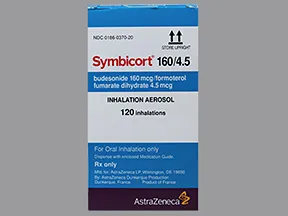
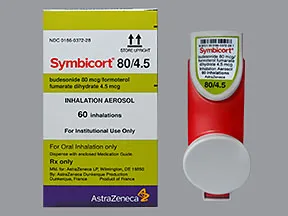
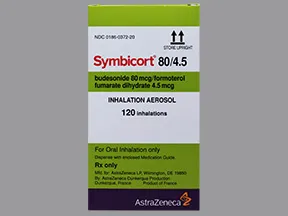
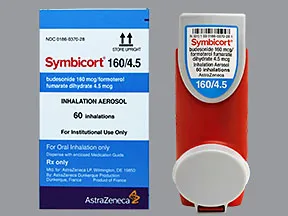
BUDESONIDE / FORMOTEROL (4.5 MICROGRAMS) HFA INHALER - ORAL

Pronunciation: (byou-DESS-oh-nide/for-MOW-ter-all)

Brand Name(s): Symbicort

Warnings
Uses
Side Effects
Precautions
Interactions
Overdose
Symbicort Inhl Warnings

Rarely, serious (sometimes fatal) asthma-related breathing problems may occur in people with asthma who are treated with drugs similar to the formoterol in this product (long-acting inhaled beta agonists). In patients with asthma, the manufacturer recommends using this product when one long-term medication (e.g., inhaled corticosteroids) does not control breathing problems or when more than one long-term medication is clearly needed to control breathing problems. Before using this medication, it is important to learn how to use it properly. Discuss the risks and benefits of treatment with this medication with your doctor.

Symbicort Inhl Uses

This product contains 2 medications, budesonide and formoterol. It is an inhaler used as a long-term (maintenance) treatment to prevent or decrease wheezing and trouble breathing caused by asthma or ongoing lung disease (such as COPD). It works in the airways by decreasing swelling and relaxing muscles. Controlling symptoms of breathing problems can decrease time lost from work or school.

This product should not be used to treat sudden attacks of breathing trouble. Your doctor should prescribe a quick-relief inhaler (e.g., albuterol/salbutamol) for sudden shortness of breath/asthma attacks while you are using this medication. You should always have a quick-relief inhaler with you. Consult your doctor or pharmacist for more details.

In patients with asthma, this medication should not be used when breathing problems can be controlled with inhaled corticosteroids (e.g., flunisolide, fluticasone) and occasional use of quick-relief inhalers. (See also Warning section.)

If you are regularly taking corticosteroids by mouth (e.g., prednisone), you should not stop using them or use this inhaled medication instead. Continue to follow your doctor's instructions on taking the corticosteroids by mouth.

How to use Symbicort Inhl

Read the Medication Guide provided by your pharmacist before you start using this medication and each time you get a refill. Refer to the illustrated directions provided by the manufacturer for directions on how to use this inhaler. If any of the information is unclear, consult your doctor or pharmacist.

Before each dose, shake the inhaler well for 5 seconds. Inhale this medication by mouth, usually twice daily or as directed by your doctor. Dosage is based on your medical condition and response to treatment. Use this medication regularly to receive the most benefit from it. To help you remember, use it at the same times each day. The manufacturer recommends that adults and children older than 11 years should not use more than 4 inhalations daily. Do not use this medication more frequently or use more inhalations than prescribed. Doing so may increase the risk of side effects.

Gargle and rinse your mouth with water after using this medication to help prevent dryness and mouth infections (e.g., thrush) and relieve throat irritation. Do not swallow the rinse water.

To clean your inhaler, wipe the outside of the mouthpiece once a week with a dry tissue. Do not use water or other liquids. Do not take the inhaler apart.

Do not stop using this medication or change your dose without consulting your doctor. Some conditions may become worse when the drug is suddenly stopped. Your dose may need to be gradually decreased.

If you have been using a quick-relief inhaler (e.g., albuterol/salbutamol) on a regular daily schedule (such as 4 times daily), you must stop this schedule and only use the quick-relief inhaler as needed for sudden shortness of breath/asthma attacks. Consult your doctor for details.

If this medication stops working well, or if you need to use your quick-relief inhaler more often than usual (4 or more puffs daily or use of more than 1 inhaler every 8 weeks), seek immediate medical attention. It may be a sign of worsening asthma, which is a serious condition.

It may take 1 week or longer before you get the full benefit of this drug. Tell your doctor if your condition persists or worsens.

Symbicort Inhl Side Effects

Headache, nausea, nervousness, trouble sleeping, cough, hoarseness, or throat irritation may occur. If any of these effects persist or worsen, tell your doctor promptly.

Remember that your doctor has prescribed this medication because he or she has judged that the benefit to you is greater than the risk of side effects. Many people using this medication do not have serious side effects.

Tell your doctor immediately if any of these unlikely but serious side effects occur: increased thirst/urination, mental/mood changes (e.g., agitation, depression), muscle cramps, persistent weight gain, shaking (tremors), vision problems (e.g., blurred vision), white patches on tongue/in mouth.

Seek immediate medical attention if any of these rare but very serious side effects occur: chest pain, fast/slow/irregular heartbeat, severe dizziness, fainting.

A very serious allergic reaction to this product is rare. However, seek immediate medical attention if you notice any symptoms of a serious allergic reaction, including: rash, itching/swelling (especially of the face/tongue/throat), severe dizziness, sudden trouble breathing.

Rarely, this medication has caused severe (rarely fatal), sudden worsening of breathing problems/asthma (paradoxical bronchospasm). If you have trouble breathing or experience sudden wheezing, use your quick-relief inhaler and seek immediate medical attention.

This is not a complete list of possible side effects. If you notice other effects not listed above, contact your doctor or pharmacist.

In the US -

Call your doctor for medical advice about side effects. You may report side effects to FDA at 1-800-FDA-1088.

In Canada - Call your doctor for medical advice about side effects. You may report side effects to Health Canada at 1-866-234-2345.

Symbicort Inhl Precautions

Before using this medication, tell your doctor or pharmacist if you are allergic to budesonide or formoterol; or if you have any other allergies.

Before using this medication, tell your doctor or pharmacist your medical history, especially of: high blood pressure, bone loss (osteoporosis), depression, diabetes, eye problems (e.g., cataracts, glaucoma), heart problems (e.g., angina, irregular heartbeat), any recent infection, liver problems, overactive thyroid (hyperthyroidism), seizures, smoking.

Budesonide/formoterol may cause a condition that affects the heart rhythm (QT prolongation). QT prolongation can infrequently result in serious (rarely fatal) fast/irregular heartbeat and other symptoms (such as severe dizziness, fainting) that require immediate medical attention. The risk of QT prolongation may be increased if you have certain medical conditions or are taking other drugs that may affect the heart rhythm (see also Drug Interactions section). Before using budesonide/formoterol, tell your doctor or pharmacist if you have any of the following conditions: certain heart problems (heart failure, slow heartbeat, QT prolongation in the EKG), family history of certain heart problems (QT prolongation in the EKG, sudden cardiac death).

Low levels of potassium or magnesium in the blood may also increase your risk of QT prolongation. This risk may increase if you use certain drugs (such as diuretics/"water pills") or if you have conditions such as severe sweating, diarrhea, or vomiting. Talk to your doctor about using budesonide/formoterol safely.

Avoid exposure to chickenpox or measles infection while using this medication unless you have previously had these infections (e.g., in childhood). If you are exposed to one of these infections and you have not previously had it, seek immediate medical attention.

If you have switched from an oral corticosteroid (e.g., prednisone tablets) to this inhaler within the past 12 months, or if you have been using this product in higher-than-usual doses and suddenly stop using it, your body may not produce enough natural steroids. You may need to start taking additional corticosteroids, especially if your body is stressed due to a major infection, surgery, or injury. Deaths due to low steroid levels have sometimes occurred during such stresses. Tell your doctor immediately if any of the following side effects occur: unusual/extreme tiredness, weight loss.

Consult your doctor or pharmacist for more details, and tell them that you use (or have used) any type of corticosteroid. Carry a warning card or medical ID bracelet that identifies your need for oral corticosteroids during times of stress. Consult your doctor or pharmacist now for specific advice about stress situations. You may need to carry a supply of corticosteroid tablets as a precaution.

Caution is advised when using this drug in children because there is a slight risk that it may temporarily slow down a child's growth rate, but this will probably not affect final adult height. Though this effect is rare with inhaled steroids such as budesonide, monitor your child's height regularly.

During pregnancy, this medication should be used only when clearly needed. Discuss the risks and benefits with your doctor.

Budesonide passes into breast milk. It is not known whether formoterol passes into breast milk. Breast-feeding is not recommended while using this drug. Consult your doctor before breast-feeding.

Symbicort Inhl Interactions

Your doctor or pharmacist may already be aware of any possible drug interactions and may be monitoring you for them. Do not start, stop, or change the dosage of any medicine before checking with them first.

This drug should not be used with the following medication because very serious interactions may occur: natalizumab.

If you are currently using the medication listed above, tell your doctor or pharmacist before starting this product.

Avoid taking MAO inhibitors (e.g., furazolidone, isocarboxazid, linezolid, moclobemide, phenelzine, procarbazine, rasagiline, selegiline, tranylcypromine) within 2 weeks before, during, and 2 weeks after treatment with this medication. In some cases a serious, possibly fatal drug interaction may occur.

Before using this medication, tell your doctor or pharmacist of all prescription and nonprescription/herbal products you may use, especially of: adrenaline-like drugs (e.g., phenylephrine, pseudoephedrine), aldesleukin, amphotericin B, other asthma drugs (e.g., quick-relief inhalers, theophylline), beta blockers (e.g., atenolol, sotalol), corticosteroids taken by mouth (e.g., dexamethasone, prednisone), drugs affecting liver enzymes that remove budesonide from your body (e.g., azole antifungals including ketoconazole; macrolide antibiotics including erythromycin; cimetidine; rifamycins including rifampin; St. John's wort; certain anti-seizure medicines including carbamazepine), inhaled anesthetics (e.g., halothane), mifepristone, tricyclic antidepressants (e.g., amitriptyline, nortriptyline).

Many drugs besides this product may affect the heart rhythm (QT prolongation in the EKG), including amiodarone, dofetilide, pimozide, quinidine, sotalol, ranolazine, sparfloxacin, procainamide, macrolide antibiotics (such as erythromycin), among others. Therefore, before using budesonide/formoterol, report all medications you are currently using to your doctor or pharmacist.

Check the labels on all your medicines (e.g., cough-and-cold products, diet aids) because they may contain ingredients that could increase your heart rate or blood pressure. Ask your pharmacist about using those products safely.

This document does not contain all possible interactions. Therefore, before using this product, tell your doctor or pharmacist of all the products you use. Keep a list of all your medications with you, and share the list with your doctor and pharmacist.

Symbicort Inhl Overdose

If overdose is suspected, contact your local poison control center or emergency room immediately. US residents can call the US National Poison Hotline at 1-800-222-1222. Canada residents can call a provincial poison control center. Symptoms of overdose may include: shaking (tremors), dizziness, fast/irregular heartbeat.

NOTES:

Do not share this medication with others.

Laboratory and/or medical tests (e.g., pulmonary function tests, morning cortisol levels, bone density tests) may be performed to monitor your progress or check for side effects. Consult your doctor for more details.

Learn to use a peak flow meter, use it daily, and promptly report worsening asthma (such as readings in the yellow/red range or increased use of quick-relief inhalers).

Avoid allergens/irritants such as smoke, pollen, pet dander, dust, and molds that may worsen asthma and other breathing problems.

Ask your doctor or pharmacist whether you should have an annual flu shot.

In adults, this medication can increase the risk of bone loss (osteoporosis) if used for a long time. Talk with your doctor about your risk, and about available treatments for osteoporosis. Lifestyle changes that reduce the risk of bone loss include doing weight-bearing exercise, getting enough calcium and vitamin D, stopping smoking, and limiting alcohol. To help prevent osteoporosis later in life, encourage children to exercise and eat a healthy diet (including calcium).

MISSED DOSE:

If you miss a dose, skip the missed dose and resume your usual dosing schedule. Do not double the dose to catch up.

STORAGE:

Store at room temperature between 68-77 degrees F (20-25 degrees C) away from light and moisture. Do not store in the bathroom. Keep all medicines away from children and pets.

Do not flush medications down the toilet or pour them into a drain unless instructed to do so. Properly discard this product when the labeled number of inhalations have been used, or 3 months after removing from the foil pouch, or when it is expired or no longer needed. Consult your pharmacist or local waste disposal company for more details about how to safely discard your product.

MEDICAL ALERT: Your condition can cause complications in a medical emergency. For information about enrolling in MedicAlert, call 1-800-854-1166 (USA) or 1-800-668-1507 (Canada).

Information last revised June 2009 Copyright(c) 2009 First DataBank, Inc.

See 158 Reviews for this Drug. - OR -

Review this Treatment

Find a Drug:

by name or medical condition or shape/color (Pill Identifier)

(for example: aspirin)

(for example: diabetes)

Report Problems to the Food and Drug Administration
 
You are encouraged to report negative side effects of prescription drugs to the FDA. Visit the FDA MedWatch website or call 1-800-FDA-1088.

FDA Protect Your Health

Explore our newly expanded FDA Center on WebMD for timely information on food safety, allergies, diabetes, vitamins & supplements, and more!

Ask the pharmacist

Questions about medications? Get expert answers by video or live chat about allergies, pregnancy, sleep, and more.
See the Ask the Pharmacist event schedule.

Ask a Question
IMPORTANT: About This Section and Other User-Generated Content on WebMD

The opinions expressed in WebMD User-generated content areas like reviews, ratings, blogs, or message boards are solely those of the User, who may or may not have medical or scientific training. These opinions do not represent the opinions of WebMD. User-generated content areas are not reviewed by a WebMD physician or any member of the WebMD editorial staff for accuracy, balance, objectivity, or any other purpose except for compliance with our Terms and Conditions. Some of these opinions may contain information about uses of drug products that have not been approved by the U.S. Food and Drug Administration. WebMD does not endorse any specific product, service, or treatment.

Do not consider WebMD User-generated content as medical advice. Never delay or disregard seeking professional medical advice from your doctor or other qualified healthcare provider because of something you have read on WebMD. You should always speak with your doctor before you start, stop, or change any prescribed part of your care plan or treatment. WebMD understands that reading individual, real-life experiences can be a helpful health information resource but it is never a substitute for professional medical advice, diagnosis, or treatment from a qualified health care provider.