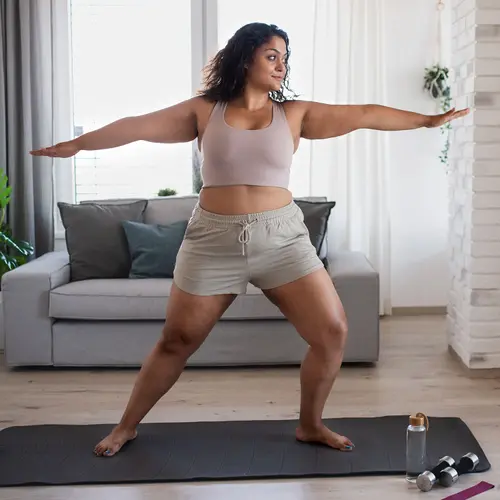

If you’ve ever gotten to a baseball game well before it started, you may have seen the players doing all sorts of leg stretches in the outfield. But you don’t have to be an athlete to stretch your leg muscles or benefit from doing so. The benefits are many and include:
- Overall improved fitness
- Enhanced ability to be more skillful at a particular sport
- Increased relaxation
- Reduced risk of injury
- Reduced soreness
- Increased flexibility
Types of Stretching
But before you start a routine, it’s helpful to know that there are several types of stretches, or flexibility exercises, like:
Static stretching. This is the most common. It’s done by extending the muscle as far as you comfortably can and holding the stretch for up to 30 seconds. There are two types of static stretches:
- Active: You pull, or push, on the muscle to increase the intensity of the stretch.
- Passive: Someone else applies force to the muscle, or you use something like a towel or elastic band to increase the intensity.
Dynamic stretching. This involves moving continuously to imitate a portion of the sport or exercise that you perform. For example, if you’re a runner, you could take slow strides in which you raise your knees to your chest and pump your arms slowly.
Ballistic stretching. This type uses repeated bouncing movements, like dropping down into a crouch and then springing straight up into the air by pushing off on the balls of your feet repeatedly. This helps stretch your calf muscles. These normally switch between low speed and high speed. Doctors recommend you do static stretching before moving to ballistic stretches.
Active isolated stretching. You do this for only 2 seconds at a time, but for several repetitions. At each interval, you should try to increase the degree of stretching by just a little bit.
Myofascial release. This is often done with the assistance of a hard foam roller. For example, you can sit on one so that the underside of your thigh, or your hamstring, is resting on the foam roller. Then you slowly roll back and forth over the roller, which helps relieve tension and improves flexibility in the muscle. While rolling you should cover 2 to 6 inches of your leg, for 30 to 60 seconds. If you’ve never used a foam roller before, have a trainer show you the right way to do it. There are also different yoga poses that can do the same thing for you..
Leg Muscles to Stretch
There are a number of muscles in your leg. Some of the most common ones that people stretch, or that you might find getting tight, include the following:
Calf: Often referred to as “the calf muscle,” it’s actually made up of two separate muscles, which are on the backs of your lower legs. In standing, the calf muscles help extend your leg and your foot.
Hamstrings: There are actually four hamstring muscles, which run along the back of your thigh. They start at the bottom of your pelvis, cross your knee, and end at the lower part of your leg. Hamstring muscles extend your knees and hips.
Quadriceps: There are four separate muscles that make up the quadriceps, which are in the front part of your thigh. In standing, the quadriceps help extend the knee and stabilize the hips and pelvis.
How to Stretch
Calf muscles: Shift your weight forward while stepping out with one leg in front of you. Keep your back heel on the floor.
Hamstrings: Put your legs out in front of you while sitting on the floor. Slowly and gently lean forward while keeping your back relatively straight.
Quadriceps: While standing up straight, gently hold onto something stable, like a chair, for balance with your right hand. Bend your right leg up behind you and at the same time reach behind your back with your left hand to grasp your right ankle.
When to Stretch
Adults (who are not injured or doing rehabilitation) should try to do stretches 2 or 3 days per week and should:
- Hold each stretch of a leg muscle for 10-30 seconds
- Repeat each individual stretch two to four times
- Do stretches when the muscles are warm, not cold. You can warm your muscles up by doing 5 to 10 minutes of light aerobic activity (walking, jogging, using an exercise machine) or even taking a hot shower or bath. It’s also a good idea to do some stretching after you’ve completed your cardio exercise. That’s because your muscles will be warm and stretching can be part of your cool-down activity.
What Not to Do
It is best not to stretch when your muscles are cold. That means don’t start stretching as soon as you get to the gym, or the moment you step onto the tennis court.
When stretching, some people may feel comfortable and relaxed, while others may push the stretch a little aggressively. However, when finished you should feel good. If not, you may be pushing too hard and placing yourself at risk of injury.
Additionally, tight muscles may be a sign of protection. Important to not just stretch but build strength so the muscle(s) can control the new stretched length. If weak, a stretched muscle, or the section of the body they control, is at risk of injury.