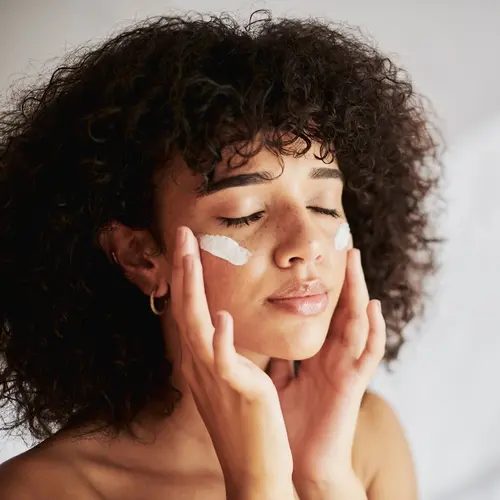

With dermabrasion, a dermatologist or plastic surgeon "sands" your skin with a special instrument. The procedure makes way for a new, smoother layer of skin to replace the skin that's been treated.
Microdermabrasion uses tiny exfoliating crystals that are sprayed on the skin. It works best on problems such as dull skin, brown spots, and age spots.
When Is Dermabrasion or Microdermabrasion Used?
Dermabrasion was developed to improve acne scars, pox marks, and scars from accidents or disease. It's not effective in treating congenital skin defects, most moles, pigmented birthmarks, or scars caused by burns.
Dermabrasion is generally only safe for people with fair skin. For people with darker skin, dermabrasion can result in scarring or discoloration.
Microdermabrasion works on all skin types and colors. It makes subtle changes, usually causing no skin color change or scarring. It is not effective for deeper problems such as scars, stretch marks, wrinkles, or deep acne scars.
With microdermabrasion, there is less downtime than with dermabrasion. Skin is temporarily pink but fully recovers within 24 hours. It doesn't require surgery or anesthetics. That may help people who cannot take "downtime" for healing.
Before You Get Dermabrasion or Microdermabrasion
You'll consult with the professional who's doing the procedure.
In a dermabrasion consultation, you'll discuss your goals, the procedure's risks and benefits, and the type of anesthesia that will be used. You'll also get instructions to follow before and after dermabrasion and perhaps have "before" photos taken to compare with your results later.
With microdermabrasion, the consultation is similar but with less talk about anesthetics and risks because it is a simpler procedure.
How Does Dermabrasion and Microdermabrasion Work?
Dermabrasion is done in the doctor's office. You may get medication to relax you before the procedure starts. Your skin will be thoroughly cleansed, and you'll get shots of numbing medicine to anesthetize the area to be treated.
The doctor will use a high-speed instrument with an abrasive wheel or brush to remove the outer layers of your skin and improve any irregularities in your skin's surface.
In microdermabrasion, tiny crystals are sprayed onto the skin to gently remove the outer layer of your skin. This technique is less aggressive than dermabrasion, so you don't need numbing medicine. It is basically an exfoliation and skin rejuvenation procedure that leaves skin looking softer and brighter.
What Happens After Dermabrasion and Microdermabrasion?
After a dermabrasion procedure, your skin will feel as though it has been severely "brush-burned" for a few days. Your doctor can prescribe or recommend medications to ease any discomfort you may feel. Healing usually happens within seven to 10 days.
Your new skin, which is pink at first, gradually develops a normal color. In most cases, the pinkness largely fades by six to eight weeks. You can use makeup as soon as the skin is healed.
Generally, most people can resume their normal activities in seven to 14 days after dermabrasion. You should avoid sunlight for a few weeks after the pink color has gone away. When outdoors, use a broad spectrum sunscreen with an SPF of 30 or more, and wear a wide-brimmed hat.
After microdermabrasion, your skin will be pink and feel dry and tight (like sunburn or windburn) for about 24 hours. Use moisturizer and broad spectrum sunscreen. Some types of makeup should not be applied for at least 24 hours after the procedure.
Are There Side Effects and Complications With Dermabrasion and Microdermabrasion?
Dermabrasion side effects include:
- Uneven changes in skin color (temporary or permanent)
- Formation of a scar
- Swelling
- Infection
- Darkening of the skin (usually temporary but may be permanent); this is caused by sun exposure in the days and months following the procedure.
Microdermabrasion side effects include:
- Irritation from crystals getting into unprotected eyes
Care After Dermabrasion and Microdermabrasion
Dermabrasion: You will have a follow-up appointment soon after your dermabrasion. Do not drink alcohol for 48 hours after the procedure. Do not take aspirin or any products that contain aspirin or ibuprofen for one week afterwards. Don't smoke.. Avoid sun exposure as best you can for three to six months.
Microdermabrasion: Use moisturizers and sunscreens. Avoid sun exposure for a few days immediately after the procedure.