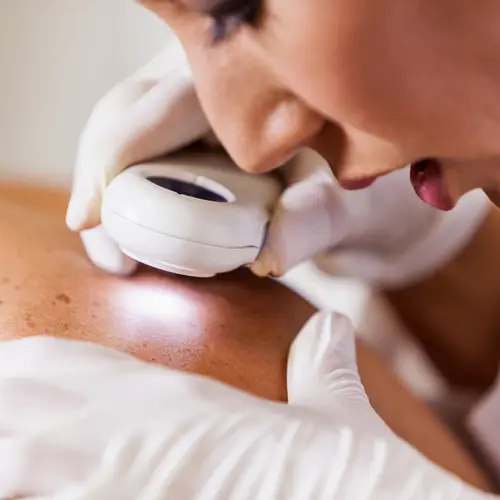
Skin cancer is the most common type of cancer in the United States. But it’s also one of the most curable cancers when we catch it early.
Melanoma is a rare and very aggressive form of skin cancer that forms in the melanocytes. These are the cells that produce your pigment, which is called melanin.
But the majority of skin cancers are nonmelanoma, meaning they do not involve the melanocytes. The two most common of these are basal cell and squamous cell skin cancers. They can almost always be cured if caught early.
But melanoma -- if you don’t find and treat it early -- can quickly become a problem that is more difficult to treat.
What Causes It?
Skin cancer develops when one of the three types of cells that make up your skin reproduce abnormally. As they grow and divide without stopping, they can metastasize. This means they spread to other places in your body through your lymphatic system.
Most skin cancers are caused by exposure to ultraviolet (UV) light. When you don’t protect your skin, UV rays from sunlight or tanning beds can damage your skin’s DNA. When the DNA is altered, it can’t properly control skin cell growth, leading to cancer. A number of things can raise your chances of getting it.
Who’s Most at Risk?
Nonmelanoma skin cancer and melanoma have many causes in common. Some you can control, others you can’t.
Sun damage. If you have a history of sunburn, or have spent a lot of time in the sun, your odds go up for both melanoma and nonmelanoma skin cancers.
Light skin, eyes, and hair. The less pigment you have in your skin, the less protection your cells have against dangerous UV rays. But skin cancer can affect anyone. When people of color get it, it tends to be diagnosed in its later stages, when it's harder to treat. Squamous cell cancer is the most common type of skin cancer in Black people.
Location. If you live in a warm climate, or high elevation, you’re exposed to higher amounts of UV radiation from the sun, which can make your odds of melanoma go up.
Age. As the years go by, you experience more and more damaging UV rays. Most nonmelanomas seem to show up in adults 50 and older.
History of skin cancer. If you’ve already had nonmelanoma skin cancer, you’re more likely to develop it again. And if someone in your family has had it, your chances go up, as well. The same goes for melanoma. If you have a parent or sibling that’s had melanoma, your odds of developing it increase, too.
Gender. Men are more likely to get nonmelanoma skin cancer than women. However, women under 50 are more likely to develop melanoma than men their age.
Exposure to toxins. Working around chemicals like arsenic, and exposure to radiation, can damage skin cells and increase your chances of getting skin cancer.
Having moles. The more moles you have, the higher your chances of developing melanoma.
A weak immune system. If your immune system is compromised, your body can’t fight off the cancer.
Exposure to radiation: If you've had radiation treatment for skin conditions like eczema or acne, you may be at higher risk of skin cancer, especially basal cell carcinoma.
Can You Prevent Skin Cancer?
Your best shot at preventing skin cancer is to protect yourself from the damaging rays of the sun by doing the following:
- Protect your skin with sunblock (at least SPF 30 with broad spectrum)
- Wear tight-weave clothing, and a wide-brimmed hat
- Avoid the outdoors or find shade when the sun is most intense
- Stay out of the sun when taking certain medications
- Never use a tanning bed
You can’t always prevent skin cancer. But regular skin checks can help you catch it early. The faster it’s diagnosed and treated, the easier it is to cure.