What Are the Symptoms of Skin Cancer?
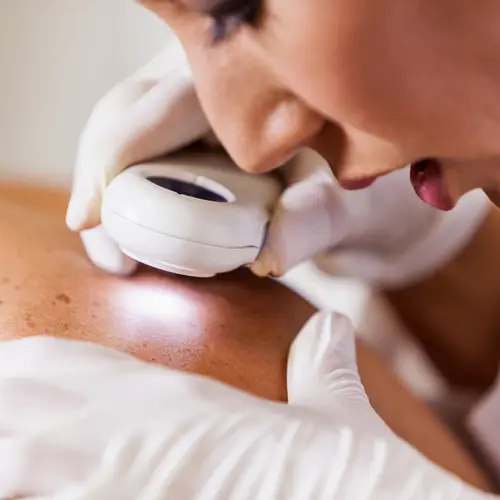
If you are in a high-risk group for skin cancer or have ever been treated for some form of the disease, you should familiarize yourself with how skin cancers look. Examine your skin from head to toe every month, using a full-length mirror and hand mirror to check your mouth, nose, scalp, palms, soles, backs of ears, genital area, and between the buttocks. Cover every inch of skin and pay special attention to moles and sites of previous skin cancer. If you find a suspicious growth, have it examined by your dermatologist.
The general warning signs of skin cancer include:
- Any change in size, color, shape, or texture of a mole or other skin growth
- An open or inflamed skin wound that won't heal
Melanoma, the most dangerous type of skin cancer, may appear as:
- A change in an existing mole
- A small, dark, multicolored spot with irregular borders -- either elevated or flat -- that may bleed and form a scab
- A cluster of shiny, firm, dark bumps
- Any new growth larger than a pencil eraser
An easy way to remember the signs of melanoma is the ABCDEs of melanoma: Asymmetry, irregular Borders, changes in Color, Diameter larger than a pencil eraser, Evolution of a mole's characteristics, be it size, shape, color, elevation, bleeding, itching, or crusting.
Basal cell carcinoma may appear on sun-exposed skin as:
- A pearly or flesh-colored oval bump with a rolled border, which may develop into a bleeding ulcer
- A smooth red spot indented in the center
- A reddish, brown, or bluish black patch of skin on the chest or back
Squamous cell carcinoma may appear on sun-exposed skin as:
- A firm, reddish, wart-like bump that grows gradually
- A flat spot that becomes a bleeding sore that won't heal
Call Your Doctor About Skin Cancer If:
- An existing mole changes size, shape, color, or texture; or you develop a very noticeable new mole as an adult
- A new skin growth or open sore does not heal or disappear in 6 weeks