What Is TMJ Disorder?
Your temporomandibular joint (TMJ) is a hinge that connects your jaw to the temporal bones of your skull, which are in front of each ear. It lets you move your jaw up and down and side to side, so you can talk, chew, and yawn.
Problems with your jaw and the muscles in your face that control it are known as temporomandibular disorders (TMDs). Your doctor may also call it TMJ disorder or TMJ dysfunction. While a lot of people refer to the condition as simply TMJ, that's just the name of the joint.
TMJ Disorder Causes
We don't know what causes TMDs. Dentists believe symptoms arise from problems with the muscles of your jaw or with the parts of the joint itself.
Injury to your jaw, the joint, or the muscles of your head and neck—like from a heavy blow or whiplash—can lead to TMDs. Other causes include:
- Grinding or clenching your teeth, which puts a lot of pressure on the joint
- Movement of the soft cushion or disc between the ball and socket of the joint
- Arthritis in the joint
- Stress, which can cause you to tighten facial and jaw muscles or clench your teeth
Research shows that a bad bite or braces to straighten your teeth don't cause TMDs. Women and people assigned female at birth are twice as likely to have TMDs than men and people assigned male at birth. Researchers are now looking into the role of differences in TMJ structure and mechanics between the sexes.
TMJ Disorder Symptoms
TMD often causes severe pain and discomfort. It can be temporary or last many years. It might affect one or both sides of your face. It's most common among people between the ages of 20 and 40.
Common symptoms include:
- TMJ pain or tenderness in your face, jaw joint area, and neck and shoulders and in or around your ears when you chew, speak, or open your mouth wide
- Problems when you try to open your mouth wide
- Jaws that get "stuck" or "lock" in the open- or closed-mouth position
- Jaw clicking, popping, or grating sounds in the joint when you open or close your mouth or chew; this may or may not be painful
- A tired feeling in your face
- Trouble chewing or a sudden uncomfortable bite—as if the upper and lower teeth aren't fitting together properly; learn more about the pros and cons of teeth alignment surgery
- Swelling on the side of your face
- Toothaches
- Earaches
- Hearing problems or ringing in your ears (tinnitus)
- Headaches or migraine
- Dizziness
- Numbness or tingling in your fingers
You may also have neck aches and pain in your upper shoulders.
TMJ Disorder Diagnosis
Many other conditions cause similar symptoms—like tooth decay, sinus problems, arthritis, or gum disease. To figure out what's causing yours, the dentist will ask about your health history and conduct a physical exam.
They'll check your jaw joints for pain or tenderness and listen for clicks, pops, or grating sounds when you move them. They'll also make sure your jaw works like it should and doesn't lock when you open or close your mouth. Plus they'll test your bite and check for problems with your facial muscles.
Your dentist may take full face X-rays so they can view your jaws, TMJs, and teeth to rule out other problems. They may need to do other tests, like MRI or CT scan. The MRI can show if the TMJ disc is in the proper position as your jaw moves. A CT scan shows the bony detail of the joint.
Your doctor or dentist could also suggest TMJ arthroscopy to diagnose a TMJ disorder. This surgery involves inserting a small thin tube (cannula) and then a camera (arthroscope) near your jaw joint to get a closer look at the area and make a diagnosis.
You may get referred to an oral surgeon (also called an oral and maxillofacial surgeon) for further care and treatment. This doctor specializes in surgery in and around the entire face, mouth, and jaw area. You may also see an orthodontist to ensure your teeth, muscles, and joints work like they should.
Home Treatments of TMD
There are things you can do on your own to help relieve TMD symptoms. Your doctor may suggest you try some of these remedies together.
Take over-the-counter medications. Nonsteroidal anti-inflammatory drugs (NSAIDs), like naproxen or ibuprofen, can relieve muscle pain and swelling.
Use moist heat or cold packs. Apply an ice pack to the side of your face and temple area for about 10 minutes. Do a few simple jaw stretches (if your dentist or physical therapist OKs them). When you're done, hold a warm towel or washcloth to the side of your face for about 5 minutes. Perform this routine a few times each day.
Eat soft foods. Add yogurt, mashed potatoes, cottage cheese, soup, scrambled eggs, fish, cooked fruits and vegetables, beans, and grains to your menu. Cut foods into small pieces so you chew less. Skip hard, crunchy foods (like pretzels and raw carrots), chewy foods (like caramels and taffy), and thick or large bites that require you to open wide.
Avoid extreme jaw movements. Keep yawning and chewing (especially gum or ice) to a minimum and don't yell, sing, or do anything that forces you to open wide.
Don't rest your chin on your hand. Don't hold the phone between your shoulder and ear. Practice good posture to reduce neck and facial pain.
Keep your teeth slightly apart. Do this as often as you can. This will relieve pressure on your jaw. Put your tongue between your teeth to control clenching or grinding during the day.
Learn relaxation techniques. This will help loosen up your jaw. Ask your dentist if you need physical therapy or massage. Consider stress reduction therapy and biofeedback.
Stop chewing certain items. This includes pens, pencils, ice, and gum.
Change your sleep position. Sleeping on your stomach can make TMD worse.
Behavior changes. This includes changing your posture.
Avoid using your teeth as tools. You may have the habit of using your teeth to rip tags off of clothing or open packaging.
TMJ Disorder Treatments
Talk to your dentist about these treatments of TMDs:
Medications. Your dentist can prescribe higher doses of NSAIDs if you need them for pain and swelling. They might suggest a muscle relaxer to relax your jaw if you grind or clench your teeth or an antianxiety medication to relieve stress, which may bring on TMDs. In low doses, they can also help reduce or control pain. Muscle relaxants, antianxiety drugs, and antidepressants are available by prescription only.
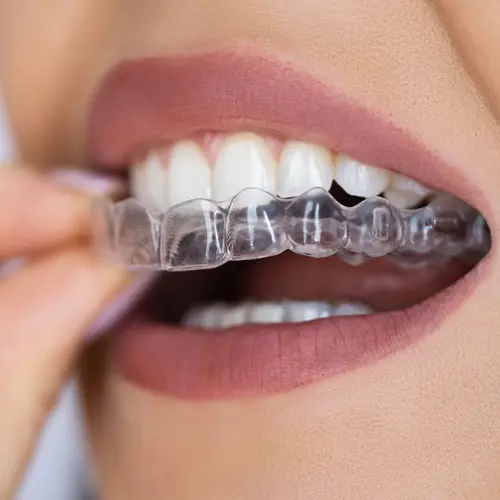
A splint or night guard. These plastic mouthpieces fit over your upper and lower teeth so they don't touch. They lessen the effects of clenching or grinding and correct your bite by putting your teeth in a better position. What's the difference between them? You wear night guards while you sleep. You use a splint all the time. Your dentist will tell you which type you need.
Dental work. Your dentist can replace missing teeth and use crowns, bridges, or braces to balance the biting surfaces of your teeth or to correct a bite problem.
Other Treatments
If the treatments listed above don't help, your dentist may suggest one or more of the following:
Transcutaneous electrical nerve stimulation. This therapy uses low-level electrical currents to provide pain relief by relaxing your jaw joint and facial muscles. It can be done at the dentist's office or at home.
Ultrasound. Deep heat applied to the joint can relieve soreness or improve mobility.
Trigger-point injections. Pain medication or anesthesia is injected into tender facial muscles called "trigger points" to give relief.
Radio wave therapy. Radio waves stimulate the joint, which increases blood flow and eases pain.
Low-level laser therapy. This lowers pain and inflammation and helps you move your neck more freely and open your mouth wider.
Surgery for TMDs
If other treatments can't help you, surgery is an option. Once it's done, it can't be undone, so get a second or even a third opinion from other dentists. Other TMJ disorder specialists include oral surgeons, orthodontists, otolaryngologists, and prosthodontists.
There are three types of surgery for TMDs. The type you need depends on the problem.
Arthrocentesis. It is used if you have no major history of TMJ disorder, but your jaws are locked. It's a minor procedure that your dentist can do in their office. They'll give you general anesthesia and then insert needles into the joint and wash it out. They may use a special tool to get rid of damaged tissue or dislodge a disc stuck in the joint or to unstick the joint itself.
Arthroscopy. It is a surgery done with an arthroscope. This special tool has a lens and light on it. It lets your doctor see inside your joint. You'll get general anesthesia; then the doctor will make a small cut in front of your ear and insert the tool. It'll be hooked up to a video screen so they can examine your joint and the area around it. They may remove inflamed tissue or realign the disc or joint. This type of surgery, known as minimally invasive, leaves a smaller scar, has fewer complications, and requires a shorter recovery time than a major operation.
Open-joint surgery. Depending on the cause of the TMD, arthroscopy may not be possible. You may need this type of surgery if:
- The bony structures in your jaw joint are wearing down
- You have tumors in or around the joint
- Your joint is scarred or full of bone chips
You'll get general anesthesia; then the doctor will open up the entire area around the joint so they can get a full view and better access. You'll need longer to heal after open-joint surgery, and there is a greater chance of scarring and nerve injury.
Modified condylotomy. Doctors perform this surgery on your mandible (lower jaw) instead of your jaw joint. It could help to ease pain and jaw locking.