

What Is Teething?
Teething is when your baby’s teeth start to come through their gumline. Another word for it is odontiasis.
When a baby’s teeth start to emerge, it can be uncomfortable.
One common thought is that baby teeth cut through gums, causing the pain that can come from teething; however, before the crown of a tooth appears, that part of your baby's gums has already been broken down by hormones.
When Do Babies Start Teething?
Teething Symptoms
The symptoms aren’t the same for every baby, but they may include:
- Swollen, tender gums
- Fussiness and crying
- A slightly raised temperature (less than 100.4 F)
- Gnawing or wanting to chew on hard things
- Lots of drool, which can cause a rash on the face
- Coughing
- Rubbing their cheek or pulling their ear
- Bringing their hands to their mouth
- Changes in eating or sleeping patterns
Teething can be painful, but it doesn’t usually make babies sick. Call your doctor if your baby has diarrhea, vomiting, rashes on the body, a higher fever, or coughing and congestion. These aren’t normal signs of teething.
You also should call the pediatrician if your baby’s gums are bleeding or you see any pus or swelling of their face.
Order of Tooth Eruption
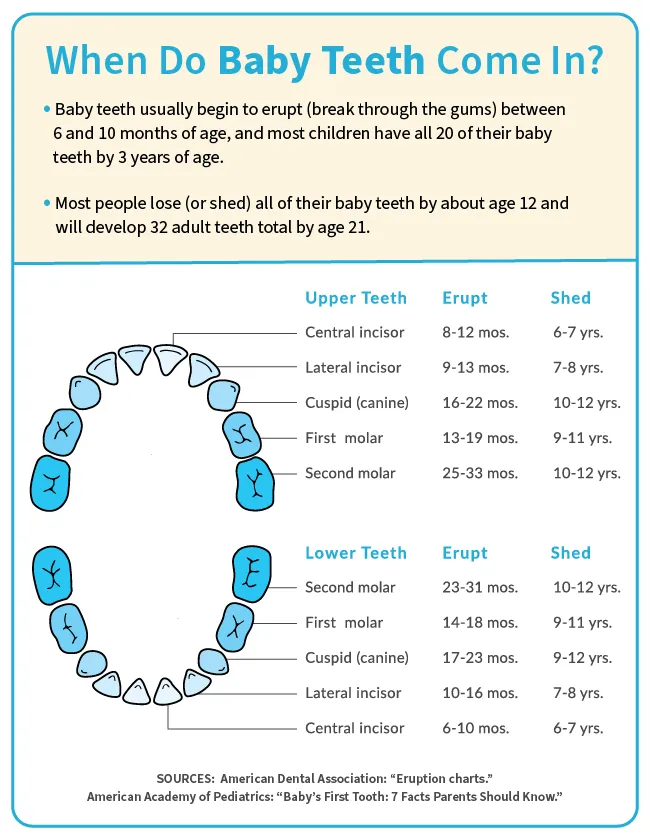
When and how teeth come in can be different for every baby and may be based on family history. But most of the time, the lower front two teeth come in first between 6 and 10 months, followed by the opposite top two teeth (between 8 and 12 months) and the two on either side of the upper front two teeth between 9 and 13 months. Next come the two on either side of the lower front teeth around 10 to 16 months, then the two first molars (upper and lower) appear between 13 and 19 months.
In all, 20 “baby teeth” will eventually be in place, usually by age 3.
Soothe a Teething Baby
You may need to try different things to help your little one feel better:
- Offer something to chew on. Something cold in your baby’s mouth, like a cold pacifier, spoon, clean wet washcloth, or a solid (not liquid) refrigerated teething toy or ring, or a rubber teether. Avoid teethers filled with liquid, which can leak, or freezable teethers, which may be too cold or hard and may hurt your baby's mouth. Also, never tie a teether around your baby's neck – it's a choking hazard. Make sure to clean teething toys, washcloths, and other items after the baby uses them.
- Teething biscuits. Most teething biscuits are not very nutritious and contain sugar and salt. If you give your baby these for teething pain, watch your baby while they are eating it. Chunks can break off easily and can lead to choking. If your child is eating solid foods, you might offer them cold applesauce or yogurt.
- Offer water. If your baby is older than 6-9 months, you can offer cool water from a sippy cup, too.
- Soothe the gums. Gently massage the gums with a cool, wet washcloth or a clean finger. Massage the gums by gently rubbing them with your clean finger. If the teeth haven’t come in yet, you can let your baby gnaw on your finger. If you’re nursing your baby, try dipping your fingers in cool water and massaging their gums before each feeding. That may keep them from biting your nipple while nursing.
- Prevent rashes. Keep a cloth with you to wipe away drool from Baby's chin.
Teething Treatments to Avoid
Never put anything in your baby’s mouth that isn’t specifically approved to help soothe teething. Even some products described as teethers or teething aids aren’t safe choices, including ones that are:
- Filled with liquid that can tear and spill
- Made of breakable material, like plastic, that can possibly lead to choking. Also, some teethers can be made from harmful substances, like lead. Look for ones made of rubber.
- Frozen solid – these can be too hard on a baby’s mouth
- Homeopathic teething tablets or gels that haven't been proven to provide benefits and may include harmful ingredients like belladonna, which can cause breathing trouble and seizures
Teething Necklaces
Child health experts don’t recommend teething necklaces. They’re dangerous and pose a strangulation risk. Babies also can choke if the necklace breaks and the beads are swallowed.
Doctors also say using amber teething necklaces, which are said to release a pain reliever when heated, is not a good idea. The benefits of using these are not proven. Although some say a
Teething Medicine
Medicine that you rub on your baby’s gums to stop the pain of teething may not help. It quickly washes away in the mouth and may numb the back of their throat and make it hard for them to swallow.
Stay away from over-the-counter teething gels and liquids that have the ingredient benzocaine. The FDA says this ingredient shouldn’t be given to children under 2. It can cause rare but serious side effects.
A small dose of a children’s pain reliever, such as acetaminophen, may help your baby. Don’t give ibuprofen to an infant under 6 months old, and ask your doctor before giving your baby any medication. Use it exactly as the doctor says.
Teething can be rough for you and your baby at first. But it will get easier as you both learn how to soothe each new tooth.
Natural Remedies for Teething
Many brands have natural options for easing the pain that can come with teething, but you should talk to your pediatrician before trying any homeopathic or natural remedies. Some can pose health risks for your child.
Cold items. Anything cold will help to numb the pain for teething babies. Wet a clean washcloth, tie it in a knot, and chill it in the refrigerator for your baby to hold. You can also refrigerate their pacifier for relief as a natural remedy for the pain. Avoid gel-filled teething rings that you place in a freezer. These may be too hard for younger babies, and they may break or leak.
Massage. Gently rubbing your baby’s gums may provide relief. Wash your hands first, and then offer your baby a finger or knuckle to chew on. You can try rubbing in a circular motion to see if they like it.
If your baby is breastfed, rubbing your finger in cold water before a feeding could prevent them from nipple chewing.
Breast milk. For some breastfed babies, nursing can soothe the teething process and they'll want to feed for longer. Other babies may find sucking painful for their gums and will have to bottle feed instead.
How to Care for Baby’s New Teeth
Good oral hygiene is important, even before your baby has teeth:
- Until teeth start to come in, clean your baby’s gums with a wet washcloth or piece of gauze at least once a day.
- Once they have teeth, clean your baby’s mouth the same way at least twice a day. After feedings is a good time for this.
- After their first birthday, you can start to use a soft-bristled baby toothbrush with water and a small amount of toothpaste that doesn’t have fluoride in it. You can also start flossing between their teeth.
Your child should see a pediatric dentist when the first tooth appears, or no later than their first birthday.
When to See a Doctor
After your baby starts teething, they need proper dental care. Tooth decay is the most common chronic disease of early childhood. Bacteria break down certain sugars, producing acid that deprives teeth of minerals and makes cavities. Your baby’s primary care doctor should be consulted about dental care, and a first dental visit should be scheduled at about 1 year.
Emergency Care
After reports of infant deaths, the FDA launched an investigation into some homeopathic (alternative medicine) teething tablets in 2017. They found inconsistent amounts of belladonna, which is a highly toxic substance also known as deadly nightshade.
If you have given your child homeopathic tablets, seek medical care right away if they have any of these symptoms:
- Seizures
- A hard time breathing
- Muscle weakness
- Flushed skin
- Lethargy or excessive sleepiness
- Excessive agitation
- A hard time urinating
- Constipation