It may be hard to believe, but experts agree -- exercise can help relieve joint pain from osteoarthritis (OA).
People with arthritis should discuss exercise options with their doctors and other health care providers. Most doctors recommend exercise for their patients. Many people with arthritis begin with easy, range-of-motion exercises, low-impact aerobics, and muscle building. People with arthritis can participate in a variety of sports and exercise programs. The doctor will know which, if any, sports are off-limits.
Your doctor may have suggestions about how to get started or may refer you to a physical therapist. It’s best to find a physical therapist who has experience working with people who have arthritis. The therapist will design a home exercise program and teach you about pain-relief methods, proper body mechanics (placement of the body for a given task, such as lifting a heavy box), joint protection, and conserving energy.
Exercise can strengthen the muscles around the joints, which helps take stress off joints. Exercise also:
- Reduces joint stiffness
- Builds flexibility and endurance
- Improves your mood and self-esteem
- Helps you sleep better
- Keeps weight under control
- Gives you more energy
In addition to osteoarthritis pain relief, exercise can offset other health problems, such as osteoporosis, diabetes, and heart disease.
How to Get Started Exercising With Osteoarthritis
First, talk to your doctor about the best types of exercise for you. Then, start slowly. Start with supervision from a physical therapist or qualified athletic trainer.
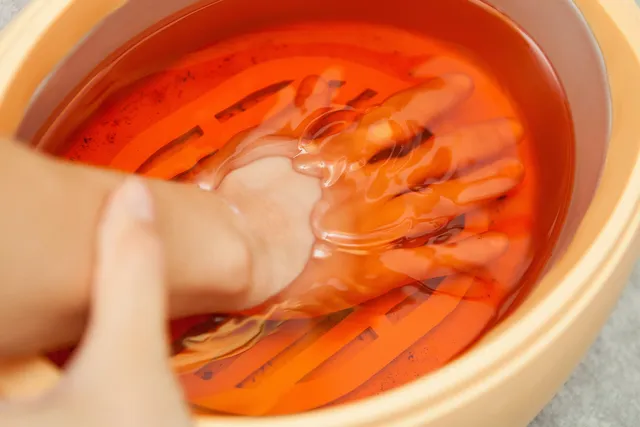
It's always smart to start your workout with a warm-up. But people with OA may want to go one step further to warm their muscles. Taking a warm bath or applying heat packs to joints may be helpful before you work out.
Movement itself can warm up muscles. If you're getting ready to swim or walk, your warm-up can be a gentle swim or walk.
Warm-Up Exercises for Osteoarthritis
Here are some simple warm-up exercises for osteoarthritis, from WebMD's fitness expert, Richard Weil, MEd, CDE. Do three to five repetitions of each.
- Side bends: Put hands on hips. Bend from the waist on one side. Then come back up. Repeat on the other side.
- Shoulder shrugs: Raise one or both shoulders up toward the ears. Lower and repeat.
- Arm circles: Extend arms out at both sides. Rotate arms forward, then in reverse.
- Torso rotations: Stand with feet shoulder-width apart and toes turned slightly out. Rotate to your left side. Then rotate to your right side.
Strengthening Exercises for Osteoarthritis
Muscle strengthening can come from lifting hand weights, using flexible tubing, even lifting a 1-liter water bottle.
To start a hand-weight program, use weights that you can lift 12 to 15 times with good form (a 1- or 2-pound weight can make a big difference). Make sure you feel comfortable using the weights. Get started with these simple strengthening exercises. Do two or three sets of eight to 12 repetitions each.
- Biceps curls: Start with elbows bent at the sides. Keeping your upper arm at your side, bring one dumbbell up to your shoulder. Lower to original position and repeat with opposite arm. Continue to alternate between sides.
- Triceps extensions: Use both hands to hold weight overhead. Keeping your elbows pointed upward, lower the weight behind your head. (Make sure you don't hit the back of your neck.) Raise weight overhead again. Return and repeat.
- Side lateral raises: With arms down at your sides, raise arms (slightly bent) to shoulder height. Lower and repeat.
- Wall push-up: This exercise is great for people who are not able to do a regular push-up. Stand with feet about 12 inches from a wall. Place hands a little wider than shoulders. Lower your chest to the wall, then push back to the starting position.
Use cold packs after exercising if you need. Many people with arthritis wrap up their exercise routine this way.
Aerobic Exercise for Osteoarthritis
Try to get at least 150 minutes of exercise a week. This could be 30 minutes, five times a week. If you can't spare a half-hour, break it up into 10-minute chunks throughout the day. You can start with short, brisk walks, climbing up and down stairs, or riding a stationary bike.
As your endurance builds up, go for 30- to 45-minute sessions. Walking, biking, swimming, tai chi, yoga, and water aerobics are all good aerobic exercises for people with osteoarthritis. Water exercise is especially ideal because of water's soothing warmth and buoyancy. It's a gentle way to exercise joints and muscles -- plus it acts as resistance to help build muscle strength.
In your everyday life, you can also work in physical activities that can help with your OA. Wash the car, mow the lawn, vacuum the house, or window-shop at the mall. You can even walk around the room while watching TV. While it may not seem like much, small movements keep your joints moving, plus you burn calories.
How Much Exercise Is Too Much?
Most experts agree that if exercise causes pain that lasts more than an hour, it is too strenuous. People with arthritis should work with their physical therapist or doctor to adjust their exercise program when they notice problems like:
- Unusual or lasting fatigue
- More weakness
- Less range of motion
- More joint swelling
- Continuing pain (pain that lasts more than 1 hour after exercising)
Consider appropriate recreational exercise (after doing range-of-motion, strengthening, and aerobic exercise). Fewer injuries to joints affected by arthritis occur during recreational exercise if it is preceded by range-of-motion, strengthening, and aerobic exercise that gets your body in the best condition possible.
Ease off if joints become painful, inflamed, or red, and work with your doctor to find the cause and eliminate it.
Choose the exercise program you enjoy most and make it a habit.
Show Sources
Photo Credit: Kali Nine LLC / Getty Images
SOURCES:
Richard Weil, MEd, CDE, WebMD fitness expert.
The Arthritis Foundation.
National Institute of Arthritis and Musculoskeletal and Skin Diseases.
Arthritis and Exercise from MedicineNet