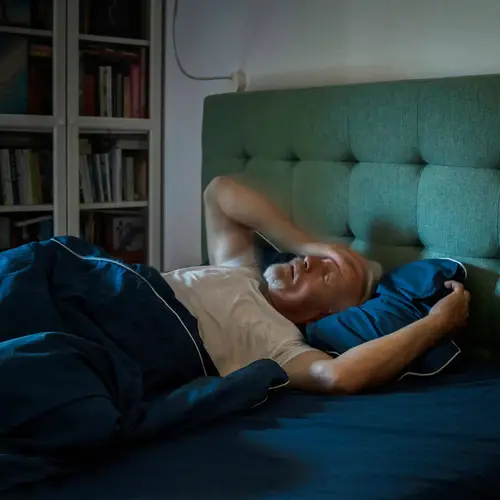
Chances are that one thing about your sleep routine is pretty consistent. Even if your bedtime changes nightly, or you wake up at wildly different times each morning, there's probably one position that's your favorite for slumber.
Unfortunately, the position that you find most comfortable might end up causing health problems, ranging from aches to sleep apnea. Learn about the pros and cons of common ways to sleep, and discover easy tips on making each position a little bit better for you.
Fetal Position
The most popular way to sleep is favored by more than 4 out of 10 people, especially among women, who are twice as likely as men to sleep curled up on their side.
For the most part, it's a healthy way to doze because it allows your spine to rest in its natural alignment. The fetal position might also help ward off conditions like Alzheimer's or Parkinson's: Recent research on animals suggests that your brain does a better job of clearing waste that can lead to these neurological diseases when you're sleeping on your side rather than on your back or stomach.
This position's also good for pregnant women. You should stick to lying on your left side while expecting. It improves circulation to your growing baby and prevents your uterus from pressing against your liver.
Make it better: Stretch out a bit. Pulling your body into a tight ball or curling forward too much limits your lungs and diaphragm. A more relaxed back encourages easy breathing.
Log Position
Do you sleep on your side but with both arms down, close to your body? You're in fairly good company, too: 15% of people prefer to catch their ZZZs in the log position. And that's great because it's good for your health.
Resting on your side, with your back mostly straight, can help cut down on sleep apnea. It can also nix neck and back pain since your spine stays aligned.
Make it better: Place a soft pillow or folded blanket or towel between your knees to ease pressure on your hips.
Freefall Position
As if sinking into the clouds, you're lying on your stomach with your arms tucked under your pillow or on either side of your head.
It may seem cozy when you're snuggling in to bed, but sleeping on your stomach can lead to low back and neck pain. You're also more likely to toss and turn as you try to get comfortable on your belly than while in other positions.
Make it better: Avoid a stiff pillow. It can put your neck at an uncomfortable angle and cause pain. Try propping a softer pillow slightly under your forehead, and sleep facing the mattress, rather than turning your head to one side. This will help keep your airway open.
Soldier Position
Flat on your back, with arms by your side, can cause snoring, which affects half of all adults at some point and is more common the older we get. Snoring isn't just annoying for the person next to you or in a nearby room. It can disrupt your sleep and lead to thickening and problems with the carotid artery, which supplies blood to your brain, face, and neck.
This position also isn't a good choice if you're prone to sleep apnea -- shallow breathing or pauses in your breath that prevent restful sleep. Sleeping on your back can lead to a sore lower back as well.
There is one big pro to this position, though: It can help acid reflux.
Make it better: To help avoid aches in this face-up position, place a pillow or rolled-up towel under your knees. It supports the natural curve of your spine and can lower your chances of back pain.
If you're snoring or have sleep apnea, it's best to sleep on your side.
Starfish Position
You're on your back for this one, too, but your legs are spread apart and your arms are bent up on either side of your head.
Like "soldier," this position can help with acid reflux, but it also makes you more likely to snore and can aggravate sleep apnea.
Make it better: Put a pillow under your knees before you doze off. If your mattress is soft or worn out, swap it out for one that's more firm. Support for your spine will help you avoid back pain.
Make a Change?
If you haven't been sleeping well and want to try a new position to see if it helps, be patient. A habit like that can take a while to change, especially if you've been hitting the sack the same way for years.
Invest in a new supportive mattress if you're wanting to sleep on your back, or a contour pillow for between your knees if you're switching to your side.
What Is Sleep Style?
Your sleep style is your body’s natural tendency to sleep at a specific time, called its chronotype. You may naturally be an early riser or more likely to stay up late. Chronotype can affect everything from your desire for food and exercise habits to even your core body temperature. Depending on your chronotype, you may feel more awake during one part of the day and drowsier at other times.
Chronotype is similar to circadian rhythm -- your built-in body clock that dictates your sleep-wake cycle -- but there are differences. Circadian rhythm responds to cues in the world around us, like light and room temperature. Your body then releases the hormone melatonin, which helps you sleep.
Chronotype, on the other hand, is more fixed. Researchers think your age, sex, and other genetic factors decide it.
Four Sleep Styles
To figure out your chronotype, think about what time you naturally wake up without commitments like work or school. It’s also when you feel most focused and alert. Four common sleep styles are:
Morning lark. Also known as early birds, you wake up bright and early. You’re also most productive in the morning, with activity tapering off in the evening.
Night owl. You usually don’t go to sleep until after 1 a.m. And you feel most alert later in the day, even though you may need to wake up early in the morning. Around 15% of people are night owls.
Hummingbird. Most of us fall somewhere between morning larks and night owls. Experts call this sleep type a hummingbird, and they think 55% of all people are in this group. You thrive following a standard daytime work schedule but still have enough energy for evening tasks.
Bimodal. Researchers are studying this fourth chronotype. Bimodal means you may have both morning and evening tendencies and peaks of activity at each time of day.
Your sleep style usually depends on your sex and can change as you grow older.