

Slideshow: 10 Ways to Stop Stress Now

Put Stress in Its Place
How you handle stress makes a big difference in how you feel. It might even help your blood pressure, blood sugar level, and the rest of you. Use these calming strategies to stop stress ASAP.

Break Out the Bubble Gum
Next time you’re at the end of your rope, unwrap a stick of gum. According to studies, chewing gum lowers anxiety and eases stress. Some researchers think the rhythmic act of chewing may improve blood flow to your brain, while others believe the smell and taste help you relax.

Get Outside
Spending time outdoors, even close to home, is linked to better well-being. You're in a natural setting, and you're usually doing something active, like walking or hiking. Even a few minutes can make a difference in how you feel.

Smile Like You Mean It
Don’t roll your eyes the next time someone advises you to “grin and bear it.” In times of tension, keeping a smile on your face – especially a genuine smile that’s formed by the muscles around your eyes as well as your mouth – reduces your body’s stress responses, even if you don’t feel happy. Smiling also helps lower heart rates faster once your stressful situation ends.
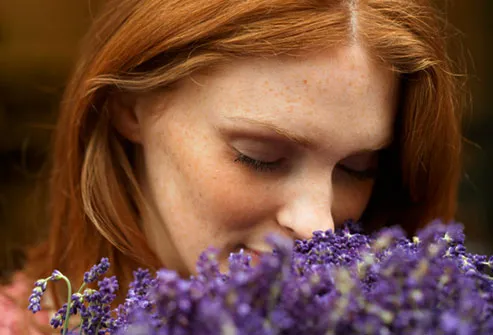
Sniff Some Lavender
Certain scents like lavender may soothe. In one study, nurses who pinned small vials of lavender oil to their clothes felt their stress ease, while nurses who didn’t felt more stressed. Lavender may intensify the effect of some painkillers and anti-anxiety medications, so if you’re taking either, check with your doctor before use.

Tune In
Heading into a stressful situation? Music can help you calm down. In one study, people had lower levels of the stress hormone cortisol when they listened to a recording of Latin choral music before doing something stressful (like doing math out loud or giving a speech) than when they listened to a recording of rippling water. (Wondering what that choral piece was, music fans? Try Miserere by Gregorio Allegri.)
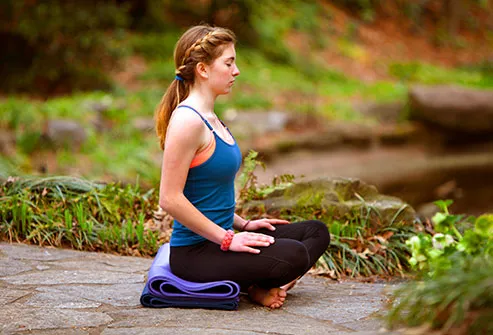
Reboot Your Breath
Feeling less stressed is as close as your next breath. Focusing on your breath curbs your body’s “fight or flight” reaction to pressure or fear, and it pulls your attention away from negative thoughts. Sit comfortably in a quiet place. Breathe in slowly through your nose, letting your chest and lower belly rise and your abdomen expand. Breathe out just as slowly, repeating a word or phrase that helps you relax. To reap the most benefit, repeat for at least 10 minutes.

Be Kind to Yourself
We all have a constant stream of thoughts running through our heads, and sometimes what we tell ourselves isn’t so nice. Staying positive and using compassionate self-talk will help you calm down and get a better grip on the situation. Talk to yourself in the same gentle, encouraging way you’d help a friend in need. “Everything will be OK,” for instance, or "I'll figure out how to handle this."

Write Your Stress Away
Jotting down your thoughts can be a great emotional outlet. Once they're on paper, you can start working out a plan to resolve them. It doesn’t matter whether you prefer pen and notebook, a phone app, or a file on your laptop. The important thing is that you’re honest about your feelings.
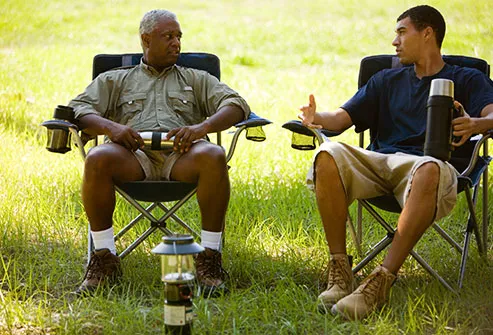
Tell a Friend
When you’re feeling overwhelmed, seek out the company of a friend or loved one. Have a friend who’s dealing with the same worries as you? Even more reason to open up. You'll both feel less alone.

Get Moving
When you work up a sweat, you improve your mood, clear your head, and take a break from whatever is stressing you out. Whether you like a long walk or an intense workout at the gym, you’ll feel uplifted afterward.


Sources Medically Reviewed on 12/16/2022 Reviewed by Smitha Bhandari, MD on December 16, 2022
Images:
1) Thinkstock / Fuse
2) Thinkstock / George Doyle / Stockbyte
3) Thinkstock /atokic/ iStock
4) Getty / Portra Images
5) Getty / Portra Images
6) Getty /mother image / The Image Bank
7) WebMD
8) Ariwasabi / iStock / 360
9) Thomas Pullicino / iStock / 360
10) Thinkstock / Purestock
11) Spotmatik / iStock / 360
SOURCES:
Sketchley-Kaye, K. Nutritional Neurosicence, November 2011.
Thompson, C. Landscape and Urban Planning, April 15, 2012.
Kraft, T. Psychological Science, Nov. 13, 2012.
Chen, M. International Journal of Nursing Practice, Nov. 15, 2013.
University of Maryland Medical Center: "Lavender."
Thoma, M. PLoS One, published online Aug. 5, 2013.
Harvard Medical School Family Health Guide: "Relaxation Techniques: Breath control helps quell errant stress response."
American Heart Association: "Four Ways to Deal with Stress."
University of Rochester Medical Center: "Journaling for Mental Health."
CDC: "Coping With Stress."
Townsend, S. Social Psychological & Personality Science, 2012.
Anxiety and Depression Association of America: "Exercise for Stress and Anxiety."
Reviewed by Smitha Bhandari, MD on December 16, 2022
This tool does not provide medical advice. See additional information.
THIS TOOL DOES NOT PROVIDE MEDICAL ADVICE. It is intended for general informational purposes only and does not address individual circumstances. It is not a substitute for professional medical advice, diagnosis or treatment and should not be relied on to make decisions about your health. Never ignore professional medical advice in seeking treatment because of something you have read on the WebMD Site. If you think you may have a medical emergency, immediately call your doctor or dial 911.