Generally, surgery is only a treatment for Parkinson's disease when medicine doesn't make your symptoms better.
Surgical ways to treat Parkinson's include:
- Deep brain stimulation
- Focused ultrasound
- Pallidotomy
- Thalamotomy
Deep Brain Stimulation
If you can't find a way to control Parkinson's motor fluctuations -- symptoms that return after taking medicine for years -- your doctor may suggest surgery called deep brain stimulation (DBS). It's not for everyone, so you'll need to talk over the pros and cons carefully. But if you decide to go forward with it, you could get relief from tremors, stiffness, and other problems.
A doctor implants electrodes in certain areas of your brain. The impulses they cause restrict other impulses that can cause the disease.
A device that acts like a pacemaker goes under the skin in your chest to control the impulses. A wire runs beneath your skin from the device to the "lead" in your brain.
The procedure might be an option for you if:
- You've had Parkinson's disease for more than 4 years.
- You have "off" and "on" periods where your symptoms come and go, even though you take medicine every day.
- Symptoms like tremor, stiffness, and slowness get in the way of your daily life.
- Your medicine dose wears off before it's time to take the next one.
- You have side effects from your medicine that bother you.
Your brain cells need to "talk" to each other for your body to move smoothly. In Parkinson's disease, the signals between brain cells aren't working right.
DBS is similar to a pacemaker that controls the heart rhythm. It sends electrical impulses to the brain to stop the faulty signals that cause Parkinson's symptoms.
Some people see their symptoms improve by up to 80% after DBS.
Deep brain stimulation won't cure Parkinson's or reverse the disease, but it could lessen your symptoms. If DBS works well for you, you may be able to cut back on your medicine.
Talk with your doctor to see if this is right for you.
Focused Ultrasound
Focused ultrasound is an FDA-approved method of treating the tremor of Parkinson's disease when medicines do not help. It uses high frequency sound waves guided by magnetic resonance imaging (MRI) to destroy very specific areas in the brain that cause the abnormal body movement. Since it is noninvasive, it may be chosen by people who cannot undergo an invasive operation because of bleeding issues or other health problems.
Pallidotomy
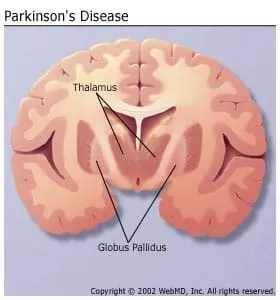
Doctors believe Parkinson's happens when a part of the brain called the globus pallidus works too hard. This acts like a brake and makes moving your body tougher. Pallidotomy surgery destroys the globus pallidus to make you feel better. This treatment can make you less rigid and ease tremors, improve balance, and make it easier for you to move.
Pallidotomy can also make medicine work better for people with advanced Parkinson's.
Thalamotomy
Research says tremors are due to trouble with your thalamus, a part of your brain that, among other things, is in charge of our balance and makes sure we can feel our arms and legs. Thalamotomy destroys part of the thalamus to block the things that cause your tremors from reaching the muscles.
It's used only to control tremors, so it's not usually recommended as a treatment for Parkinson's disease.
Thalamotomy and pallidotomy surgeries are rarely done anymore because of the risk of serious side effects.