
Skier's Thumb Overview
Skier's thumb describes an injury of the soft tissue that connects the bones of your thumb together. In medical terms, this soft tissue is called a ligament.
Skier’s thumb accounts for a significant number of skiing injuries. In severe cases, with complete tearing of the ligament, this injury must be surgically repaired. The ultimate stability of the ligament is important because of its contribution to the grasping function of the thumb.
People with skier’s thumb may be able to return to work and even skiing in a short period with proper rehabilitation.
Skier's Thumb Causes
Skiing accidents are the most common cause of skier's thumb.
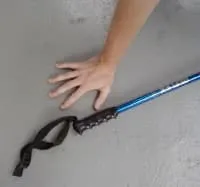
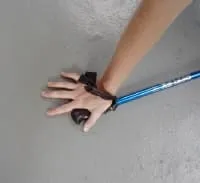
A fall on an outstretched hand with a ski pole in the palm of your hand creates the force necessary to stress the thumb and stretch or tear the ligament. A simple fall on an outstretched hand with an empty palm usually does not create this same force. However, your thumb can also be injured if it jams into packed snow at high velocity.
Another less common cause of this injury is an automobile crash when the driver has the thumb alone draped over the steering wheel. Any injury in which the thumb is abnormally bent backward or to the side can cause skier's thumb.
Skier's Thumb Symptoms
These symptoms may occur minutes to hours after the fall that created the injury:
- Pain at the base of the thumb in the web space between thumb and index finger
- Swelling of your thumb
- Inability to grasp or weakness of grasp between your thumb and index finger
- Tenderness to the touch along the index finger side of your thumb
- Blue or black discoloration of the skin over the thumb
- Thumb pain that worsens with movement in any or all directions
- Pain in the wrist (which may be referred pain from your thumb)
When to Seek Medical Care
If you experience any of the symptoms of skier's thumb following an injury, call your doctor as soon as possible. Follow your doctor's instructions about special home care considerations and find out when your thumb can be checked.
If you determine that skier's thumb is possible, considering the way your accident happened, then you should be taken by car to a hospital's emergency department. There is no need to go by ambulance unless that is your only means of transportation or there is another more serious injury associated with the accident.
An alternative to the emergency department would be an office visit to an orthopedic surgeon (bone specialist) or hand surgeon's clinic. If an orthopedic surgeon is available to see you on the day of your injury, it is more efficient to go see the surgeon directly instead of from the emergency department's referral.
Exams and Tests
The physician will first make sure you have no other limb-threatening injuries and then evaluate your thumb in more detail.
The doctor will ask you how the injury happened. Be prepared to answer these questions:
- At what time did your injury take place?
- What was the exact positioning of your hand and thumb during the injury?
- How soon after the injury did the pain and swelling begin?
- Did it feel as if your thumb was stressed beyond its normal range of motion?
The doctor will also ask about your past medical history. Be prepared to answer these questions:
- Have you ever suffered from a similar injury before?
- Have you ever had any type of surgery in your hand or wrist?
- Are you allergic to any pain medications?
- Have you ever fractured any bones in your wrist or hand?
- Are you right-handed or left-handed?
- What is your primary occupation?
The doctor will then perform a physical examination and include the following tests:
- A comparison of the movement of the injured thumb with that of the uninjured thumb looking for looseness of the ligament
- An assessment of how well the major nerves in your hand function
- A check for fractures, including an X-ray of your hand to make sure no bones are broken
- An examination of the rest of your arm for any associated injuries to your wrist, forearm, elbow, and shoulder
Skier's Thumb Treatment Self-Care at Home
If you suspect that you may have a skier's thumb, then home care should address the pain and swelling of your thumb. Take the following steps to reduce your pain and swelling.
- Apply ice to the thumb for 35 minutes at a time, up to 4 times per day. Do not apply ice directly to your skin. Continue to use ice until the pain stops. (You should see your doctor as soon as possible after the injury and then follow a doctor's directions for ice therapy.)
- Avoid movement of the thumb as much as possible. The loose application of an ACE wrap or commercially available wrist brace in the neutral position will help immobilize the thumb. This will help lessen your pain.
- Take acetaminophen for pain relief or ibuprofen for anti-inflammatory action. Avoid both of these over-the-counter drugs if you have stomach problems and cannot tolerate them.
- The most important aspect of home care is to ensure that the injury is fully evaluated by an emergency doctor, orthopedic surgeon, or your primary care physician in the first few days.
Medical Treatment
If the doctor determines that you have a skier's thumb, then referral to an orthopedic or hand surgeon will be the next step. The orthopedic surgeon will determine when your thumb needs to be reexamined. At that time, your options for surgical versus nonsurgical therapy will be discussed.
Typically, partial injuries to the ligament are immobilized for several weeks, while complete rupture of the ligament usually requires surgical repair.
Surgery
If you elect to have surgery, then operative exploration and ligament repair using something called a "suture anchor" will most likely be performed. After the operation, your hand may be placed in a lightweight cast to hold your thumb still while your ligament heals. You will have to remain in this cast for some time based on your orthopedic surgeon's preferences, although some surgeons now advocate early gentle motion.
If you have an associated fracture with your skier's thumb, then it may be treated with a modified cast. Surgical stabilization of the fracture might be needed if a piece of bone has broken off.
Next Steps Follow-up
Your orthopedic surgeon will see you after surgical repair or after a period of immobilization in a cast. Your thumb will be reexamined. The doctor will decide if you need to continue to immobilize your thumb or if you need physical therapy to regain movement in it. The remainder of your rehabilitation and the management of any chronic problems that may arise from your injury will be addressed by your orthopedic or hand surgeon.
Prevention
Skiers should be taught to consciously discard the ski pole during all falls. Falling onto an outstretched hand while skiing without the ski pole in hand should minimize the chance of injury. Skiers should also be encouraged to use poles with finger-groove grips without any restraining devices such as a wrist strap or closed grip.
You can prevent skier's thumb during a car accident by keeping your thumbs on the outside of the steering wheel along with your fingers. This new routine will require a conscious effort because most drivers are taught to grip the steering wheel in a fashion similar to a ski pole.
Outlook
- Acute partial rupture of the ulnar collateral ligament can be treated effectively with 4 weeks of immobilization in a special cast. Healing with full recovery is the rule with partial ruptures.
- With a total rupture, either immobilization or surgical repair can result in partial or full recovery with the potential for long-term complications, including chronic pain and instability of the joint.
Multimedia
Media file 1: Skier's thumb. Fall on outstretched hand after discarding ski pole. Skier's thumb is unlikely with this mechanism of injury.
Media file 2: Skier's thumb. Fall on outstretched hand with ski pole in palm of hand. Skier's thumb is possible with this mechanism of injury.
Synonyms and Keywords
gamekeeper's thumb, gamekeeper thumb, skier's thumb, skier thumb, thumb sprain, sprained thumb, thumb pain, hand injury