
Conception: From Egg to Embryo Slideshow

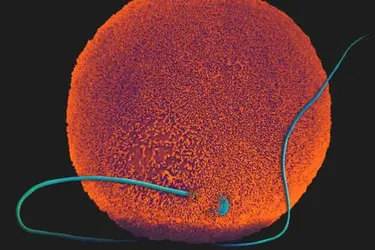
Conception: From Egg to Embryo
Take a journey with us from the moment a single sperm fertilizes an egg. From tiny egg to growing embryo, follow the incredible process of conception.

Ovulation
Ovulation happens each month when a woman's ovaries release a mature egg. It happens about 2 weeks after the first day of their last menstrual period.

Moving Into the Fallopian Tube
After the egg is released from the ovary, it travels into the fallopian tube. It stays there until a single sperm fertilizes it.

The Sperm's Long Journey
A man may ejaculate 40 million to 150 million sperm, which start swimming upstream toward the fallopian tubes on their mission to fertilize an egg. Fast-swimming sperm can reach the egg in a half an hour, while others may take days. The sperm can live up to 48-72 hours. Only a few hundred will even come close to the egg because of the many natural barriers that exist in a woman's body.

Fertilization: Sperm Penetrates Egg

The Cells Start to Divide
The fertilized egg starts growing fast, dividing into many cells. It leaves the fallopian tube and enters the uterus 3 to 4 days after fertilization. In rare cases, the fertilized egg attaches to the fallopian tube. This is called a tubal pregnancy or ectopic pregnancy and is a danger to the mother.

Implantation
After it gets to the uterus, the fertilized egg attaches to the lining of the uterus, called the endometrium. This process is known as implantation. The cells keep dividing.

Pregnancy Hormones
Within about a week of conception, a hormone called human chorionic gonadotropin (hCG) can be found in the mother's blood. It is produced by cells that will become the placenta. The hormone will show up on a blood or urine pregnancy test at the doctor's office. Some home tests can detect pregnancy on the first day of your missed period.

Baby's Development
After the egg attaches to the uterus, some cells become the placenta while others become the embryo. The heart begins beating during week 5. The brain, spinal cord, heart, and other organs are beginning to form. At the eighth week the developing baby, now called a fetus, is well over a half-inch long -- and growing. A "full term" delivery generally happens around 40 weeks.