Health & Cooking
This article is from the WebMD Feature Archive
Garlic: An Immunity-Boosting Superstar
For thousands of years, people all over the world have hailed garlic as an elixir of health. Its cloves are said to help treat the common cold, keep the plague at bay, and even ward off vampires. Despite its notorious odor, this veggie is the bulb of a plant in the sweet-smelling lily family. Ancient writings show that garlic was used as an aphrodisiac in India and as currency in Egypt.
Today, at just 4 calories per clove, it's a low-cal immunity-boosting superstar. One clove contains 5 mg of calcium, 12 mg of potassium, and more than 100 sulfuric compounds -- powerful enough to wipe out bacteria and infection (it was used to prevent gangrene in both world wars). Raw garlic, not cooked or dried, is most beneficial for health, since heat and water inactivate sulfur enzymes, which can diminish garlic's antibiotic effects. In clinical trials, the toxin-fighting staple seems to lower blood pressure and cholesterol and kill parasites in the body.
Summer Barbecue Recipe Makeovers
Memorial Day is so much more than a three-day weekend. Formally, and most importantly, it's a day to remember all the people who gave their lives defending our nation. (Interestingly, Memorial Day was proclaimed in the 1800s, before both world wars were fought.) Informally, though, Memorial Day weekend kicks off summer – and the barbecue season. And that’s where I come in. Nothing says summer like barbecues featuring burgers, mayo-drenched salads, chips and dip, and colorful cakes. But from...
Read the Summer Barbecue Recipe Makeovers article > >
Other Immunity Boosters
Sulfuric compounds are also in brussels sprouts, cabbage, chives, kale, leeks, onions, and shallots.
Recipe
Roasted Garlic and Garlic Oil
Makes 2 2/3 cups garlic oil and 2/3 cup garlic mash
4 large heads garlic
3 cups olive oil
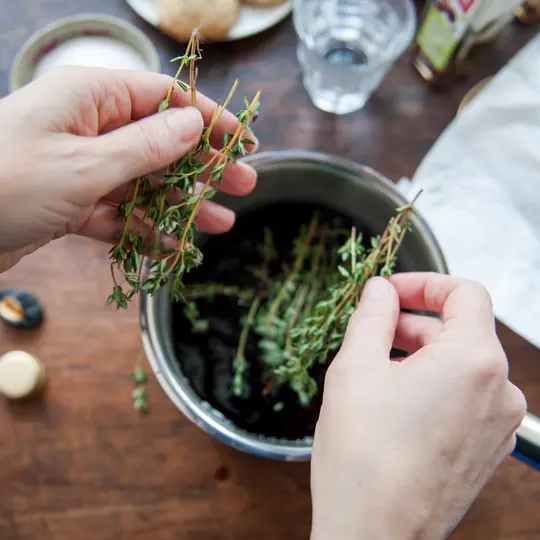
4 sprigs fresh rosemary or thyme
2 teaspoons black peppercorns
- Preheat the oven to 300 degrees.
- Break the garlic heads into quarters with skins intact. Do not peel the cloves.
- Place quarters in a small ovenproof casserole dish. Pour olive oil over garlic to cover. Add herbs and pepper. Cover.
- Bake slowly for about one hour until the cloves are soft.
- Cool. Strain the garlic oil into a bottle and store at room temperature.
- Squeeze the garlic from the skins and mash. Place in an airtight container and refrigerate for up to three weeks.
Use garlic mash in soups, stews, egg dishes, or pizza. Spread on baguette slices for garlic bruschetta, and on grilled chicken or roasted meats. You can substitute garlic oil, which has a subtle hint of garlic plus rosemary or thyme, in any dish that calls for olive oil. You can also use garlic oil to roast tomatoes, drizzle on grilled vegetables, or moisten cooked pasta.
Per serving (1 teaspoon plus 1 teaspoon garlic mash): 45 calories, 0.2 g protein, 1 g carbohydrate, 4.5 g fat, 0.6 g saturated fat, 3.3 g monounsaturated fat, 0.4 g polyunsaturated fat, 0 mg cholesterol, 0 g fiber, 0.5 mg sodium. Calories from fat: 90%.
Originally published in the September/October 2007 issue of WebMD the Magazine.
Today in Health & Cooking
WebMD Recipe Finder
Browse our collection of healthy, delicious recipes, from WebMD and Eating Well magazine.