Genital herpes is a disease caused by the herpes simplex virus (HSV), of which there are two types. Type 1 (HSV-1) usually causes oral herpes, an infection of the lips and mouth. Symptoms are commonly known as cold sores or fever blisters. In the past, HSV-1 was not known to cause genital herpes, but that is changing, especially among people who begin having sex at a young age. Still, in most cases, genital herpes is caused by the second type of herpes virus (HSV-2).
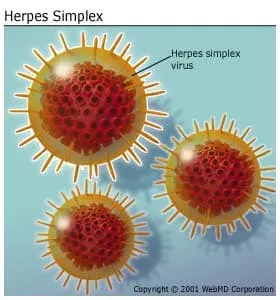
HSV-2 lives in the nerves. When it's active, it travels to the surface of the infected area (skin or mucous membrane) and makes copies of itself. This is called "shedding" because these new viruses can, at this time, rub off on another person. Then the virus travels back down the nerve to a ganglion (mass of nerve tissue), usually at the base of the spine, where it lies dormant for a while.
Who Gets Genital Herpes?
About one-fifth of all people ages 12 and up in the U.S. are infected with the HSV-2 virus that causes genital herpes, but as many as 90% don't know it. (By comparison, experts estimate 50% to 80% of adults have oral herpes.)
More women than men are infected -- one in four women compared with one in five men. One reason may be that the virus can infect a woman's genitals more easily than it can a man's. Genital herpes becomes more common as people age. The more sex partners people have, the more common it is, too.
How Is Herpes (Oral or Genital) Spread?
HSV-1 is usually passed from person to person by kissing. HSV-1 can also spread from the mouth to the genitals during oral sex (fellatio, cunnilingus, analingus). If this happens, it becomes a case of genital herpes.
HSV-2 is most often passed by vaginal sex and anal sex. But just as HSV-1 can infect the genitals and cause genital herpes, HSV-2 can pass from one person's genitals to another person's mouth, resulting in oral herpes.
HSV-2 cannot survive long on a non-living surface, so there is no real risk of getting it from a toilet seat or hot tub, for example.
How Can Genital Herpes Be Prevented?
If you are sexually active:
- Use a latex condom the correct way every time you have sex. Keep in mind, though, that the condom may not fully cover herpes sores, and the virus may be contagious in areas of the skin that don't have visible herpes sores.
If you are in a relationship with a person who has genital herpes, you can lower your risk of getting genital the disease if:
- Your partner takes anti-viral medication daily
- You avoid having vaginal, oral, or anal sex when your partner is having a herpes outbreak
Herpes can be spread to the genitals by a person who has cold sores on their mouth.