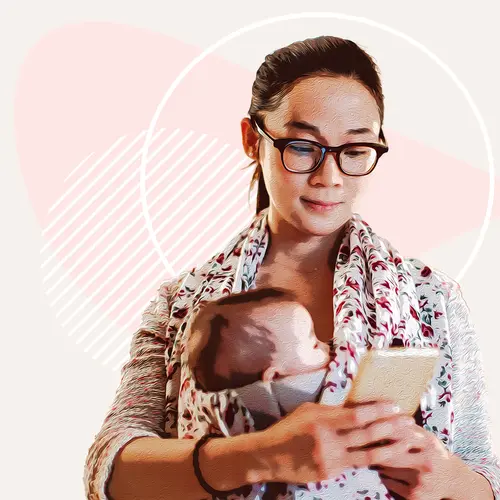

In the U.S, about three of every 100 pregnant women give birth to twins or triplets. And by many accounts, twin pregnancies are on the rise. Still, even experienced moms may not know what to expect when they bring home newborn twins.
While it is true that twins can bring double the joy, parenting twins can also require double the work -- at least initially.
"This is survival mode," says Jennifer Walker, Atlanta-based pediatric nurse and co-author of The Moms on Call Guide to Basic Baby Care. Walker is also a mother of twins.
The key to not feeling you're over your head with twins is planning ahead. Here's what the experts say.
1. No schedule means no life for you.
"It's hard enough with a single baby, but when you have newborn twins, things have to be on a schedule," Walker says. "You want to get the babies on the same feeding and napping schedules. They will eventually learn to adapt."
2. You can breastfeed both babies at the same time -- really!
"If you breastfeed, you can feed both babies at the same time with one twin on each breast. But it takes great coordination and patience," Walker says. "I personally did not like the way it felt."
She recalls that breastfeeding her newborn twins felt like she was balancing two bobbing heads. The solution? "I breast-fed one and bottle-fed the other," she says. "I would sit down on the floor, breastfeeding one infant while the other lay on a pillow in front of me or on my side with a bottle. The whole feeding experience would take me 45 minutes total."
3. One crib is fine in the beginning.
"Newborn twins can certainly remain in the same crib initially," Walker says. "If they sleep better when they know the other is close by, crib-sharing can last up until they move into their childhood beds."
Many parents may make the switch to two cribs when the twins begin to roll, bump into one another, and wake each other up, she says.
While one crib is fine, two car seats and a double-stroller are absolute musts for newborn twins.
4. Newborn twins may be more likely to have respiratory problems.
Newborn twins are more likely to be born early and underweight. "Preemies often have more respiratory issues because their lungs may not be as developed as babies born at term," pediatrician Alan Rosenbloom says. This doesn't mean that both premature newborn twins will have respiratory issues. "If you have two premature twins born at 32 weeks and one needs a breathing tube, this twin may be more likely to have respiratory issues down the road than a twin who had slightly more mature lungs and only needed some oxygen via a nasal cannula."
5. Newborn twins share everything -- including germs.
"Twins are like all siblings in that they certainly get each other's illnesses," Rosenbloom says. If one twin has a contagious infection, the sibling has the same risk of getting it as he or she would if someone else in the house had that infection, he says. Parents of newborn twins may consider separating the two if one comes down with a contagious illness right after birth. "Mobility is less of an issue early on, so if one twin has chickenpox, you can separate them and let the healthy twin stay somewhere else to minimize the risk," he says. "You can’t reduce the risk to zero, but you can control it better."
6. Twins may be similar, but they are also different.
Encourage the differences between twins and never compare them to one another, says mom of twins and developmental pediatrician Randye Huron. She’s the chief of developmental pediatrics and the director of the Institute for Child Development at the Joseph M. Sanzari Children's Hospital at Hackensack University Medical Center in New Jersey. "Most children do have their own strengths and weaknesses, and twins are no exception," Huron says. "My daughter loves ballet and art, and my son likes sports. I encourage the differences to minimize competition and comparisons," she says. "Never say, 'Your sister is behaving, so why aren't you?'"
Separating the twins eventually is also helpful. "It is in their best interest to be separated and to get their own group of friends," she says. Separate time with parents and separate play dates encourage independent decision-making.
7. Parenting twins gets easier and easier.
University of Texas maternal-fetal medicine director and mother of twins Manju Monga says, "Young twins are easier to raise, have each other to play with, and sleep better than singletons once they turn 2."