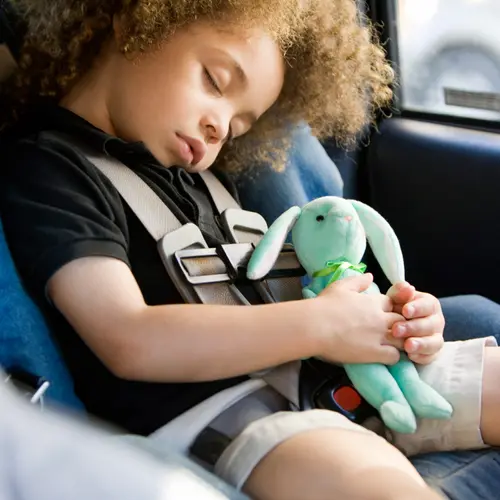

Much to her nanny's surprise and chagrin, Betsy Davidson, now slightly more than 2 years old, was fully potty trained by her first birthday.
And Betsy is not the only toddler who is giving up her diapers for a turn on the toilet. A growing group of parents are fast-tracking the toilet training process and teaching their children to use the potty before they can walk, talk or even turn 2.
"I started potty training Betsy at eight months because she had very regular bowel movements. I would feed her, put her down and take a shower and when I got out of the shower, she would have a poop in her diaper," Betsy's mom, Emily Jean Davidson, MD, MPH, an attending physician at Children's Hospital Boston, tells WebMD. When Davidson began to sense that early toilet training was possible for her daughter, she did research and contacted a nonprofit group called Diaper-Free Baby, which comprises 77 local groups in 35 states that promote and teach the elimination communication method to interested parents such as Davidson.
"My nanny thought we were crazy for trying this," she says. "But after a few months when Betsy was around 1 year old, the nanny said, 'she was crying and turning red and scooting, so I put her on the potty, she pooped and then she was happy.'"
Davidson explained to her nanny that Betsy was really signaling that she had to go. It is this signal/response process that is the key to early potty training. Moms like Davidson merely respond differently to cues and take their baby to the toilet -- instead of the changing table.
For the Davidson's, the method worked. "We had a very positive experience," she says. "Once we started, there were maybe 10 to 20 times that we had to change a poop diaper. She became pretty consistently dry by around 16 months."
Recognizing the Cues
Known as elimination communication, such early potty training relies on a parent's ability to read and recognize the signs that their infant needs to eliminate -- much as they would if their child was tired or hungry. Signs of impending bowel movement or urination can include facial expression, grunting, and bearing down. Advocates suggest that such early toilet training enhances interaction and communication between parents and babies, prevents diaper rash, avoids the struggles associated with diaper changing, saves money on diapers, and is better for the environment -- as 22 billion disposable diapers end up clogging landfills in the U.S. each year. Detractors, however, have their own reservations about this practice -- namely that an infant's muscles are simply not developed enough for toilet training before they turn 2.
But "in terms of communication, elimination communication is better because the child learns to understand what's going on with their body and realizes if they let you know, you can do something about it," Davidson says. "There's also less diaper rash because they are not sitting in their poop."
Davidson likens elimination communication to how parents teach children to eat. "How do we know when a child needs to feed? We just have a sense and we feed them," she says.
"There's a nice logic to the elimination communication method," agrees Leslie Rubin, MD, a pediatrician at the Morehouse School of Medicine and Emory University School of Medicine, both in Atlanta. "If you become aware and sensitive to what the little ones are doing, you can respond accordingly. It may not be absolute because just like with feeding, sometimes you can't feed an infant when it's time to feed because for whatever reason, you might be distracted."
When to Potty Train
According to the American Academy of Pediatrics, there is no right age to toilet train a child. Readiness to begin toilet training depends on the individual child, the group states. But starting before age 2 (24 months) is not recommended as the readiness skills and physical development your child needs occur between age 18 months and 2.5 years. While the practice may sound like relative heresy in the U.S., it's embraced in at least 75 countries including India, Kenya, and Greenland.
This type of elimination communication "takes place in cultures where there is a greater degree of intimacy between parents and infants," Rubin says. "If indeed what they are talking about is learning to read babies' signals, that's wonderful because there is no question the baby will have signals when it needs to [go to the bathroom]."
Not so Fast...
"Obviously it would be great to have kids learn to use the toilet by age 1," points out Andrea C.S. McCoy, MD, the medical director at Temple Pediatric Care in Philadelphia. "Unfortunately, their muscles and nerves are not mature enough to really be able to consistently hold urine and stool, relax to allow spontaneous voiding and stooling, and recognize the need to 'go.'"
McCoy says that her greatest concern is the unrealistic expectations that the parent may have as well as the potential for struggles around an issue that ultimately only the child can control. "In older children, we see voluntary withholding that leads to constipation, inappropriate soiling, and voiding dysfunction if they are pressured into toilet learning before they are ready," she tells WebMD. "The same difficulties are potential problems for the child under 1."
A recent study in Pediatrics showed that the average age for completing toileting in girls is about 32 months and in boys is about 35 months. "I think there are subsets within the population that successfully accomplish toileting at earlier ages (18-24 months), but the trend really continues to be between 2 and 3 years of age," she says. "A generation ago I believe there was the same push to early training, but as with many things, the pendulum swings."
While "it is fine to expose the child to toileting and establish a routine, be neutral with regard to expectation," she advises. "In other words, no pressure to perform, no stress around it, and it's OK to give up and try again when the child is older."
Even Davidson agrees with this. "I think it's an approach that is not right for every family," she says. "I don't think it's good to do it in a goal-oriented way and expect by X date that your child will be fully potty trained. But I think for a family who wants to learn a child's cues and help a child learn to respond to cues, it's neat and really amazing to see a young infant let you know they have to use the bathroom."
What Would Freud Say?
Father of psychoanalysis, Sigmund Freud, may very well turn over in his grave if he heard of diaper-free babies. According to Freud, a child can have problems later in life if the toilet training doesn't go well, or is too strict. For example, an adult might strive for perfection or excessive cleanliness because they were too harshly toilet trained.
"The clear issue is before the kid turns 1 [going to the bathroom] is a purely reflex action," explains New York City psychoanalyst Leon Hoffman, MD, director of the Pacella Parent Child Center. Sure, "the child will be cleaner, but he or she doesn't have mastery or control that they would after they turn 2. After age 2, their whole muscular system is developed."
"When toilet training occurs later on when a child is older and able to have control over their musculature, he or she can own the activity," he says. "The diaper-free method is not teaching them autonomy and that they can do things on their own."