WebMD: Better Information. Better Health.
  • Bookmark This Page
  • Site Map
  • Sign up for WebMD Newsletters

Sleep Disorders Health Center

Select a topic to explore more.
Select An Article
Font Size
A
A
A

Sleep 101

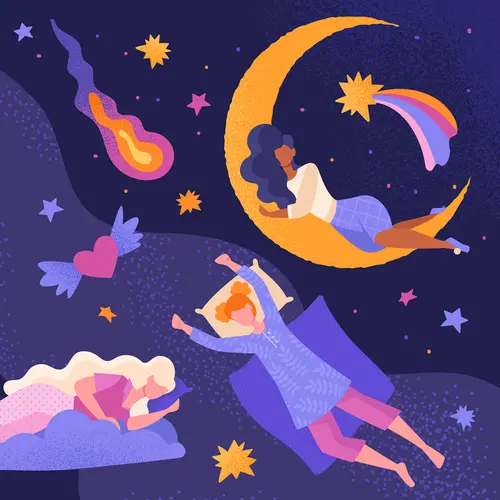
When you sleep, your body rests and restores its energy levels. However, sleep is an active state that affects both your physical and mental well-being. A good night's sleep is often the best way to help you cope with stress, solve problems, or recover from illness.

What Happens During Sleep?

Sleep is prompted by natural cycles of activity in the brain and consists of two basic states: rapid eye movement (REM) sleep and non-rapid eye movement (NREM) sleep, which consists of Stages 1 through 4.

During sleep, the body cycles between non-REM and REM sleep. Typically, people begin the sleep cycle with a period of non-REM sleep followed by a very short period of REM sleep. Dreams generally occur in the REM stage of sleep.

What Is Non-REM Sleep?

The period of NREM sleep is made up of stages 1-4. Each stage can last from 5 to 15 minutes. A completed cycle of sleep consists of a progression from stages 1-4 before REM sleep is attained, then the cycle starts over again.

  • Stage 1: Polysomnography (sleep readings) shows a reduction in activity between wakefulness and stage 1 sleep. The eyes are closed during Stage 1 sleep. One can be awakened without difficulty, however, if aroused from this stage of sleep, a person may feel as if he or she has not slept. Stage 1 may last for five to 10 minutes. Many may notice the feeling of falling during this stage of sleep, which may cause a sudden muscle contraction (called hypnic myoclonia).
  • Stage 2: This is a period of light sleep during which polysomnographic readings show intermittent peaks and valleys, or positive and negative waves. These waves indicate spontaneous periods of muscle tone mixed with periods of muscle relaxation. The heart rate slows and the body temperature decreases. At this point, the body prepares to enter deep sleep.
  • Stages 3 and 4: These are deep sleep stages, with stage 4 being more intense than Stage 3. These stages are known as slow-wave, or delta, sleep. If aroused from sleep during these stages, a person may feel disoriented for a few minutes.

During the deep stages of NREM sleep, the body repairs and regenerates tissues, builds bone and muscle, and appears to strengthen the immune system. As you get older, you sleep more lightly and get less deep sleep. Aging is also associated with shorter time spans of sleep, although studies show the amount of sleep needed doesn't appear to diminish with age.

WebMD Medical Reference provided in collaboration with the Cleveland Clinic

Next Article:

TOPAMAX is approved for migraine prevention in adults only.
TOPAMAX is not used to stop a migraine after it starts.

IMPORTANT SAFETY INFORMATION

Serious risks associated with TOPAMAX include lowered bicarbonate levels in the blood resulting in an increase in the acidity of the blood (metabolic acidosis). Symptoms could include hyperventilation (rapid, deep breathing), tiredness, loss of appetite, irregular heartbeat or changes in the level of alertness. Call your doctor immediately if you get these symptoms. Your doctor may want to do simple blood tests. Chronic, untreated metabolic acidosis may increase the risk for kidney stones or bone disease.

Other serious risks include decreased sweating, increased body temperature, kidney stones, sleepiness, dizziness, confusion, difficulty concentrating, and increased eye pressure (glaucoma). Call your doctor immediately if you have any decrease in vision or eye pain. These problems can lead to blindness if not treated right away.

More common side effects are tingling in arms and legs, loss of appetite, tiredness, nausea, diarrhea, taste change and weight loss.

Tell your doctor about other medications you take. Please see full U.S. Prescribing Information.

© 2004-2008 Ortho-McNeil Neurologics, Inc. All rights reserved.

WebMD does not endorse any specific product, service, or treatment.

Most Popular Stories