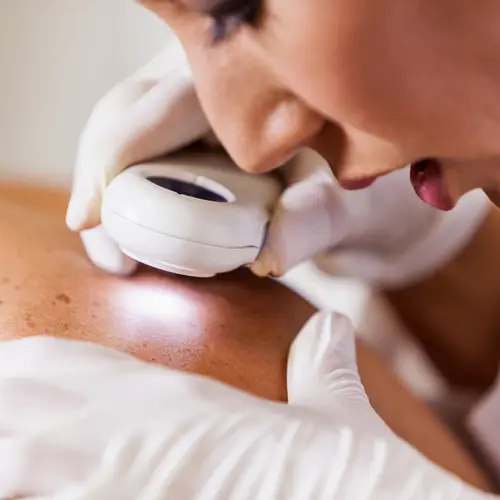
A skin biopsy is a procedure in which a doctor cuts and removes a small sample of skin to have it tested. This sample may help your doctor diagnose diseases such as skin cancer, infection, or other skin disorders.
There are several types of skin biopsy, including:
- Shave biopsy: The doctor shaves a thin layer from the top or around a lesion.
- Punch biopsy: The doctor uses an instrument called a punch to remove a circular section through all layers of the lesion.
- Excisional biopsy: The doctor uses a scalpel to take off the entire lesion. This method is used for smaller lesions.
- Incisional biopsy: The doctor uses a scalpel to remove a small sample of a large lesion.
How Is a Skin Biopsy Done?
The doctor will first cleanse the biopsy site, and then numb the skin by using an anesthetic (pain-relieving) injection. The skin is then sampled using one of the above procedures. Shave biopsies do not usually need stitches, while punch, excisional, and incisional biopsies will usually be closed with sutures or steri-strips. The procedure is usually done in the doctor's office.
What to Expect After a Skin Biopsy
After the skin biopsy is done you may have some soreness on or near the biopsied site for a few days. Tylenol is usually sufficient to relieve any discomfort. If you had stitches after the procedure, keep the area clean and moist. Your doctor will tell you when the stitches should be removed (usually within one week). If adhesive steri-strips (which look like small pieces of tape) were used to close the incision, keep the area dry and do not remove them. They will gradually fall off on their own. If the strips do not fall off on their own, your health care provider will remove them at your follow-up appointment.
You should expect a small scar from the biopsy.
What Is Done With a Skin Biopsy Sample?
The tissue is processed, and a pathologist examines the skin biopsy sample under a microscope to determine if there is any disease. The results usually come back within one to two weeks.
When Should I Call the Doctor After a Skin Biopsy?
Call your doctor if you have bleeding that can't be stopped by applying pressure or any signs of infection such as redness, warmth, tenderness, pus, or red streaks. Also call if you have any questions or concerns after a skin biopsy.