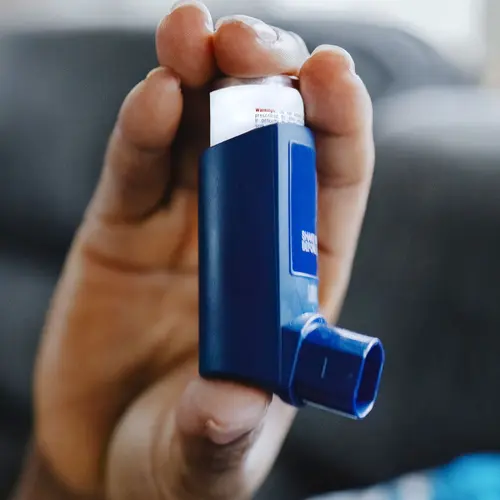
What is Status Asthmaticus?
Status asthmaticus is respiratory failure that comes with the worst form of acute severe asthma, or an asthma attack. If an attack comes on quickly and it doesn’t respond to regular treatment, it can lead to status asthmaticus, If it happens, you may have to go to the hospital to get it treated. If you have a bad asthma attack and your rescue inhaler or your nebulizer doesn't help, you need medical care right away.
If you have a steroid medicine at home (such as prednisone), you can take a dose of it on your way to the emergency room.
Many people have asthma. And there are many treatments to manage it. It’s important to follow the asthma action plan that you made with your doctor, avoid your triggers, take your medicine, and keep up with your doctor appointments.
Still, asthma attacks can happen, and some severe ones are an emergency.
With any asthma attack, never wait to see if it goes away on its own. It could worsen so much that you need to go to a hospital.
You may hear a severe asthma attack called a “severe asthma exacerbation.” In its most severe form, you may hear it called status asthmaticus.
Symptoms
A severe asthma attack can cause symptoms such as:
Will My Wheezing or Coughing Be Worse?
Not necessarily. You might be surprised to learn that you may not have more of these than usual during a severe asthma attack. So don’t judge how bad your asthma attack is based on how much you wheeze or cough.
In fact, very severe asthma attacks may affect your airways so much that you don’t get enough air in and out of your lungs to make a wheezing sound or cough.
Causes
Doctors don’t know why some people get severe asthma attacks. It may be more likely if:
- You don’t often see your doctor, so your asthma isn’t under good control.
- You come in contact with your asthma triggers or things you’re allergic to.
- You don’t use your peak flow meter and asthma medicines as directed by your doctor in your asthma action plan.
Diagnosis
Your doctor will ask about your symptoms and how well you’re breathing. They'll want to know if you have any fatigue or if you wheeze when you breathe in and out. They’ll check your pulse rate. You may also get tests such as a peak expiratory flow and an oxygen saturation, among others.
Treatment
With any asthma attack, you must start treatment right away, at the first sign of symptoms, either at home or in your doctor's office.
If your symptoms are severe and don’t go away after you follow your asthma action plan and use your medications as directed by your doctor, then call 911 and get emergency medical help. At the hospital, your treatment may include continuous use of an asthma nebulizer, and also epinephrine and corticosteroids to stop the attack.
The doctor at the hospital may also give you terbutaline shots and magnesium sulfate to help the muscles around your airways relax.
If medicines don’t help, you may need a mechanical ventilator in an intensive care unit to help you breathe. Your doctor will put a face mask on you, or put a breathing tube into your nose or mouth, to do this. Your doctor will remove them once the attack ends and your lungs have recovered enough to breathe without the machine’s help.
Prevention
You may not be able to prevent all severe asthma attacks. But you can take steps to make them less likely:
- Take your asthma medication as often as your doctor recommends.
- Use a peak flow meter several times a day. These devices help to check on how well your lungs are working. Start treatment immediately, according to your asthma action plan, if you notice a lower reading, even if you feel fine.
- Keep up with your doctor appointments to find out how well your lungs are doing and to make sure your medicines are working well.
Complications
There are a few, and they depend on the stage of treatment or other conditions:
- Respiratory failure or arrest: Your airways dilate and fill with mucus so you can’t breathe.
- Cardiac arrest: A lack of oxygen can throw your heart rhythm off.
- Hypoxemia: When you don’t have enough oxygen in your blood for too long, it can cause brain damage or death.
- Respiratory alkalosis: If you hyperventilate early, you may have low levels of carbon dioxide in your blood.
- Hypercarbia: As the disease progresses, your lungs can’t remove carbon dioxide as well, so you have too much. This is especially likely if you wind up on a ventilator.
- Pneumothorax: Your lung collapses, and air leaks into the space between your lung and chest wall.
- Pneumomediastinum: Air leaks from the lungs and into the chest cavity.
- Toxicity from medications: Theophylline, a medication that helps open your airways, can have negative effects on your system.
Prognosis
Unless you have a complicating illness like congestive heart failure or chronic obstructive pulmonary disease, you should do well as long as you get treatment on time.