What Are the Treatments for Spinal Stenosis?
Spinal stenosis is a narrowing of the canal in your spinal column that affects mostly people age 50 and older. Nothing can cure it, but there are things you can do on your own, under your doctor's guidance, to enjoy an active life.
Some of the best ways to treat the complications and pain of spinal stenosis are also the simplest.
Most doctors will suggest you start with exercise and over-the-counter medications before thinking about something more involved such as surgery.
Physical Therapy for Spinal Stenosis
A physical therapy program can go a long way toward easing your symptoms and can also help with:
- Flexibility
- Balance
- Endurance
One study found that a formal physical therapy program was just as good as surgery to improve everyday function. In that study, people did bends, pelvic tilts, standing squats, and other exercises.
Spinal stenosis exercises
Exercise, along with good eating habits, can help you slim down if you’re overweight. This will ease the strain on your spine. Even if you do decide to have surgery, exercising afterward can boost your recovery. But you’ll need to start slowly. Talk with your doctor or physical therapist about exercises that can help you:
- Gain flexibility: Stretching exercises can help with pain and make it easier to hold and move your neck and spine in healthier ways.
- Strengthen your muscles: A series of exercises called stabilization training can help build up the muscles that support your neck and give them better balance. Like stretching, these are simple exercises you can do at home without any special equipment.
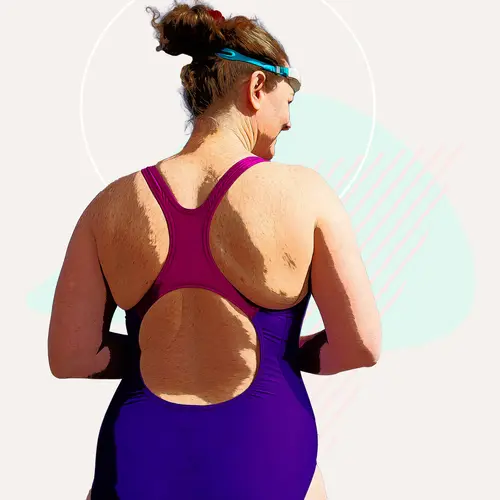
- Boost your fitness: Aerobic exercises, ones that get your heart and breathing rates up, release chemicals called endorphins that can ease pain. Examples of aerobic exercise include bicycling or swimming.
There's no one right way to exercise with this condition -- and you don’t want to overdo it. Ask your doctor or a physical therapist for ideas.
Sometimes, you can wear corsets or braces around your stomach to make it easier to exercise. If you wear them too much, though, they can backfire and cause your muscles to get weaker. Ask your doctor about it.
Spinal Stenosis Medications
Spinal stenosis is commonly treated with medication, both over-the-counter and prescription.
- Nonsteroidal anti-inflammatory drugs (NSAIDs) reduce pain and inflammation. Examples of over-the-counter NSAIDs include aspirin, naproxen (Aleve), and ibuprofen (Advil, Motrin).
- Analgesics help relieve pain but don’t affect inflammation. Acetaminophen (Tylenol) is a common analgesic used for spinal stenosis.
- Antidepressants. Some types of these can help with chronic pain. Amitriptyline is the most common.
- Anti-seizure drugs. Your doctor may prescribe these to help with pain caused by damaged nerves.
If none of these help, your doctor may prescribe something stronger such as an opiate. These drugs can give your short periods of pain relief, but they can be dangerous over a long time, because they can be addicting and cause other health effects.
Side effects of spinal stenosis medications
All medications, even over-the-counter medicines, can have side effects. Too many NSAIDs can cause ulcers and other stomach problems and, especially among older people, may increase the chance of heart attacks and strokes. They might also interact with other medicines.
Antidepressants can make you sleepy, so it’s best to take them at bedtime. Other possible side effects include blurred vision, constipation, dry mouth, lightheadedness, problems peeing, weight gain or loss, sweating, and trouble performing sexually.
Anti-seizure drugs also can have side effects, like drowsiness, dizziness or confusion, swelling in your feet and legs, or kidney issues. But those aren’t likely to happen with smaller doses. In some cases these medicines can make people have occasional suicidal thoughts. If that happens, call your doctor right away.
Always check with your doctor before taking any medications, even those that don't need a prescription.
Injections for Spinal Stenosis
Certain injections have the same effect as many medications. Doctors use two basic types for spinal stenosis:
- Corticosteroids can be injected straight into the area around the spinal cord. This is called an epidural injection. Like NSAIDs, steroids work on inflammation and pain. An anesthesiologist or other specialist gives the injection.
- Nerve blocks are anesthetics injected near the damaged nerves. Everybody responds differently to these injections. You may get relief for a long time, for a short period, or not at all.
Decompression Procedure for Spinal Stenosis
This procedure, called percutaneous image-guided lumbar decompression (PILD), removes part of a ligament that’s gotten thicker. This keeps the ligament from affecting the nerve root and frees up space in the spinal canal.
You don’t have to be asleep for PILD, so it may be an option for people who can’t have surgery because of other medical issues.
Alternative Treatments for Spinal Stenosis
The two most common alternative therapies are acupuncture and chiropractic treatment.
Acupuncture: This is a traditional Chinese practice in which someone inserts tiny, flexible needles into you or puts pressure on specific parts of your body to ease pain.
Chiropractic care: Chiropractors try to adjust your spine to reduce pain and improve movement. Some also use traction, which involves pulling bones further apart to make more room for the nerves. Although there isn't a lot of scientific evidence for this, some people say that traction helps them.
You may also benefit from yoga, tai chi (an ancient Chinese exercise routine), or massage.
Surgery for Spinal Stenosis
If these treatments don't work, your doctor may suggest surgery, especially if:
In fact, your doctor may recommend surgery first if you have severe symptoms. Like other treatments, surgery is not a cure, but it can help with pain and function.
Your doctor may talk to you about these types:
- Laminectomy. This is the most common one. A doctor takes out the bone, spurs, and ligaments that are putting pressure on the nerves.
- Laminotomy. Your doctor makes a small hole in the back part of the affected vertebra, called the lamina. The hole should be just big enough to relieve some pressure in the area.
- Laminoplasty. This procedure creates space in the spinal canal in your neck. A metal hinge is put on the lamina to bridge the gap of the opened-up area.
- Discectomy. With this procedure, the injured part of a bulging, or herniated, disc is taken out to ease pressure on your nerves or spinal cord. It can be done through a cut in your spine or neck that lets your doctor get to it directly or with smaller cuts and tiny instruments.
- Spinal fusion. Doctors sometimes do this along with a laminectomy. It involves joining vertebrae together to reduce movement within the spine.
- Foraminotomy. A doctor expands the portion of the vertebrae where the nerve roots branch out to the rest of the body.
- Minimally invasive surgery. This takes out parts of the lamina or a disc in a way that doesn’t damage healthy tissue or raise your chances of needing spinal fusions.
Recovery can be a few days or up to 3 months. Surgery helps many people but there are also risks, such as blood clots.