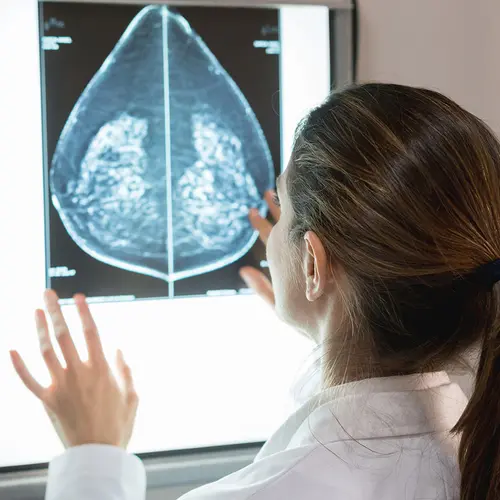
Breast cancer is the second most common cancer in women in the U.S, second only to skin cancer. Improved screening tests and treatment techniques are saving lives.
The most common screening method is the mammogram. It uses X-rays to scan your breasts. The images are checked for anything irregular, and doctors also look for changes from previous tests.
The images were recorded on film for many years. But now digital mammograms can store and analyze the information using a computer.
How Do They Work?
The method of getting mammogram images is the same for both types. A technician positions your breast between two plates and flattens and compresses it. They then take images of your breasts from top to bottom and side to side. It can be uncomfortable, but the entire process takes about 20 minutes.
Film mammograms are saved on hard files. With the digital kind, the X-rays are turned into electric signals that can be stored in a computer. It’s similar to the way digital cameras take and store pictures.
How Well Do They Work?
The two different types are well-matched in accuracy, research suggests.
A study published in the New England Journal of Medicine looked at 49,000 women with no known signs of breast cancer, and it compared digital mammograms to film mammograms. The women were screened using both types of tests. Breast cancer was found in 335 of the women. The researchers determined that digital mammograms did a better job with detection for three groups of women:
- Under age 50
- Had dense breasts
- Hadn't yet gone through menopause, or had been in menopause less than a year
If you fall into one of these groups, talk with your doctor about having a digital mammogram.
What Are the Potential Benefits of Digital?
- More analysis. Because digital mammograms are stored electronically, they can be analyzed by computers as well as by radiologists.
- Easier second opinions. They can easily be sent electronically for analysis.
- More to see. The images can be manipulated for better clarity and visibility. Conventional (film) mammograms can’t.
- Lower average radiation dosage. Digital mammograms often take more views of each breast than the film kind -- but they use about 25% less radiation. That’s because smaller areas of the breast are imaged in each view.
- Easier to store. The digital images stay on a computer. The film type produces bulky sets of films.
Most mammogram facilities in the U.S. now have digital capabilities. But If you can't get the digital kind, that doesn’t mean you should skip getting a film mammogram.
Also, 3-D mammography is available at some centers.
If you're at high risk of getting breast cancer, you might also benefit from an annual MRI in addition to a yearly mammogram.