
Looking for a natural or alternative treatment for your cold or flu symptoms? Here are tips that may help relieve your symptoms.
1. Know When Not to Treat Symptoms
Believe it or not, those annoying symptoms you're feeling are part of the natural healing process—evidence that the immune system is battling illness. For instance, a fever is your body's way of trying to kill viruses by creating a hotter-than-normal environment. Also, a fever's hot environment makes germ-killing proteins in your blood circulate more quickly and effectively. So if you endure a moderate fever for a day or two, you may actually get well faster.
Coughing is another productive symptom; it clears your breathing passages of thick mucus that can carry germs to your lungs and the rest of your body.
Even that stuffy nose is best treated mildly or not at all. A decongestant, such as pseudoephedrine, restricts flow to the blood vessels in your nose and throat. But often you want the increased blood flow because it warms the infected area and helps secretions carry germs out of your body.
2. Blow Your Nose Often (and the Right Way)
It's important to blow your nose regularly when you have a cold rather than sniffling mucus back into your head. But when you blow hard, pressure can carry germ-carrying phlegm back into your ear passages, causing earache. The best way to blow your nose: press a finger over one nostril while you blow gently to clear the other.
3. Treat That Stuffy Nose With Warm Salt Water
Salt-water rinsing helps break up nasal congestion while also removing virus particles and bacteria from your nose. Here's a popular recipe:
Mix 1/4 teaspoon salt and 1/4 teaspoon baking soda in 8 ounces of distilled, sterile, or previously boiled water. Use a bulb syringe or nasal irrigation kit to squirt water into the nose. Hold one nostril closed by applying light finger pressure while squirting the salt mixture into the other nostril. Let it drain. Repeat two to three times, then treat the other nostril.
4. Stay Warm and Rested
Staying warm and resting when you first come down with a cold or the flu helps your body direct its energy toward the immune battle. This battle taxes the body, so give it a little help by resting.
5. Gargle
Gargling can moisten a sore throat and bring temporary relief. Gargle with half a teaspoon of salt dissolved in 8 ounces of warm water, four times daily.
To reduce the tickle in your throat, try an astringent gargle, such as tea that contains tannin, to tighten the membranes. Or use a thick, viscous gargle made with honey or honey mixed with apple cider vinegar. Steep one tablespoon of raspberry leaves or lemon juice in two cups of hot water; mix with one teaspoon of honey. Let the mixture cool to room temperature before gargling.
6. Drink Hot Liquids
You need to drink lots of liquids when you're sick with a cold or the flu to keep you from getting dehydrated and to help loosen mucus. Hot liquids such as tea or the old standby, chicken soup, are particularly good for relieving nasal congestion and soothing the uncomfortably inflamed membranes that line your nose and throat.
7. Take a Steamy Shower
The warmth and humidity from a steamy shower can moisturize your nasal passages and may help you relax. If you're dizzy from the flu, run a steamy shower while you sit on a chair nearby and take a sponge bath. A cool mist vaporizer near your bed or the couch has a similar effect.
8. Use a Salve Under Your Nose
A small dab of mentholated salve under your nose can help open breathing passages and soothe the irritated skin at the base of the nose. Menthol, eucalyptus, and camphor all have mild numbing ingredients that may help relieve the pain of a nose rubbed raw. However, only put it on the outside or under your nose, not inside your nose.
9. Apply Hot or Cold Packs Around Your Congested Sinuses
Either temperature works. You can buy reusable hot or cold packs at a drugstore or make your own. You can apply heat by taking a damp washcloth and heating it for 55 seconds in a microwave (test the temperature first to make sure it's not too hot.) A small bag of frozen peas works well as a cold pack.
10. Sleep With an Extra Pillow Under Your Head
Elevating your head will help relieve congested nasal passages. If the angle is too awkward, try placing the pillows between the mattress and the box springs to create a more gradual slope.
11. Don't Fly Unless Necessary
There's no point adding stress to your already stressed-out upper respiratory system, and that's what the change in air pressure will do. Flying with cold or flu congestion can temporarily damage your eardrums as a result of pressure changes during takeoff and landing. If you must fly, use a decongestant and carry a nasal spray with you to use just before takeoff and landing. Chewing gum and swallowing frequently can also help relieve pressure.
12. Eat Infection-Fighting Foods
Here are some good foods to eat when you're battling a cold or flu:
- Bananas and rice to soothe an upset stomach and curb diarrhea
- Vitamin C-containing foods, such as bell peppers
- Blueberries curb diarrhea and are high in natural aspirin, which may lower fevers and help with aches and pains
- Carrots, which contain beta-carotene
- Chili peppers may open sinuses and help break up mucus in the lungs
- Cranberries may help prevent bacteria from sticking to cells lining the bladder and urinary tract
- Mustard or horseradish may help break up mucus in air passages
- Onions contain phytochemicals that may help the body clear bronchitis and other infections
- Black and green tea have catechin, a phytochemical that may have natural antibiotic and antidiarrheal effects
13. Herbs and Supplements
More and more people are turning to these products for relief from their cold and flu symptoms. But the scientific evidence is mixed. Here's what we know.
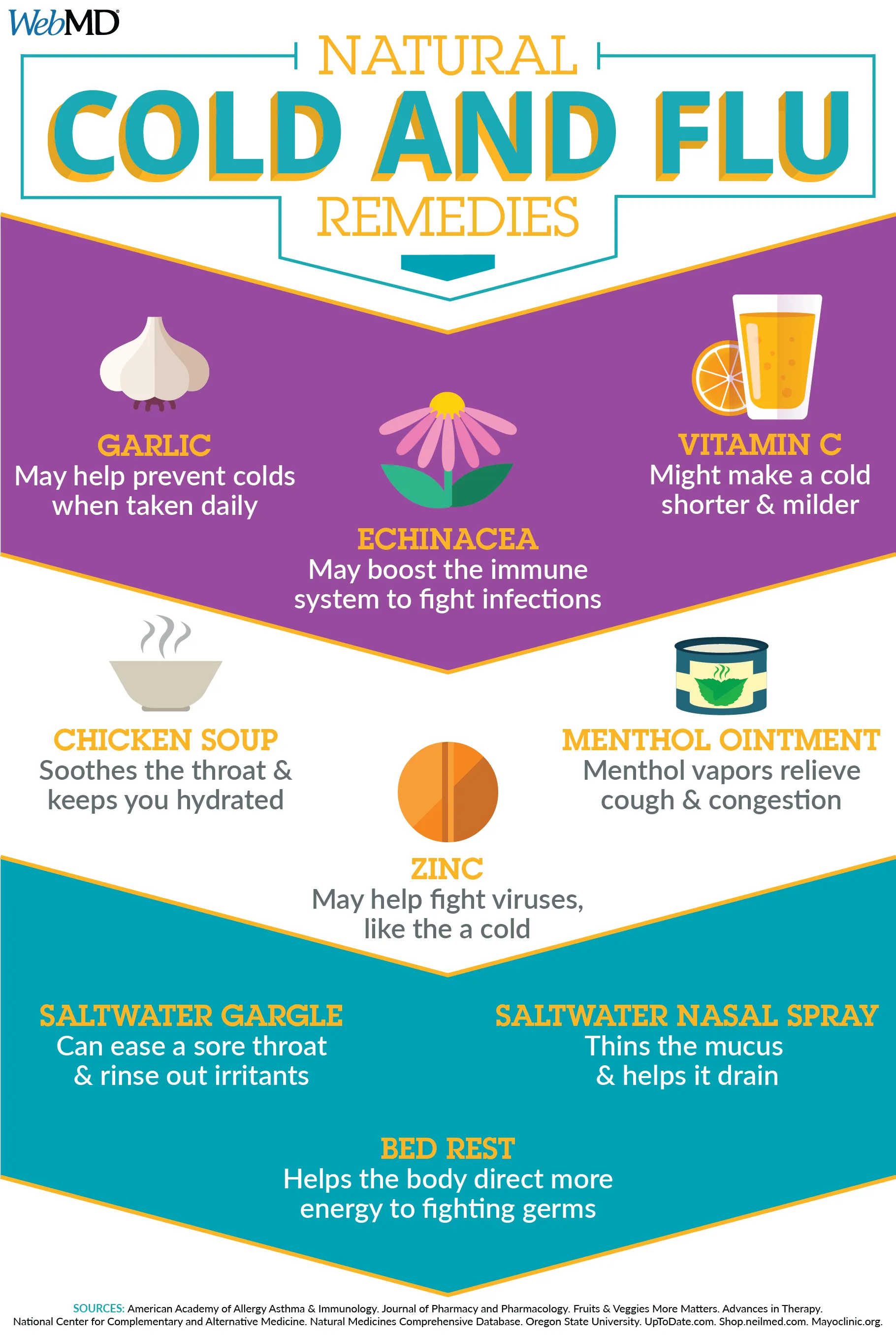
Vitamin C. While it doesn't seem to prevent colds in most people, some studies show that vitamin C can shorten a cold by as much as a day or so. Other studies show no effect.
Echinacea. Again, some studies showed modest benefits, a 10%-30% reduction in the length and severity of cold symptoms, but others found none. Experts say that could be because different varieties of the plant were tested.
Zinc. Taking this mineral, either as a syrup or lozenge, through the first few days of a cold may shorten your misery, according to a review of 15 studies. However, others show no benefit, which may be partly due to the different formulations of zinc being studied.
Elderberry. When it comes to the flu, one small study found that taking a specific formulation of elderberry extract four tablespoons a day for 3 days cut the number of symptom days in half.
Garlic. Like a number of other supplements, garlic is believed to stimulate the immune system. While there's some evidence that eating it daily may lower your risk of catching a cold, it hasn't been proven to help fight one.
Ginseng. This root may boost the immune system and help prevent or treat cold and flu. Research suggests that a particular formulation of North American ginseng, when taken for several months during flu season, seems to both lower the risk of getting either cold or flu and lessen symptoms. Another species of Asian ginseng may also increase the protection offered by the flu vaccine.
Andrographis. Studies of this herb, also called “Indian echinacea,” show that it appears to improve cold symptoms significantly, at least when started within 3 days of when they start.
Experts say natural cold and flu remedies seem fairly safe—at least when taken in normal doses by healthy adults for short periods. But talk to your doctor before taking any herb, supplement, or vitamin. This is especially important if you're pregnant, have a medical condition, or take medicines or other supplements, which could interact to cause problems.
Also, check with your pediatrician before giving them to your child. Most alternative supplements haven't been studied in children, so we don't know whether they're effective and safe.
14. Keep It to Yourself
While you're taking care of yourself, also take care not to spread your cold and flu germs to other people. Cover your mouth with a tissue or your sleeve when you cough or sneeze. And wash your hands often with soap and water for at least 20 seconds. If you can't get to a sink, rub your hands thoroughly with an alcohol-based sanitizer.
Remember, serious conditions, such as sinus infections, bronchitis, meningitis, strep throat, and asthma, can look like the common cold. If you have serious symptoms or don't seem to be getting better, call your doctor.