
Sound Body, Sound Mind
When caring for an older adult, it's important not to overlook routine care -- stuff that seems obvious but that may not be on your radar. Here is a rundown of what to keep in mind.
Everyone needs regular checkups. But some older adults (and young ones, too) reason that since they just saw the doctor last month about that sinus problem, they don't need to go again. A visit to the doctor for a specific problem, however, doesn't take the place of a complete checkup.
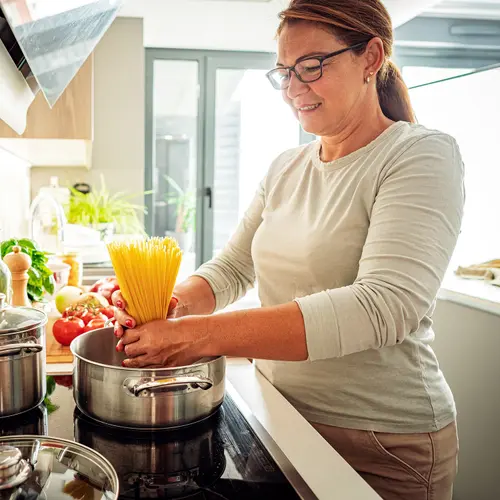
Make sure your parent is eating a balanced diet. Accompany them to the market to guide shopping choices, teach how to read labels, and discuss the importance of all the food groups, vitamins, fiber, and calcium.
ID jewelry with pertinent medical alert and contact information should be worn by all older adults. There is a huge variety of bracelets, pendants, and even watchbands available. One company that sells them is American Medical Identifications.
Know your mother's baseline -- what's "normal" for them. Some older adults have a lower normal body temperature than 98.6 degrees Farenheit, and others have had chronic problems throughout their lives. Be familiar with Mom's "default setting," and be aware of changes. Know that baselines change as a person ages. If, for instance, they go through surgery, chances are they will come out of it with a new baseline.
Know your loved one's complete medical history and keep a record of it to be taken to doctor's appointments and checked often. Just as important is to know your own medical history, in case genetic issues arise or transplants or transfusions become necessary.
Unless told otherwise by your doctor, you should each be drinking eight glasses of water a day. Did you know that dehydration is a common cause of many disorders in older adults, including circulation problems? Make sure liquids are available all day long. How about an attractive thermos for the bedside or a water cooler in the living room and on the patio? Get one on casters so it can be moved from room to room.
Blood pressure is an issue among most older adults. Get a reliable sphygmomanometer (a blood pressure monitor) and teach your loved one -- and yourself -- to take blood pressure readings. Some pharmacies take blood pressure readings and teach you to do it yourself for free.
Local community service organizations such as the Kiwanis or Lions Club often offer free eye exams and eyeglasses to older adults who can't easily afford them. Your Area Agency on Aging will tell you what's available in your area.
Free dental care is available from local dental schools, and often, a low income is not even a requirement. Contact the dental college in your area.
Keep a diary of your parent's health progress.
If your loved one is running a temperature or experiencing any other condition that may require a doctor's care, keep hourly notes and temperature readings for later reference.
Wash your hands often when caring for your parents. Remind them to wash theirs, too.
Keep plenty of moisturizer around. Dry, chapped hands are especially common in winter. When you visit department stores, ask the people at the cosmetics counters for free samples, and keep these around the house to be used often.
Even natural supplements can sometimes be a bad mix with certain medications or cause side effects on their own. Ask your mom if they are taking anything like herbs or other supplements. Check them out with their doctor, no matter how harmless you believe they are.
Foot massagers are great for promoting blood circulation and avoiding cracked heals, which can sometimes split. This is especially important in people with diabetes.
A digital thermometer is easier to use than a mercury thermometer. Take temperatures using the armpit if your parent has breathing problems or is easily confused.
If Mom has breathing problems and uses an inhaler, keep several around your house and hers, in the car, and so forth.
Many trips to the bathroom may indicate a urinary tract infection, common among older people who don't always get the fluids they need. Consult a doctor immediately.
Consult a podiatrist immediately for corns, calluses, bunions, blisters, sores, and infections, or ingrown, hard, brittle, split, or discolored toenails. If your senior has problem feet, a weekly trip to a salon for a pedicure makes a great outing. Most salons have special discount days for older adults. Don't forget to ask about these.
Keep a checklist -- a "report card" -- and update it periodically to keep track of how your parent is doing with meal preparation, housework, mobility (in and out of the house), laundry, shopping, money issues, medications, bathing, dressing, and eating. These are key activities of daily living (ADLs), and difficulty with them indicates there may be trouble.
If your parent or parents live in a multilevel home but has problems with stairs, consider a chair lift. They are not inexpensive, but they can be cheaper than moving and will help keep your parent independent for a longer time. For someone who sits a lot, an ergonomic chair that offers greater lumbar support and adjustable features (chair height, armrest height, seat depth) can make a huge difference in overall health. Ergonomic chairs come in all kinds of models and varying prices.
If an ergonomic chair is not an option, make sure your father's chair has an adjustable height feature, the seat depth is approximately two-thirds the length of their thighs and buttocks, the back is at least fourteen inches high, and the armrests are no more than nine inches high.
Bad posture can complicate back problems and limit mobility. Is Mom walking as upright as they used to? Is Dad favoring one leg over the other for some reason? Sometimes the answer can be as simple as a new pair of shoes.
Osteoporosis is a serious problem for older women, leading to height changes and serious (sometimes deadly) fractures. Schedule your parent for a bone density test, and encourage weight-bearing exercise (walking, light weights, gardening). Make sure Mom gets plenty of calcium (the new "chocolate chew" supplements are delicious), and ask their doctor about hormone replacement therapy or other treatments.
Make sure Mom has a mammogram annually.
If there are precautionary measures that must be remembered, make a checklist and post it in a place where it can't possibly be missed. But change the list and its location from time to time so that it doesn't get taken for granted after a while. If you use a dry erase board or a chalkboard, ask your parent to check off the points as they are followed.
The older you get, the more you are affected by alcohol. On the other hand, a glass of wine now and then has been known to be beneficial for the heart. Check with your loved one's doctor for a good rule of thumb. In the meantime, locate some "zero-proof" recipes and dress them up -- tiny umbrellas and all -- for a special or even not-so-special occasion.
Don't minimize changes in your parents' health, even if they seem minor. These changes may be accompanied by fear, which can exacerbate even a minor problem. Address your parents' fears; be positive about your ability to find a solution.
Anemia is very common among older adults, usually resulting from either a loss of blood or a poor diet. Check with the doctor as to whether iron supplements (taken with orange juice or with vitamin C for better absorption) might be in order.
Help prevent infections by keeping antibacterial wet wipes handy at all times. Keep boxes of them around the house; individually wrapped ones can go in your purse or wallet and in the car.
Avoid foot fungus by keeping feet clean and dry. That means changing socks daily and shoes often. It's also a good idea to let feet "air out" once a day.
Nylon or synthetic socks are more likely to make feet sweat. Cotton is better.
If socks are too tight at the tops, they can interfere with circulation. Cut notches into them to make sure they don't bind.
Teach your loved one to respect pain. If something hurts, there's a reason for it.
Bedsores -- or pressure sores -- result when there is constant pressure on an area where bones are close to the skin's surface. Be on the lookout for problems in these most vulnerable areas: the back of the head, the shoulder blades, the elbows, the base of the spine, the hips, the heels, and the ankles. Consult a doctor if you see red, cracking, or dried skin. In the meantime, encourage Dad to move about when they can, and don't leave them sitting or lying on a damp surface. Make sure linens are not irritating, and wash them often.
Always wear (disposable) rubber gloves when you suspect you might have any kind of skin disorder, such as a rash, an infection, or a lesion of any type.
Eating and the Older Adult
It's a good idea to accompany your mother to the supermarket occasionally to point out new products and to make sure they are shopping wisely. Encourage them to read labels for salt content, sugar, and other health considerations. If they resist, urge them to at least heed fat content. Generally, none of us should be taking in more than 30% of our daily calorie intake in the form of fat, and of that, no more than 10% should come from saturated fats. Olive oil is a good source of unsaturated fat.
Frozen foods, which are processed right after they are harvested, often retain more vitamins than "fresh" vegetables, which may sit on shelves for days before getting to the supermarket.
When ordering packaged meals from local agencies, ask for extra vegetables. Also, consider supplementing the meal with a homemade side dish.
Would a small refrigerator or a mini microwave in the bedroom or family room make it easier for Dad to have nutritious snacks all day long?
If shopping is a problem, maybe you can fit an extra freezer in Mom's home somewhere that will allow them to stock up.
Does your grandfather need help with cooking? Contact Meals on Wheels of America to find a local program that will deliver free meals to their home. All adults older than sixty are eligible. Note that Meals on Wheels doesn't deliver on weekends, so you'll have to make other arrangements. Can a neighbor help? How about a local church or other religious organization? Or ask a local favorite restaurant to deliver a couple of meals.
If your father has vision problems, put liquid in a see-through cup or glass so they can see the liquid.
If your mother's on a special diet, write the day's menu on a blackboard and ask them to check each item off as it's consumed.
Fax a weekly shopping list to your parent's local market and ask for it to be delivered. You can even pay for it over the phone with your credit card.
Find easy recipes that allow your parent to cook with canned and packaged foods -- they combine quickly and are quite tasty. There are a variety of cookbooks in this category. Mom might enjoy Desperation Dinners, by Beverly Mills and Alicia Ross; for Dad, how about A Man, a Can, a Plan, by David Joachim.
There are cookbooks available with easy recipes suitable for special diets (diabetes, heart disease), cooking for one, or microwave cooking. Browse the bookstore or search Amazon.com for the one that will suit your parents' tastes.
When you call, casually ask your parent to tell you what they have been eating. "What did you have for dinner last night?" is better than "How's your appetite?"
If Mom is passing up making the meals they once loved because "it's just one person," get them a small wok and a cooking-for-one cook-book. Schedule visits at mealtimes so they'll have an excuse to cook.
If asked, the grocer might break up packages to sell smaller quantities to your parent, like a half-dozen eggs, two potatoes, or just a few slices of bread (the grocer can use the rest of the loaf to make sandwiches).
Ultra-pasteurized milk that comes in cardboard cartons has a very long shelf life. Just make sure your parent chills it before drinking and refrigerates it after it's opened.
If your loved one takes a long time to eat, arrange for them to start their meal before everyone else.
Be especially patient at mealtimes; older adults often eat much more slowly than what you may be used to. Try to minimize distractions at mealtimes, and don't bring up stressful subjects.
| "We usually have dinner with my grandmother on Sunday nights. It's nice, but sometimes she can go on autopilot, where instead of having a conversation, she just has a long monologue, a riff on everything. You can't get a word in edgewise. That can be frustrating, but as my father pointed out, she spends a lot of her week alone, bottling up thoughts and ideas, and so when she gets a chance to unload, she needs to let it all out." |
| -Ilene Klausner |
A person who is easily confused might have an easier mealtime if you serve one course at a time and clear each one away before serving the next.
A solid-color tablecloth, as opposed to a patterned one, will minimize mealtime distractions.
Maybe your parent or grandparent just hates eating in the kitchen. Try moving to the dining room or even a space outdoors.
Don't ever wrap dentures in napkins, assuming you will retrieve them after the meal. Chances are they'll be thrown out.
Freeze small containers of your leftovers from home to share with your parent. Label them with the date and contents.
Freeze sauces, soups, and bouillon in ice cube trays so that individual servings can be popped out and heated.
Make sure that your parent or grandparent has access to lots of healthy, easy-to-eat snacks, such as berries, bagels, pitas, cheese, raisins, crackers, energy bars, or apple, melon, or orange slices.
If Mom's appetite is lagging, find out if they have a taste or yen for something special. Experiment with old recipes to make them more palatable and "legal" (use lactose-free milk, salt and sugar substitutes, ground meat instead of cubed, or yogurt instead of cream, but first consult a doctor about the interaction of these substitutes with any medications). There are tons of books on the subject and most have recipes. Consult them.
If your loved one is having trouble gaining or maintaining weight, pack their diet with liquid calories. Fruit juices, milk, and milk alternatives such as soy, rice, and nut milks are high in nutrients and calories and are much less filling than solid foods. Smoothies, yogurt shakes, and protein drinks are a little more filling, but may still make a good meal alternative.
Respect your father's tastes. If they have hated yogurt all their life, don't start feeding it to them now just because they are less able to resist.
A water filter makes a great gift for an older parent or grandparent.
Four or five smaller meals during the day can be more manageable than three large ones. This approach has the added benefit of keeping blood sugar levels more even throughout the day.
If your parent has vision problems, use the "clock" method of serving food: the main dish is right in front of them at "six o'clock," the starch dish is farthest and directly opposite at "twelve o'clock," and so on.
When family and friends call and ask what gift they can bring, suggest prepared foods. (If your parent gets Meals on Wheels deliveries, save the goodies for the weekend.)
Use plastic bibs at mealtime.
| "Dad flipped when he saw Mom come at him with a bib! He was furious and refused to wear it. 'I'm not a baby,' he screamed. So the next night when we sat down to eat, all of us -- the kids, me, my husband, and his parents -- wore bibs. We all wound up laughing about it, and Dad admitted that it wasn't such a big deal after all. We promised never to make him wear it in restaurants, unless, of course, he ordered the lobster." |
| -Vonda Giraldo |
It's OK to bring a special meal to a restaurant for your parent and ask to have it microwaved for you, just as long as everyone else is ordering off the menu. Waiters and waitresses want to help you; tell them what you need privately, to avoid embarrassment. And a good chef, if they are not too busy, can accommodate anyone. Show your appreciation, and tip accordingly.
Dry food can be difficult to swallow. Use sauces generously, but learn to make healthy versions.
Use flexible straws.
For those who refuse regular meals, keep healthy snacks (fruits, nutritious cookies, cut-up vegetables) available around the house. Finger foods are best. Be creative -- but not overbearing -- in your coaxing efforts.
Try using children's non-spill cups with covers or sports drink containers with a straw.
Make mealtime more special by using fancy plates and napkins.
For some, it's easier to cut food with scissors than a knife and fork.
If Mom can't cut their meat any longer, avoid embarrassment by cutting it for them in the kitchen before you serve.
Soft and pureed foods don't have to be bland and tasteless. Find out which herbs and spices make an otherwise bland dish interesting. You might also serve the following in colorful combinations:
- cereal
- puddings and gelatin
- cooked and creamed vegetables
- cheese
- soups and stews
- egg salad and tuna and other fish salads
- tabouli, baba ganoush, and hummus
- cooked fish
- sushi
- pasta
- stewed fruit
- egg rolls, cut up
- chicken nuggets
- scrambled eggs and omelettes
- pancakes and French toast
- rice and risotto
- yogurt
- meat loaf
Baby food is great if you need to get a meal together in a hurry. The fruit selections are delicious!
Get a copy of The Non-Chew Cookbook, by Randy J. Wilson.
No one likes to eat alone. If Mom insists that you partake of their bland, pureed diet, consider bringing along your own snacks at mealtime.
Too many items on the table can be confusing. Keep condiments to a minimum.
| "My mother hated dinnertime and often refused to settle down for it. So we started a routine of getting a little dressed up for dinner each night -- she wears a nice brooch and one of her many scarves, and she likes to carry a purse -- and now she looks forward to what's become her favorite part of our day." |
| -Michaela Kevis |
Freely make use of microwaveable prepackaged foods. You can stock up on them and put them in the freezer after marking each with the day of the week when it should be eaten.
If your loved one can't swallow thin liquids, someone has probably recommended Thick-It, a tasteless powder that thickens hot and cold liquids. The canister is bulky, so keep small supplies of Thick-It in your bag to use on outings. If Dad's not supposed to drink unthickened liquid, don't cheat, not even "just this once."
Older adults should always eat sitting up.
Take your parent to lunch, even if you're at work. Call at lunchtime, and you can eat together -- you at the desk, they at home in the kitchen. But remember that it's dangerous for an older person (or anyone else) to talk while chewing.
Your parent's peak period of digestion (when it's easiest to digest food) is midday. Plan the large meal for that time of day, and keep supper light.
When feeding your father, only put one teaspoon of food in their mouth at once. Alternate spoonfuls of solids and liquids.
Plan your mother's weekly menu ahead of time so shopping for all meals can be done at once. Copy their recipes onto cards and write the shopping list for each dish on the backs. Take the cards with you when you go shopping.
Older adults who seem to have endless appetites often forget they have just eaten. Put stickers on the clock for mealtimes so they can see how long it is until the next meal. Making small nutritious snacks available throughout the day is also helpful.
Your parent should never lie down right after a meal -- that is the most common cause of indigestion. (Eating too fast is the second most common cause.) Make sure Mom sits or stands for at least an hour after they eat.
Many medications leave an awful taste in the mouth that is far worse than anything you can imagine. They can make sugar taste like salt, and some favorite foods become completely inedible. Be especially patient during this time as you try new things to see what works. In the meantime, a lollipop may help your loved one after they have eaten something distasteful. (Don't give sucking candies to anyone who might easily swallow them whole.)
You can get someone to come to the house just to feed meals to your parent. Contact your Area Agency on Aging.
Even if Mom isn't making use of the local senior center, they can attend every day just for meals. If salt is an issue, there are a bunch of flavorful seasoning substitutes on the market.
| "I bribed Mom to eat toward the end -- it was the only way I could get her to take anything. I actually gave her a quarter for every meal. The funny thing is, I forgot all about this. Then, after she passed away and we were going through her bedroom, I found jars of quarters under her bed! It all added up to over $150, which we donated to the local food bank, which is exactly where I knew she'd want it to go. It helped give us closure to know that the money that helped feed our mother would now feed others." |
| -Brenda Bienvenuti |
There are tons of special utensils that can make eating a lot easier; a combination fork and knife for one-handed eating, a tilted spoon for someone with hand problems, or a two-handled mug for easier drinking are available from the many suppliers of special-needs items. You can also buy plate guards that keep food from sliding off. B Independent offers a wide range of such products.
Jews, Christians, Sikhs, Muslims, and Hindus all incorporate fasting into various rituals and celebrations. If your parent is observant, but you suspect they may not be physically up to the fast, speak to their doctor or spiritual counselor, who can talk to them about reasonable exemptions from fasting.
Diet supplements like Ensure are widely used in hospitals and nursing homes. Keep them cooled. Put a few cans on ice in the morning, and make them available all day long.
A glass of wine, if it's allowed by your Mom's doctor, can stimulate the appetite.
Sleep and Older Adults
If Grandma has trouble sleeping (and is not bedridden), encourage them to spend as little "awake time" as possible in bed. Reading, watching TV, and so forth, should be done in a favorite chair, while bed is for sleep only. Going to sleep and waking up at about the same time each day will also help train their body for better sleep overall.
Older adults should avoid oversleeping in the morning. It leads to having trouble falling asleep later, and the cycle of insomnia begins.
If Dad can't fall asleep within fifteen minutes of getting into bed, suggest them to get up for a while and do something calming, and then try again later.
Don't take sleep disruption lightly. It can be caused by an improper dose of medication, an illness, or a psychological problem. Talk about it with your loved one's doctor. Many drugs, including Halcion and even the antidepressants that are supposed to make their life better, can cause terrifying nightmares.
If your father wakes with night terrors, be reassuring. Show them that there's no danger nearby, but avoid arguing. If they insist that something (or someone) woke them, let them know that whatever the trouble was, it's gone now.
People of any age who have difficulty sleeping should avoid exercise in the late afternoon and evening. Try morning walks instead.
Avoid caffeine, not just in the evening but at any time of day. Aside from coffee, tea, and cola, look out for caffeine in chocolate, non-cola soft drinks, and some pain relievers. And while decaffeinated coffee has less caffeine than regular, it's not caffeine-free.
Alcohol can make your senior drowsy at first, but it hurts healthy sleep in the long run by disturbing the sleep cycle, making sleep less restful, and making them more likely to wake up during the night.
As with practically everything, "A good laugh and a long sleep are the two best cures." |
| -Irish proverb |
Maintain a sleep diary to note sleep patterns. The doctor will find this information useful if you need to consult with her, and you might discover patterns you weren't aware of: Is sleeping a problem the night before the family comes to visit? Is this about anxiety or excitement? Visit the National Sleep Foundation for more information.
If there are serious issues that require discussion, don't bring these up right before bedtime. Avoid arguments.
Some people swear by a teaspoon of honey in a cup of hot water before bedtime. Others go for warm milk with a little cinnamon. But if liquids are a problem before bed, find a different solution. A foot bath or massage right before bed can help.
Get dark-lined (blackout) shades for people who don't sleep well, and block out disturbing noise with a fan or a white noise machine. Some models have a choice of sounds that mimic ocean waves, the patter of raindrops, and other soothing sounds.
Aromatherapy using lavender candles and potpourri can be very relaxing. Try a couple drops of lavender oil in a bath or on the corner of your parent's pillow. You can even buy soft microwavable products that warm up potpourri inside.
Change the linens often. Everyone enjoys fresh sheets. You can even buy lavender water to put in the wash. It's sold in a lot of home stores and catalogs these days.
Unpleasant odors can interfere with sleep. Use potpourri and make sure the air in the room has a chance to circulate. When Mom's out of the room for a while, open the windows or light a scented candle.
Create a sleep ritual before bedtime and follow this every evening. If you live far away, you can still call at bedtime to wish your parents sweet dreams.
Cotton pajamas and sheets are less irritating than synthetics.
Restless leg syndrome is a condition in which one leg or both legs experience nervous sensations that cause excessive movement. It's a fairly common condition that can often be treated with medication, iron supplements, and exercise. Is this what's keeping your loved one awake? Find out more online and talk to your doctor.
Does Dad's snoring rock the house? Is Grandma really sleepy in the morning and drowsy during the day? They may have sleep apnea, a disorder in which the person stops breathing at points during sleep. Consistent loud snoring, observed episodes of not breathing, and morning and daytime sleepiness are some of the warning signs. Men, people who are over forty, and people who are overweight are all at higher risk, but anyone can have it, and it's more common than diabetes. Sleep apnea can lead to insomnia, high blood pressure, weight gain, headaches, memory problems, excessive drowsiness, depression, impotence -- the list goes on.
Make sure the mattress your father sleeps on is comfortable and right for them. Soft beds are nice, but maybe they need more support. It's easier to rise from a firm mattress.
Some people are just not morning people. If getting your parent up every morning is a problem and you already have enough to do at that hour, let them stay in bed until midmorning, if they like, and get them up after the family has gone off to work and school.
While it may be tempting to take naps, they should be avoided if they interfere with getting a good night's sleep.
Arrange calming activities before bedtime; this is a time for reading, soft music, and soothing conversation. Have your loved one spend some time in pajamas before settling in to sleep.
Saying prayers together before bedtime can be a wonderful ritual.
Maybe Mom can't sleep because they have issues they can't talk about. Try to discuss this with them, or suggest they discuss the problem with another member of the family or a professional.
Remind your senior to go to the bathroom before going to sleep. If they get up often at night to go to the bathroom, suggest that they don't drink any liquids for three or four hours before bedtime. On the other hand, don't skimp too much on fluids during the day because you want to cut down on bathroom visits. Older adults often become dehydrated, which leads to painful (but common) urinary tract infections.
Learn sleep techniques and teach them to your senior:
- Listen to your own breath and count breaths. Get comfortable, close your eyes, and begin breathing slowly but normally, then count each exhalation, either starting at one or counting back from one hundred.
- Practice progressive muscle relaxation by tensing and relaxing one limb at a time. Make a fist and clench your right arm, while keeping the left relaxed; then relax the right arm. Repeat with the left arm, then each leg.
- Use visualization techniques to picture yourself in a perfect, relaxing place, such as a quiet beach or lakeside.
- Try a tape or CD that will guide you through a relaxation exercise or visualization. There are many available. You can even make your own.
- Make up for lost sleep as soon as possible.
A baby monitor will alert you to any nighttime problems your parent may be having, and they will feel secure knowing that if they call in the middle of the night, you will hear them. Show them how the monitor works.
If it's the bed that's keeping your father awake, consider getting a hospital bed. Medicare will pay for it if their doctor recommends it.
A foam "egg crate" mattress will help prevent bedsores and can be purchased from any medical supply house.
Rotate a new mattress once a month the first year and every season (four times a year) after that. A mattress should be replaced every eight to ten years.
If they sleep in the same bed but Mom needs a firm mattress and Dad prefers something softer, consider getting two single beds and moving them next to each other. You can use king- or queen-sized bedding, so it looks like one bed. This allows many couples to feel comfortable without giving up intimacy.
A clock with brightly illuminated numbers can keep someone awake. Use the dimmer on the clock if it has one, turn the clock to the wall, or get a new clock.
Some people have trouble sleeping because their biological clocks are waking them at weird times. To "reset" Dad's biological clock, have them get up in the morning at the time they are like to awaken each day and spend about ten minutes facing the sun.
If your mother grinds their teeth at night -- a common condition called bruxism -- talk to the dentist. Mom might need a mouth guard.
Keep familiar, favorite photos at the bedside to calm Mom in case they wake up confused about where they are. If they travel or have to spend some time in the hospital, keep these same items at their bedside there for continuity.
Exercise and Older Adults
Nowhere is the saying, "use it or lose it," more meaningful than among older adults. Aside from its cardiovascular benefits, exercise combats depression and osteoporosis, reduces the risk of falling, cuts down on healing time when there are injuries and illnesses, and generally improves lifestyle. Encourage your grandmother to stick to a routine.
Ask your older relative to keep an exercise log and consult it often. Compliment their progress and celebrate breakthroughs.
Yoga is a great form of gentle exercise that improves the immune system and promotes well-being, among many other benefits. Weight training, tai chi, swimming, and low-impact aerobics are also generally beneficial to seniors.
Make your own exercise video for your mother. They might hate the idea of staring at a nubile twenty-something while they do their stretching exercises, but what if, instead, they had an image of you or their granddaughter guiding them through the routine? If you own a video camera, don't pass up this opportunity to make each day more special for them.
Set up an area of your Dad's home where they can exercise safely. Make it special: get an attractive exercise mat and maybe even hang up an inspirational poster. Get them colorful workout wear or a funny T-shirt ("Over the hill? What hill?").
If you can't go yourself, hire a reliable teen to take your parent for a walk. The outing might be less awkward if you give it a purpose, like a daily trip to the store for bagels and a newspaper.
Gardening, housecleaning, and shopping can be considered exercise. Redefine the word exercise as needed.
Things change. From time to time, review your loved one's exercise routine to make sure it's still appropriate.
Encourage deep breathing. Most people forget to breathe when they exercise.
Check with a doctor or physical therapist before your loved one embarks on any exercise routine.
"I've heard that advice about a million times and was assured by our family doctor that Dad's calisthenics were just fine for him. But it never occurred to me to check back after he developed a minor ear infection that left him with a slight balancing problem. It turned out that even some of the neck rolls he was doing were affecting his ability to stand up without getting dizzy." |
| -Bari Meyer |
If your grandfather isn't motivated to exercise, take them to a ball game to remind them of what it was like to have the wind blow through their hair (when they had hair). Walking to your seats is enough to get the body moving, and the fresh air will do wonders for them.
Bring your older parent to a physical therapist for advice and general guidance. If you can get Dad's doctor to recommend the visit, insurance will pay for it. If not, it'll be a worthy expense, given the possible benefits.
All exercise routines, even walking, should start and end with a period of stretching. A stretch needs to be held for at least five seconds to be effective.
If your father refuses to exercise, try to get them to at least work on one of the important muscle groups: arms, legs, shoulders, or back.
Exercising to music is always more fun, especially if the music is your favorite. Make your loved one a special exercise tape of their favorite tunes. If your parent totally resists the idea of exercise, don't try to bully them into it.
The mall opens before the stores do, and in many areas, people have discovered that they're a great place to walk. Aisles are nice and wide, and it's temperature-controlled.It's also a great way to meet people. Make sure security has arrived on duty by the time your parent or grandparent gets there.
Exercise reduces stress. That's probably something you both need. Do it together.
Consider a professional personal trainer. Even if it's too expensive to have one regularly, a couple sessions will get Mom started on the right track and allow them to develop an appropriate routine.
It's a good idea for someone else to be around when your parent exercises, just in case there are problems. If you or a family member can't be there, this is a potential job for a responsible teen.
An hour of brisk walking four times a week can drastically improve the quality of life for an older person -- or anyone else, for that matter.
Buy Mom a pedometer so they can measure their distance when they walk.
Start a senior exercise class in your dad's neighborhood. A small group can pool their resources and hire a teacher just for them, at their convenience. If no one has a basement big enough, ask restaurant owners whether their private rooms, which are rarely used during the daytime, can be made available. Or, perhaps the local school can let them use part of the gym when it's not being used.
Walking is still the best exercise there is. Learn to enjoy walking slowly with your loved one.
| "When I first started taking Gramps out for short walks, I thought I'd go crazy -- each block took a good half hour, which was often the length of a whole visit. I soon learned to appreciate the value of slowing down my day this way, and seeing the world this way brought us closer together." |
| -Steve Fein |
Yoga classes can be beneficial to both you and your loved one. Consider taking classes together.
If your parent hates the idea of walking, ask them to help you by running certain errands for you ("Dad, could you return this to the library for me?").
Swimming is often an option for older adults who have lost mobility. Also, water exercise classes are available at many swimming facilities.
Dancing: it's good exercise, it's a great social activity, the music can be therapeutic, and it's a wonderful way to meet people. Find out what classes are available locally, and don't ignore those classes that are aimed at kids. Instructors at those classes might be willing to start offering adult classes if enough students can be gathered.
Look into special exercise programs for older adults in the neighborhood. Visit the classes on your own before you suggest your parent joins. There are some good ones out there, but some can be depressing to those who are fairly vital.
Squeezing balls of clay is good exercise for arthritic hands, as are therapeutic squeeze balls made just for that purpose. They're available at most drugstores.
Older adults have found that weight lifting using relatively light weights strengthens the body, helps bone density, increases flexibility, and reassures them of their abilities.
Always check with a doctor before your loved one embarks on any exercise program.