
Skip to content
WebMD: Better information. Better health.
 
Other search tools:Symptoms|Doctors|Medical Dictionary

Hair Removal Quiz: Solutions for Unwanted Hair

  1 of  
Current Score:  
slide image

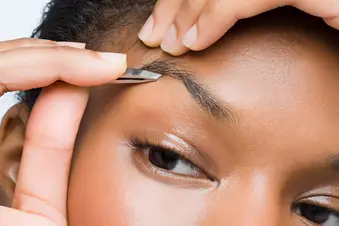
It’s important not to overpluck your eyebrows, because they grow back more slowly than other hair.

slide image

It’s important not to overpluck your eyebrows, because they grow back more slowly than other hair.

  • Your Answer:
  • Correct Answer:

At any given time, most of your eyebrow hairs are in the telogen, or resting, phase. Because of this growth cycle stage, they will grow back much more slowly. Also, hair in this area grows more slowly than in other parts of the body. Tweeze carefully and sparingly, because the hairs you pluck will take several weeks to come back.


Plucking is the least expensive method for shaping eyebrows, and you can do it yourself. Waxing, like plucking, pulls the hair from the follicle and may damage the root. Electrolysis permanently removes hair by destroying the growth center of the hair. Your skin might redden slightly after treatment, but there are no permanent side effects. Laser treatments heat and destroy the dark melanin in the hair follicles without hurting the surrounding skin.

slide image

Threading is effective at removing hair on the:

slide image

Threading is effective at removing hair on the:

  • Your Answer:
  • Correct Answer:

Threading only works on flat surfaces, so it’s usually done on the face. The practitioner twists a looped piece of thread over the face, capturing hairs and pulling them out at the root. Threading has recently gained popularity as a quick, relatively painless way to remove unwanted hair from the upper lip, hairline, and other parts of the face. 

Shaving makes hair grow back thicker and darker.

Shaving makes hair grow back thicker and darker.

  • Your Answer:
  • Correct Answer:

It’s a myth that shaving makes hairs grow back thicker and darker. However, because shaving leaves a blunt tip on the end of each hair, it can make hair appear darker and coarser as it grows back.

The best way to avoid ingrown hairs is to:

The best way to avoid ingrown hairs is to:

  • Your Answer:
  • Correct Answer:

Ingrown hairs happen when a hair re-enters the skin after shaving and doesn’t completely emerge through the skin's surface, causing bumps and irritation. Ingrown hairs are common with frequent, close shaving in the bikini area, for example. The best way to prevent ingrown hairs is to exfoliate the area you’re shaving regularly. Using a gentle scrub will remove the top layer of dead skin and allow your hair to grow more easily. Also, soften your hair with warm water before shaving and shave in the same direction as hair growth.

Waxing is safe for all parts of the body.

Waxing is safe for all parts of the body.

  • Your Answer:
  • Correct Answer:

Waxing is the process of applying melted wax to areas with unwanted hair, allowing it to cool and harden and then quickly pulling it off in the opposite direction, taking the hair with it. The FDA warns against waxing the nipples, genital areas, eyelashes, nose, or ears. Despite the warning, waxing is used to remove hair from just about anywhere on the body, including the face and bikini area. Waxing can cause temporary inflammation and infection. Never wax sunburned or irritated skin.

People taking certain medications should avoid waxing because:

People taking certain medications should avoid waxing because:

  • Your Answer:
  • Correct Answer:

Some medications, like antibiotics or acne treatments, may cause the skin to become thinner, more sensitive, and prone to tearing. Check with your doctor if you are taking prescription medications before waxing, because it may remove a layer of skin and cause scarring and infection.

The only parts of your body that don’t have hair are the palms of your hands, soles of the feet, lips, and:

The only parts of your body that don’t have hair are the palms of your hands, soles of the feet, lips, and:

  • Your Answer:
  • Correct Answer:

Except for the palms of the hands, the soles of the feet, the lips, and the eyelids, your entire body is covered with hair. There are two types of hair: Vellus hair is the fine, soft “peach fuzz” that covers most of your body. The purpose of vellus hair is to help maintain body temperature. The darker, coarser hair that grows on your head, under your arms, and on your genitals is called terminal hair. Terminal hair helps protect sensitive areas.

Depilatories are relatively inexpensive and easy to use, but drawbacks include: 

Depilatories are relatively inexpensive and easy to use, but drawbacks include: 

  • Your Answer:
  • Correct Answer:

Depilatories work by dissolving hair from the skin’s surface. They react with the protein in hair, dissolving it into a jellylike substance that can be wiped away. Depilatories are an inexpensive and painless way to remove unwanted hair, but they are notorious for being smelly and messy. They also can burn the skin if left on too long, and they may not be effective on very thick, coarse hair. They should not be used on eyebrows, areas near the eyes, or irritated skin. They come in various forms, including gel, lotion, cream, and roll-on.

Electrolysis is painful.

Electrolysis is painful.

  • Your Answer:
  • Correct Answer:

Electrolysis has a reputation for being painful, but most people say it feels more like a tingling sensation. In electrolysis, a professional electrologist inserts a small needle into the hair follicle and applies an electrical current to kill the follicle. Because electrolysis must be done hair by hair, it’s not recommended for larger areas of the body.

Which hair removal technique is considered permanent?

Which hair removal technique is considered permanent?

  • Your Answer:
  • Correct Answer:

Electrolysis kills the hair follicle using an electrical current and it’s generally permanent. Some people do occasionally have regrowth of hair. With electrolysis, there is a risk of infection from unsterile needles. And you may have scarring if the operator is not competent.


Laser hair removal also is effective, but touch-ups may be necessary every six months to a year.

Laser hair removal works best on people with:

Laser hair removal works best on people with:

  • Your Answer:
  • Correct Answer:

Laser hair removal uses concentrated beams of light to destroy hair follicles. The light is absorbed by melanin, the pigment that gives skin and hair its color, so it works best on people with light skin and dark hair. Laser hair removal is ineffective on light hair. Laser treatments can remove large areas of unwanted hair with minimal discomfort. Multiple sessions are necessary. Possible risks are blistering, discoloration, swelling, redness, and scarring.


People with dark skin should only consider laser hair removal when it’s done by a very experienced practitioner because of the risk of burns and skin discoloration.

Laser hair removal works best on which areas of the body:

Laser hair removal works best on which areas of the body:

  • Your Answer:
  • Correct Answer:

Laser hair removal is most effective on areas on the body where the skin is thinner, so you’ll probably have better results on the underarms and bikini area than on the legs or back. To reduce pain, you may want to apply a numbing cream.

Any salon worker can do laser hair removal.

Any salon worker can do laser hair removal.

  • Your Answer:
  • Correct Answer:

Laser hair removal is considered a medical procedure. It can damage your skin if it’s done by someone who is inexperienced. Laser hair removal can be performed by a trained and experienced dermatologist. But some states also allow other practitioners to perform the procedure. Regulations about who else can perform laser hair removal vary by state. Check with your state's medical board.

Too much hair on a woman’s face or body can be caused by:

Too much hair on a woman’s face or body can be caused by:

  • Your Answer:
  • Correct Answer:

Hirsutism, or excess hair growth, is caused when a woman’s body produces abnormally high levels of male hormones. Conditions that can cause hirsutism include hormone disorders like polycystic ovary syndrome (PCOS) and Cushing’s syndrome. Hirsutism can also be caused by certain medications, including steroids. In women with PCOS, some types of birth control pills, certain blood pressure medications, and other treatments can reduce the growth of unwanted hair.

Your Score:   You correctly answered   out of   questions.
results image

Congratulations! When it comes to hair removal, you’re top notch.

Not bad! You know a thing or two about hair removal.

Hmm. You may want to brush up on hair removal and retake the quiz.