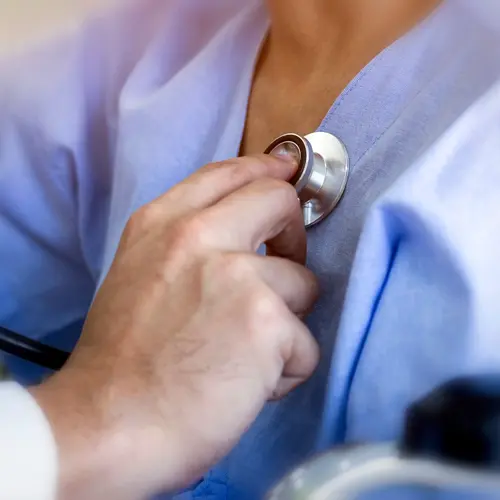
Your heart is an amazing organ. It continuously pumps oxygen and nutrient-rich blood throughout your body to sustain life. This fist-sized powerhouse beats (expands and contracts) 100,000 times per day, pumping 5 or 6 quarts of blood each minute, or about 2,000 gallons per day.
How Does the Heart Work?
As the heart beats, it pumps blood through a system of blood vessels, called the circulatory system. The vessels are elastic tubes that carry blood to every part of the body.
Blood is essential. In addition to carrying fresh oxygen from the lungs and nutrients to your body's tissues, it also takes the body's waste products, including carbon dioxide, away from the tissues. This is necessary to sustain life and promote the health of all the body's tissues.
There are three main types of blood vessels:
- Arteries. They begin with the aorta, the large artery leaving the heart. Arteries carry oxygen-rich blood away from the heart to all of the body's tissues. They branch several times, becoming smaller and smaller as they carry blood farther from the heart.
- Capillaries. These are small, thin blood vessels that connect the arteries and the veins. Their thin walls allow oxygen, nutrients, carbon dioxide, and other waste products to pass to and from our organ's cells.
- Veins. These are blood vessels that take blood back to the heart; this blood lacks oxygen (oxygen-poor) and is rich in waste products that are to be excreted or removed from the body. Veins become larger and larger as they get closer to the heart. The superior vena cava is the large vein that brings blood from the head and arms to the heart, and the inferior vena cava brings blood from the abdomen and legs into the heart.
Blood flows continuously through your body's blood vessels. Your heart is the pump that makes it all possible.
Where Is Your Heart?
The heart is under the rib cage, to the left of your breastbone (sternum) and between your lungs.
Looking at the outside of the heart, you can see that the heart is made of muscle. The strong muscular walls contract (squeeze), pumping blood to the arteries. The major blood vessels connected to your heart are the aorta, the superior vena cava, the inferior vena cava, the pulmonary artery (which takes oxygen-poor blood from the heart to the lungs where it is oxygenated), the pulmonary veins (which bring oxygen-rich blood from the lungs to the heart), and the coronary arteries (which supply blood to the heart muscle).
On the inside, the heart is a four-chambered, hollow organ. It is divided into the left and right side by a wall called the septum. The right and left sides of the heart are further divided into two top chambers called the atria, which receive blood from the veins, and two bottom chambers called ventricles, which pump blood into the arteries.
The atria and ventricles work together, contracting and relaxing to pump blood out of the heart. As blood leaves each chamber of the heart, it passes through a valve. There are four heart valves within the heart:
- Mitral valve
- Tricuspid valve
- Aortic valve
- Pulmonic valve (also called pulmonary valve)
The tricuspid and mitral valves lie between the atria and ventricles. The aortic and pulmonic valves lie between the ventricles and the major blood vessels leaving the heart.
The heart valves work the same way as one-way valves in the plumbing of your home. They prevent blood from flowing in the wrong direction.
Each valve has a set of flaps, called leaflets or cusps. The mitral valve has two leaflets; the others have three. The leaflets are attached to and supported by a ring of tough, fibrous tissue called the annulus. The annulus helps to maintain the proper shape of the valve.
The leaflets of the mitral and tricuspid valves are also supported by tough, fibrous strings called chordae tendineae. These are similar to the strings supporting a parachute. They extend from the valve leaflets to small muscles, called papillary muscles, which are part of the inside walls of the ventricles.
How Does Blood Flow Through the Heart?
The right and left sides of the heart work together. The pattern described below is repeated over and over, causing blood to flow continuously to the heart, lungs, and body.
Right side of the heart
- Blood enters the heart through two large veins, the inferior and superior vena cava, emptying oxygen-poor blood from the body into the right atrium.
- As the atrium contracts, blood flows from your right atrium into your right ventricle through the open tricuspid valve.
- When the ventricle is full, the tricuspid valve shuts. This prevents blood from flowing backward into the atria while the ventricle contracts.
- As the ventricle contracts, blood leaves the heart through the pulmonic valve, into the pulmonary artery, and to the lungs where it is oxygenated.
Left side of the heart
- The pulmonary vein empties oxygen-rich blood from the lungs into the left atrium.
- As the atrium contracts, blood flows from your left atrium into your left ventricle through the open mitral valve.
- When the ventricle is full, the mitral valve shuts. This prevents blood from flowing backward into the atrium while the ventricle contracts.
- As the ventricle contracts, blood leaves the heart through the aortic valve, into the aorta, and to the body.
How Does Blood Flow Through Your Lungs?
Once blood travels through the pulmonic valve, it enters your lungs. This is called the pulmonary circulation. From your pulmonic valve, blood travels to the pulmonary artery to tiny capillary vessels in the lungs.
Here, oxygen travels from the tiny air sacs in the lungs, through the walls of the capillaries, into the blood. At the same time, carbon dioxide, a waste product of metabolism, passes from the blood into the air sacs. Carbon dioxide leaves the body when you exhale. Once the blood is purified and oxygenated, it travels back to the left atrium through the pulmonary veins.
What Are the Coronary Arteries?
Like all organs, your heart is made of tissue that requires a supply of oxygen and nutrients. Although its chambers are full of blood, the heart receives no nourishment from this blood. The heart receives its own supply of blood from a network of arteries, called the coronary arteries.
Two major coronary arteries branch off from the aorta near the point where the aorta and the left ventricle meet:
- The right coronary artery supplies the right atrium and right ventricle with blood. It usually branches into the posterior descending artery, which supplies the bottom portion of the left ventricle and back of the septum with blood.
- The left main coronary artery branches into the circumflex artery and the left anterior descending artery. The circumflex artery supplies blood to the left atrium, side, and back of the left ventricle, and the left anterior descending artery supplies the front and bottom of the left ventricle and the front of the septum with blood.
These arteries and their branches supply all parts of the heart muscle with blood.
When the coronary arteries narrow to the point that blood flow to the heart muscle is limited (coronary artery disease), a network of tiny blood vessels in the heart that aren't usually open called collateral vessels may enlarge and become active. This allows blood to flow around the blocked artery to the heart muscle, protecting the heart tissue from injury.
How Does the Heart Beat?
The atria and ventricles work together, alternately contracting and relaxing to make the heart beat and pump blood. The electrical system of your heart is the power source that makes this possible.
Your heartbeat is triggered by electrical impulses that travel down a special pathway through your heart.
- The impulse starts in a small bundle of specialized cells called the SA node (sinoatrial node), in the right atrium. This node is known as the heart's natural pacemaker. The electrical activity spreads through the walls of the atria and causes them to contract.
- A cluster of cells in the center of the heart between the atria and ventricles, the AV node (atrioventricular node) is like a gate that slows the electrical signal before it enters the ventricles. This delay gives the atria time to contract before the ventricles do.
- The His-Purkinje network is a pathway of fibers that sends the impulse to the muscular walls of the ventricles, causing them to contract.
At rest, a normal heart beats around 50 to 99 times a minute in an adult. Exercise, emotions, fever, and some medications can cause your heart to beat faster, sometimes to well over 100 beats per minute.