Skip to content
My WebMD Sign In, Sign Up

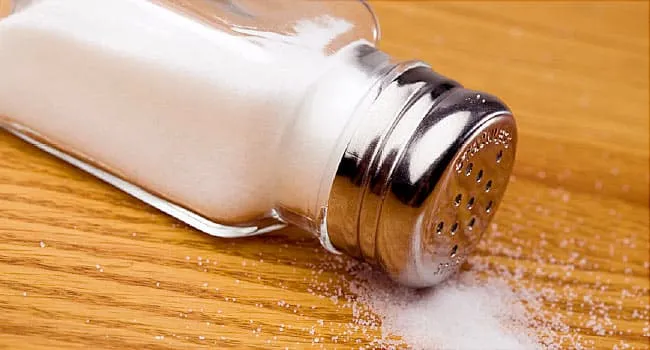
Quiz: Test Your Salt Smarts

  1 of  
Current Score:  
slide image

Salt and sodium are the same thing.

slide image

Salt and sodium are the same thing.

  • Your Answer:
  • Correct Answer:

Salt is made up of sodium and chlorine (chemical name: "sodium chloride"). But there are other forms of sodium in food, including baking soda (sodium bicarbonate) and food additives, such as monosodium glutamate, sodium nitrite, and sodium benzoate. Any form of sodium adds to your overall daily intake, but salt makes up about 90% of the sodium we consume.

slide image

Your body needs sodium to help with the function of your:

slide image

Your body needs sodium to help with the function of your:

  • Your Answer:
  • Correct Answer:

The human body needs some sodium for proper functioning. Sodium helps regulate your blood pressure and blood volume, the balance of other fluids in your body, and it helps with the function of your nerves and muscles.


However, your body needs only 180 mg to 500 mg a day to function properly. That's less than the amount in 1/4 teaspoon of salt.

Most sodium in a typical Western diet comes from:

Most sodium in a typical Western diet comes from:

  • Your Answer:
  • Correct Answer:

Only about 6% of our daily sodium comes from salt added at the table. Another 5% comes from salt added during cooking. Most of the rest -- up to an estimated 77% -- comes from processed or restaurant foods. The easiest way to cut down on your sodium  intake is to eat more home-cooked meals made from fresh ingredients.

High-salt diets have been linked to which of the following health problems?

High-salt diets have been linked to which of the following health problems?

  • Your Answer:
  • Correct Answer:

By far, the biggest health problem caused by a high-salt diet is high blood pressure. On average, the higher your salt intake, the higher your blood pressure. And high blood pressure increases your risk for stroke, kidney problems, heart failure, blindness, and heart attacks.

A high-salt diet is just as bad for a person's blood pressure whether they're physically active or sedentary.

A high-salt diet is just as bad for a person's blood pressure whether they're physically active or sedentary.

  • Your Answer:
  • Correct Answer:

You can help counter the negative effects of a high-salt diet with physical activity. Studies show that the more physically active you are, the less your blood pressure rises in response to a high-salt diet. Consequently, researchers say if you live a sedentary lifestyle, you need to pay particular attention to reducing your salt intake.

A high-salt diet can contribute to heart disease.

A high-salt diet can contribute to heart disease.

  • Your Answer:
  • Correct Answer:

Too much salt can have detrimental effects on the heart, kidneys, and blood vessels. According to the CDC, excess sodium can increase your risk for a heart attack or a stroke.

The maximum recommended daily intake of sodium for healthy adults is contained in about:

The maximum recommended daily intake of sodium for healthy adults is contained in about:

  • Your Answer:
  • Correct Answer:

The National Academy of Science's Institute of Medicine recommends that healthy adults limit their sodium intake to less than 2,300 mg per day -- about the amount in one teaspoon of table salt (which is about 40% sodium). On average, Americans consume more than 3,400 mg of sodium per day -- or the amount contained in about 1 1/2 teaspoons of salt.

You should limit your sodium intake to 1,500 mg per day if you are:

You should limit your sodium intake to 1,500 mg per day if you are:

  • Your Answer:
  • Correct Answer:

Certain populations are more prone to high blood pressure or at risk from its effects. For these groups -- including people 51 years of age or older, African-Americans, or people who have high blood pressure, diabetes, or chronic kidney disease --1,500 mg per day is the recommended maximum intake of sodium. Some people may need to consume even less.

Women typically consume more dietary sodium than men.

Women typically consume more dietary sodium than men.

  • Your Answer:
  • Correct Answer:

Men consume more dietary sodium than women, mainly because they simply eat more food. On average, American men consume between 3,100 mg and 4,700 mg of sodium per day; women consume between 2,300 mg and 3,100 mg.

Sodium is used in food as a:

Sodium is used in food as a:

  • Your Answer:
  • Correct Answer:

Sodium isn't all bad; it occurs naturally in most foods and can perform several important functions in the food supply. Salt and other forms of sodium are used to bind and stabilize ingredients and as preservatives, flavor enhancers, and color enhancers.

Which of the following typically contains more sodium?

Which of the following typically contains more sodium?

  • Your Answer:
  • Correct Answer:

While ordinary flour may contain no sodium at all, self-rising flour includes leavening, which typically contains large amounts of sodium in the form of baking soda and salt. Because of that, flour contributes to the surprising amounts of sodium in baked goods.


According to the CDC, bread products contribute 354 mg of sodium per day to the average American diet. Other surprising sources of salt include dairy products (one cup of low-fat cottage cheese contains 918 mg); canned soups, sauces, and vegetables (one cup of canned tomato sauce has 1,284 mg); and deli meats (two slices of salami have 822 mg).

How long does it take for most people’s taste preferences to adapt to a low-salt diet?

How long does it take for most people’s taste preferences to adapt to a low-salt diet?

  • Your Answer:
  • Correct Answer:

It can take a while to adjust to a low-salt diet. Salt is an acquired taste, but most of us acquired it as children. As adults, after years of eating overly salted foods, we have to make a committed effort to changing our palates. Experts say on average it takes 8 to 12 weeks.

Sea salt is a good low-sodium alternative to table salt.

Sea salt is a good low-sodium alternative to table salt.

  • Your Answer:
  • Correct Answer:

Table salt, sea salt, and kosher salt are all the same thing: sodium chloride. And they all have the same sodium content (40%). The differences are primarily in texture and taste.


Table salt is made from rock salt harvested from inland deposits (with iodine sometimes added as an extra nutrient). Kosher salt is made from similar sources, but it's usually additive-free and has a coarser texture. Sea salt, as its name suggests, is harvested from evaporated seawater. Consequently, it has a slightly different flavor. In the end, though, they all contribute equally to your total sodium consumption. 

Most sports drinks contain sodium.

Most sports drinks contain sodium.

  • Your Answer:
  • Correct Answer:

Most sports drinks contain electrolytes, which are minerals found in the bloodstream; they include sodium, potassium, and calcium. Electrolytes in sports drinks are meant to replenish the losses through sweat during exercise, but if you drink them without sweating enough to lose these minerals, you could be increasing your sodium intake.

If the label on a food product says "sodium-free," it contains no sodium.

If the label on a food product says "sodium-free," it contains no sodium.

  • Your Answer:
  • Correct Answer:

Food labeling rules allow up to 5 mg per serving in a product labeled "sodium-free." Products labeled "very low-sodium” are allowed to have up to 35 mg per serving; "low-sodium" means 140 mg or less; "reduced sodium" means the usual sodium level has been cut by at least 25%; and "unsalted," "without added salt" and “no salt added” mean that it contains no additional salt beyond the amount that occurs naturally in the food.

Your Score:   You correctly answered   out of   questions.
results image

Good job! You know your way around a salt shaker.

Not bad, but you can improve. Do a little reading and try the quiz again.

Keep trying. Do a little reading and take the quiz again.

Today in Hypertension

lowering blood pressure
SLIDESHOW
man in bed
TOOL
 
heart-shaped stethoscope
Quiz
Overturned salt shaker
Quiz
 
heart healthy living
ARTICLE
Erectile Dysfunction Slideshow
SLIDESHOW
 
Bernstein Hypertension Affects Cardiac Risk
VIDEO
Compressed heart
Article
 
Heart Disease Overview Slideshow
SLIDESHOW
thumbnail for lowering choloesterol slideshow
SLIDESHOW
 
Heart Foods Slideshow
SLIDESHOW
Low Blood Pressure
VIDEO