When you had your tubes tied, you were probably 100% sure you never wanted to get pregnant. But what if you change your mind? There's still a way to make it happen.
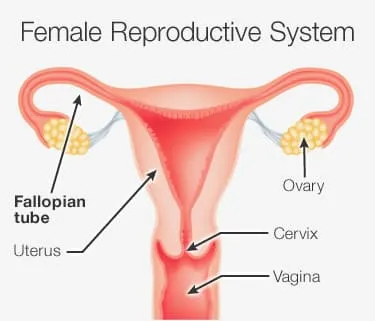
Your doctor may suggest an operation called "tubal ligation reversal." A surgeon will reopen, untie, or reconnect your fallopian tubes so you can have a baby again.
Can I Have Tubal Reversal Surgery?
Your doctor will consider several things before you both decide that the operation is right for you:
- Your age
- The type of surgery you had to get your tubes tied
- Your overall health and the health of your ovaries, uterus, and remaining fallopian tubes, especially their length
Your doctor will also ask you questions like:
- When did you have your tubes tied and what type of surgery did you have?
- Were you ever pregnant and was it a healthy pregnancy?
- Had you had surgery for endometriosis, fibroids, pelvic inflammatory disease (PID), or other gynecological disorders? Surgery can cause scar tissue, which may affect the success of the tubal reversal.
In general, tubal reversal could be right for you if you had only small parts of your fallopian tubes removed, or if your tubes were closed with rings or clips.
Some surgeons say the best candidates for tubal reversal are women younger than 40 who had their tubes tied right after childbirth, a procedure called postpartum tubal ligation.
Before the Procedure
Your doctor will likely suggest you and your partner get a complete physical exam. That way you can find out if there's anything that might keep you from getting pregnant after a tubal reversal.
Your exam may include blood and imaging tests to make sure your ovaries are normal. You'll also need a test called a hysterosalpingogram (HSG), to check the length and function of your remaining fallopian tubes. An HSG can be done using dye and X-rays or saline and air along with ultrasound.
Your doctor may also suggest that your partner get tests such as a sperm count and semen analysis to rule out any fertility problems.
How Is Tubal Reversal Done?
You'll need to go to a hospital or an "outpatient" center -- a place where you don't stay overnight after surgery. You'll be given general anesthesia, which means you'll be pain-free and won't be awake during the operation.
Your surgeon places a small lighted scope, called a laparoscope, through your belly button and into the pelvis area. This lets them look at your fallopian tubes and decide if reversal surgery is possible.
If they decide it's OK to do the reversal, your doctor then makes a small surgical cut, called a "bikini cut," near your pubic hair line. Microscopic instruments attached to the end of the laparoscope let them remove any clips or rings that were used to block your tubes, and reconnect the ends of the tubes to the uterus, using very small stitches.
The surgery usually takes about 2 to 3 hours.
Ask your doctor about other approaches to a tubal reversal.
Recovery After a Tubal Reversal
Recovery time depends on the surgical method your doctor used. Tubal reversal is major abdominal surgery that is more difficult and takes longer to do than your original tube-tying operation.
Some women may need to stay in the hospital for 1 to 3 days. But today, tubal reversal surgery is most often done using "microsurgical" techniques. An overnight hospital stay may not be needed. Women who have the microsurgical method usually go home the same day, typically within 2to 4 hours after the surgery is complete.
Your doctor will prescribe painkillers to help you manage any discomfort. Most women go back to their normal activities within 2 weeks.
Pregnancy Success Rates After Reversal
If your remaining fallopian tubes are healthy, and you and your partner don't have any other infertility issues, you have a good chance of getting pregnant after tubal reversal.
Keep in mind, though, that it doesn't work for everyone. Age plays an important role in whether you get pregnant after tubal reversal. Older women are much less likely than younger women to have success.
In general, pregnancy success rates range from 40% to 85%. When pregnancy does happen, it's usually within the first year.
Besides your age, getting pregnant after tubal reversal depends on things such as:
- Type of tubal ligation procedure you had
- Length of your remaining fallopian tubes, and whether they still work properly
- Amount of scar tissue in your pelvic area
- Results of your partner's sperm count and other fertility tests
- Your surgeon's skill
You'll need another X-ray dye test (hysterosalpingogram) about 3 to 4 months after surgery to make sure your tubes are open and working right.
Complications and Risks
All surgery has some risk. It's rare, but it's possible you could have bleeding, infection, damage to nearby organs, or reactions to anesthesia. Tubal reversal also gives you a higher risk of ectopic pregnancy, a life-threatening condition in which a fertilized egg grows outside your womb.
And sometimes, the area where you had the tubal reversal forms scar tissue and blocks the fallopian tubes again.
How Much Does Tubal Reversal Surgery Cost?
Insurance doesn't typically cover the procedure. Tubal reversal is expensive -- several thousand dollars for the surgery, along with anesthesia and hospital fees and the cost of fertility tests that you need to get before the procedure.
Alternatives to Tubal Reversal Surgery
You may want to consider in vitro fertilization (IVF). In this procedure, your egg and a man's sperm are fertilized outside the womb in a laboratory dish. The fertilized egg (embryo) is later placed into your womb.
IVF is also an option if you don't get pregnant after tubal reversal surgery.