Your sinuses are air-filled spaces inside your forehead, cheekbones, and behind the bridge of your nose. When they get inflamed -- usually because of an allergic reaction or an infection -- they swell, make more mucus, and the channels that drain them can get blocked.
The build-up of pressure in your sinuses causes pain that feels like a headache.
Symptoms
You’ll feel a deep and constant pain in your cheekbones, forehead, or the bridge of your nose. The pain usually gets stronger when you move your head suddenly or strain. At the same time, you might have other sinus symptoms, such as:
- A runny nose
- Feeling of fullness in your ears
- Fever
- Swelling in your face
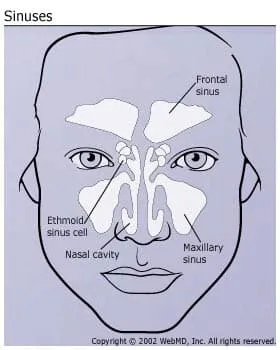
Other kinds of recurring headaches, like migraines or tension headaches, are often mistaken for sinus headaches. Because the treatment you need depends on what kind of headache you have, it’s important to figure out if your symptoms are caused by your sinuses. If a sinus blockage, such as an infection, really is the cause, you'll likely have a fever.
Usually your doctor can tell if your sinuses are blocked based on the symptoms you describe and a physical exam, but in some cases, you may need CT or MRI scans.
Treatment
The goal is usually to relieve your symptoms and treat an infection if you have one. You might take antibiotics, as well as antihistamines or decongestants for a short time. You can also use inhaled nasal decongestants, but only for up to 3 days. Longer use can make your symptoms worse.
You can also take pain relievers, or if they don't help, your doctor can prescribe corticosteroids to ease the inflammation in your sinuses. If an allergic reaction causes your sinus flare-ups, you might need a preventive allergy treatment.
You can also feel better with simple at-home tricks, such as drinking more fluids or using a humidifier or saltwater nasal spray.
It’s also possible to relieve sinus pain and pressure using a bioelectronic device that emits microcurrent waveforms. Sold over-the-counter, the device's waves target blood vessels and nerves to reduce sinus congestion and pain.
If you take decongestant and pain-relieving medicines too often, you might get medication overuse headaches. It's important to touch base with your doctor if you’re using any medication for a long time to relieve your headaches. Decongestants also can raise your blood pressure, so if you have high blood pressure, talk to your doctor before you take one.
In rare cases, they may recommend sinus surgery to remove polyps or open up small or constantly swollen sinuses.
Allergies and Sinus Headaches
Ever heard that allergies cause sinus headaches? It’s not quite that simple.
Allergies can cause sinus congestion, which can make your head hurt. Treatment for your allergies can ease that congestion, but it won’t relieve your headache pain. You usually have to treat the two conditions separately. See your doctor to make sure you get the right help.