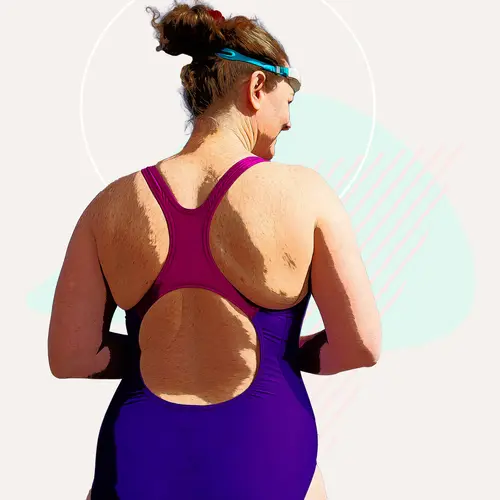
What Is Scoliosis?
Scoliosis is a sideways curve in your backbone (spine). The angle of the curve may be small, large, or somewhere in between. But anything that measures more than 10 degrees on an X-ray is considered scoliosis. Doctors may use the letters "C" and "S" to describe the curve.
About 2%-3% of Americans (6 million to 9 million people) have scoliosis. Most get it between the ages of 10 and 15. Although it can affect both genders, females are eight times more likely to need treatment than males. Often doctors don't know what causes your scoliosis.
Scoliosis diagnosed during the teen years can continue into adulthood. The more your spine is curved, the more likely it is to get worse over time. If you had scoliosis in the past, have your doctor check your back regularly.
Scoliosis Symptoms
If you have scoliosis, you might lean a little when you stand. You could also have:
- A visible curve in your back
- Uneven shoulders, and a waist that shifts to the side
- One shoulder blade that looks bigger
- Ribs that stick out farther on one side of your body than the other
- One hip appearing higher than the other or one leg longer than the other
Along with visible symptoms, scoliosis may lead to:
- Low back pain
- Back stiffness
- Pain and numbness in your legs (from pinched nerves)
- Fatigue due to muscle strain
- A hard time breathing because of an upper spine (thoracic) curve
Scoliosis pain
Teenagers who get scoliosis typically don't feel any pain. If your teen has severe back pain or numbness, a doctor needs to rule out other causes of the pain. Adults age 40 or older who have untreated scoliosis may start to feel pain as the disks in their back break down.
Scoliosis Diagnosis
Scoliosis test
There isn't one test for scoliosis. It's diagnosed with a variety of tests, including a physical exam and an imaging test like an X-ray, a CT scan, or an MRI.
The first test (and the one used in school screenings) is for you to stand with your feet together and bend 90 degrees at the waist, while wearing gym clothes or otherwise exposing your back. At this angle, your doctor can see whether your spine looks curved. This test, called the Adam's forward bend test, needs to be followed up with an imaging test to confirm that you have scoliosis.
Scoliosis X-ray
A technician will make a picture of your spine, using radiation. This test lets your doctor see the angle of your spinal curve and whether it needs to be treated. Usually, an X-ray of your back and side are taken. If you have a small curve, they may decide to do no treatment.
Scoliosis imaging
After a diagnosis of scoliosis from an X-ray, your doctor may follow up with an MRI or CT scan to try to figure out the cause. A CT scan can show the bony structures like your spine in greater detail. The MRI would look at soft tissue like the spinal cord and see whether you have any spinal disks breaking down.
Scoliosis degrees
Your doctor will measure the curve in your spine in degrees. If the curve is less than 10 degrees, you don't have scoliosis. If it's more than that, you have scoliosis:
- 10-24 degrees: Mild scoliosis
- 25-39 degrees: Moderate scoliosis
- 40 degrees or more: Severe scoliosis
The curve in your spine can increase if your scoliosis is not treated.
Scoliosis Types
Idiopathic scoliosis
This is scoliosis without a known cause and is the most common type. In as many as 80% of scoliosis cases, doctors don’t find out the exact reason for the curved spine. Idiopathic scoliosis is the diagnosis made when the other types have been ruled out.
Congenital scoliosis
This begins as a baby’s back develops before birth. Problems with the tiny bones in the back, called vertebrae, can cause the spine to curve. The vertebrae may be incomplete or fail to divide properly because one area of the spinal column lengthens more slowly than the rest. Doctors usually spot this rare condition when the child is born. But they may not find it until the teen years.
Neuromuscular scoliosis
This is caused by a disorder like spina bifida, cerebral palsy, or a spinal cord injury. These conditions sometimes damage your muscles so they don’t support your spine correctly. That can cause your back to curve.
Degenerative scoliosis
Adults over the age of 65 are the ones who might get this. It develops in the lower back as the disks and joints of the spine begin to wear out as you age. This type of scoliosis is usually milder than the others.
Rotoscoliosis
Here, the spine doesn't just bend to the side, as in idiopathic scoliosis; it also twists. This is a very severe form of scoliosis and is usually very painful.
Scoliosis Causes and Risk Factors
Some kinds of scoliosis have clear causes. Doctors divide those curves into two categories: structural and nonstructural.
In nonstructural scoliosis, the spine works normally but looks curved. This happens for a number of reasons, such as having one leg that's longer than the other, muscle spasms, and inflammations like appendicitis. When these problems are treated, the scoliosis often goes away.
In structural scoliosis, the curve of the spine is rigid and can’t be reversed.
Causes include:
- Cerebral palsy
- Muscular dystrophy
- Birth defects
- Infections
- Tumors
- Genetic conditions like Marfan syndrome and Down syndrome
Most types of scoliosis don't have a clear cause.
Is scoliosis genetic?
About 30% of people with scoliosis also have a family member with it. But no one gene has been found for idiopathic scoliosis. Researchers think that a variety of genes might affect whether you get it and how severe it is. There might be hormones or things in the environment at work, too (for instance, the amount of sunlight exposure a teen gets). Since girls are much more likely to have a severe curve than boys, scientists think the female hormone estrogen plays some kind of role. If you or one of your children has scoliosis, make sure your other kids are checked regularly.
Scoliosis Treatment
For mild scoliosis, you may not need treatment. Instead, your doctor might watch you and take X-rays once in a while to see if it's getting worse. Some children grow out of scoliosis.
If you or your child needs treatment, your doctor might suggest the following:
Scoliosis brace
In kids who are still growing, wearing a brace can stop the curve from getting worse. They're usually made of plastic and cover the front and back of your body, from the armpits to the pelvis. Many kids wear them 16-23 hours a day and take them off to shower. You can't see the brace under loose clothes, and it doesn’t stop you from doing everyday activities. Studies have shown that if kids wear these braces as instructed, they can stop a curve from getting worse 80% of the time.
Scoliosis surgery
This is done when a curve is over 40 degrees or there are signs it's getting worse. There are three main types of surgery:
Spinal fusion. Your surgeon puts pieces of bone or a similar material between bones in your spine. They use hardware to hold the bones in place until they grow together, or fuse. The surgery can lessen the curve in your spine as well as keep it from getting worse. The hardware stays in the spine permanently.
Expandable rod. This is done to correct more serious scoliosis in children who are still growing. Your surgeon attaches rods to your spine or ribs with hardware. As you grow, they adjust the length of the rods every 3-6 months. When growth is over, the surgeon takes out the rods and does a spinal fusion.
Vertebral body tethering. This newer treatment is done on children. Your surgeon puts screws on the outside edge of the spinal curve and threads a strong cord through the screws. As your spine lengthens, the tether slows growth on the curved side of the spine to give the other side of the spine to catch up. Eventually, the spine grows straighter. The screws and threads stay in the body permanently.
Scoliosis Prevention
There's no way to prevent scoliosis. While heavy backpacks may cause back, shoulder, and neck pain, they don’t lead to scoliosis. Neither does playing sports, though some should be avoided if you have scoliosis. These include sports that put a strain on your spine, like football, gymnastics, and horseback riding, as well as sports that overuse one side of the body, like golf and tennis.
And what about poor posture? The way a person stands or sits doesn’t affect their chances of having scoliosis. But a curved spine may cause a noticeable lean. If your child isn’t able to stand upright, ask your doctor to look at their spine.
Your doctor may recommend you do back and core (abdominal) exercises or go to physical therapy. How well scoliosis-specific exercises alone work to lessen a curve is still being studied, according to the American Academy of Orthopaedic Surgeons. Right now, the group says, they don't seem to work very well for that, though they may help with back pain and improve your posture.
Scoliosis Complications
If scoliosis is not treated, it can cause the following problems:
- Ongoing low back pain
- Breathing problems, since the rib cage may press against the lungs in very serious cases
- Low self-esteem, as your crooked spine becomes more noticeable to others
Other Reasons My Back Is Crooked
Besides scoliosis, there are two other main types of spine curvature disorders:
- Lordosis. Also called swayback, the spine of a person with lordosis curves significantly inward at the lower back.
- Kyphosis. This is an abnormally rounded upper back (more than 50 degrees of curvature).
Treatment for these conditions includes physical therapy, wearing a brace, and/or surgery.
Living With Scoliosis
Here are some tips for living with scoliosis:
- You can play most sports and do most exercises. Swimming, Pilates, and walking are all good, as they're low-impact and can strengthen your back muscles. If you had back surgery, avoid contact sports like wrestling, hockey, and football.
- Keep a healthy weight. Being too thin or too heavy can put stress on your bones.
- Practice good posture to take the strain off your back muscles.
- Wear shoes with good support in them.
- Have regular checkups with your doctor to see if your scoliosis is getting worse.
If you've had a spinal fusion surgery, your chances of getting arthritis early do increase – but so do your chances if you don't get surgery to correct your scoliosis. With a spinal fusion (particularly if you had the older type using a rod called a Harrington rod), your back will be less flexible, which might make it harder to do certain types of sports or exercises, like yoga.
Can scoliosis be cured?
It can't be cured in the sense of "made to go away." But surgery (with some permanent hardware) can straighten your spine either completely or lessen your curve. Bracing can stop your curve from getting worse.
Scoliosis exercises
Your doctor may send you to physical therapy so you can be given exercises specific to your spinal curvature. Here are some general exercises to reduce back pain and strengthen your back and core muscles:
Pelvic tilt. Lie on your back with your knees bent and your feet flat on the floor. Push your back into the floor by tightening your stomach muscles. Hold for 5 seconds, breathing normally. Then release. Do two sets of 10 repetitions.
Cat-cow stretch. Get on your hands and knees, pull your stomach in, and keep your head straight. Breathe in, and round your back so you look like an angry cat. Breathe out, tilt your pelvis so your tailbone sticks up, and look up slightly. (That's your cow position.) Return to your beginning neutral spine position. Do two sets of 10 repetitions.
Bird dog. Get on your hands and knees, and position your shoulders over your hands and your hips over your knees. Pull in your stomach and lift your right arm out to shoulder height and level with your body.
With your arm still raised, lift your left leg out from your hip. Hold this position for 15 seconds, keeping your raised arm and leg level. Slowly lower to the ground and repeat with the opposite arm and leg. Do this five times.
Plank. Lie on your stomach with your forearms on the floor and your elbows directly below your shoulders. Tighten your belly muscles and lift your hips off of the floor. Squeeze the muscles in your bottom and lift your knees off the floor. Keep your body straight, and hold for 30 seconds.
If this is too hard, hold for 15 seconds. Or just lift your hips and keep your knees on the floor. Return to start and rest for 30 seconds. Do this five times.
Takeaways
Most cases of scoliosis have no cause, but the condition does tend to run in families. If you have scoliosis, you may notice there's a curve to your spine. Treatment depends on how severe the curve is but can be a combination of exercises, wearing a back brace, or, in more serious cases, surgery.
Scoliosis FAQs
Is scoliosis a disability?
In the U.S., the Social Security Administration uses a medical guide called the Blue Book to find out if you're eligible for disability benefits. Scoliosis is not considered a disability by the Blue Book, but some spinal disorders are considered to be disabilities. If your scoliosis means that you have trouble walking or are in so much pain you have to reposition yourself more than once in 2 hours, you might qualify for disability benefits. For more information, visit the Social Security Administration website.
Can I live normally with scoliosis?
Yes. If it's mild, you can continue with your daily life with few problems. If it's more serious, you may need to wear a back brace for some years or have surgery. But after that, you can continue to do most things easily.
Does scoliosis get worse with age?
Yes, especially if it's not treated. There is also a type of scoliosis that mainly affects adults over 65.