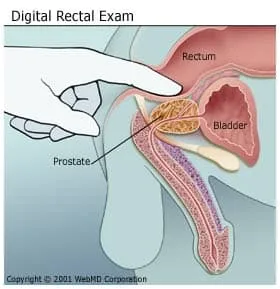
Doctors use the digital rectal exam (DRE) as a relatively simple test to check the prostate. Because the prostate is an internal organ, your doctor cannot look at it directly. But because the prostate lies in front of the rectum, they can feel it by inserting a gloved, lubricated finger into the rectum.
It may be performed in the screening of prostate cancer.
Who Should Get a Digital Rectal Exam?
Not all medical institutions agree on when men should begin screening (routine testing) for prostate cancer or even if a DRE should be part of the screening.
To help detect prostate cancer in its early stages, the American Cancer Society recommends that men talk to their doctors about the benefits, risks, and limitations of prostate cancer screening before deciding whether to be tested.
For most men at average risk, discussions about screening begin at age 50. However, some doctors recommend that men at higher risk of prostate cancer -- African-American men or men with a family history of prostate cancer -- start screening earlier.
What Happens During a Digital Rectal Exam?
Your health care provider will insert a gloved finger into the rectum and feel the prostate for hard, lumpy, or abnormal areas. The test takes only a few minutes to complete.
You may feel slight, momentary discomfort during the test. The procedure does not cause significant pain or any damage to the prostate.
What Happens After the Digital Rectal Exam?
You may go on with your normal activities. Your doctor will discuss the test results with you. If they detect a suspicious lump or area during the exam, further testing will be the next step.