Skip to content
My WebMD Sign In, Sign Up
Font Size
A
A
A

Prostate Cancer, Advanced or Metastatic - Treatment Overview

Choosing treatment for prostate cancer can be confusing. Any treatment probably will cause serious side effects. It's important to learn all you can about your choices and talk to your doctor about them.

Your treatment options will depend on:

  • What kind of cancer cells you have. This is called the grade or Gleason score of your cancer. Some prostate cancer cells grow more quickly than others.
  • Your age.
  • Any serious health problems you might have, including urinary, bowel, or sexual function problems.
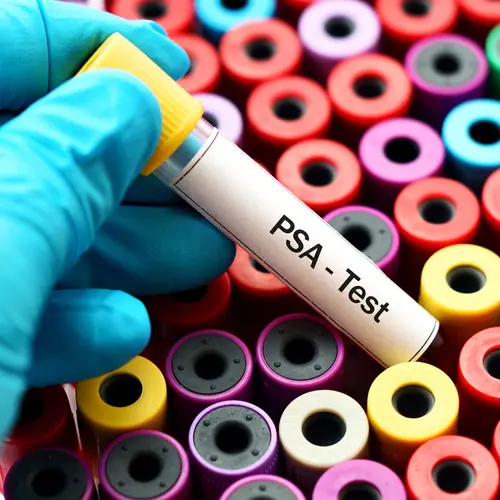
  • Your PSA level.

Treatment for locally advanced or metastatic prostate cancer may include hormone therapy, surgery, radiation therapy, and chemotherapy. You may want to talk with your doctor about entering a clinical trial of new cancer treatment options.

Some treatments being studied in clinical trials for advanced prostate cancer include ultrasound-guided cryosurgery, proton beam radiation, mixed beam radiation, and high-intensity-focused ultrasound (HIFU). For metastatic prostate cancer, treatments in clinical trials include new forms of chemotherapy and immunotherapy, including vaccines.

Prostate cancer and its treatment may cause nausea, pain, or other side effects. You can manage some side effects at home. If you experience nausea, wait for 1 hour after vomiting has stopped and then sip a rehydration drink to restore lost fluids and nutrients. Your doctor also may prescribe medicines to control nausea and vomiting. Constipation and diarrhea may be eased if you drink enough fluids.

Pain from cancer that has spread to the bones can be managed. If pain becomes a problem, talk to your doctor about seeing a pain management specialist. For tips on handling pain, see:

Cancer: Controlling Cancer Pain.

For more information, see the topic Cancer Pain.

Localized prostate cancer is cancer that has not spread outside the prostate. For more information on treatment of localized prostate cancer, see the topic Prostate Cancer.

Treatment for locally advanced prostate cancer

Prostate cancer that has spread to tissue around the prostate may be treated with:

  • Radiation therapy . This treatment uses high-energy X-rays or protons to destroy the cancer. Radiation treatments, both external and internal radiation, have been improved with newer technologies, so there are fewer side effects and complications than in the past. Radiation therapy usually is combined with hormone therapy.
    • External radiation. Also called external beam radiotherapy, or EBRT, radiation therapy uses high-energy rays, such as X-rays, to destroy the cancer. It is usually given in multiple doses over several weeks. For men with locally advanced cancers, ERBT may be given along with brachytherapy. Radiation destroys tissue, so it may damage the nerves along the side of the prostate that affect your ability to have an erection. If you already have bowel problems, external radiation may cause your symptoms to get worse. The two most common forms of external radiation are listed below:
      • Conformal radiotherapy (3D-CRT) uses a three-dimensional planning system to target a strong dose of radiation to the prostate cancer. This helps to protect healthy tissue from radiation.
      • Intensity modulated radiation therapy (IMRT) uses newer 3D-CRT technology to target the cancer.
  • Surgery.
    • Radical prostatectomy. This operation takes out your prostate gland and the cancer in and around it. After surgery, men usually are started on hormone therapy.
    • Transurethral resection of the prostate (TURP). This surgery can help relieve bladder problems, because it removes part of the tumor that may be blocking the urethra, the tube that carries urine from your bladder through your penis. The procedure is done under general anesthesia. This can keep the tumor from growing for a while. But TURP does not take out the whole tumor.
  • Hormone therapy, also called androgen deprivation therapy (ADT). Prostate cancer needs male hormones (testosterone) in order to survive. Hormone therapy decreases the amount of testosterone and other male hormones in your body. This often causes tumors to shrink. Shrinking the tumors can ease severe bone pain caused by the spread of cancer to the bones. Hormone therapy usually is combined with radiation therapy. The most common methods are:
    • LH-RH agonists and GnRH agonists. These drugs, such as goserelin (Zoladex), leuprolide (Lupron), and triptorelin (Trelstar), stop the body from making testosterone.
    • GnRH antagonists. These drugs stop the body from making testosterone. They work right away and avoid the flare caused by GnRH agonists that can make symptoms worse for several weeks. One GnRH antagonist is degarelix (Firmagon).
    • Antiandrogens. These drugs, such as bicalutamide (Casodex), often are used along with LH-RH agonists. Antiandrogens help block the body's supply of testosterone.
    • Orchiectomy. This is surgery to remove the testicles, which produce more than 90% of the body's male hormones (androgens), including testosterone.
1 | 2 | 3 | 4

WebMD Medical Reference from Healthwise

Last Updated: March 01, 2011
This information is not intended to replace the advice of a doctor. Healthwise disclaims any liability for the decisions you make based on this information.
Next Article:

Today in Prostate Cancer

Prostate Cancer Overview
SLIDESHOW
what is your cancer risk
HEALTH CHECK
 
Prostate Exam
VIDEO
Prostate Nerve Transplant
VIDEO
 
cancer fighting foods
SLIDESHOW
15 Cancer Symptoms Men Ignore
FEATURE
 
Prostate Enlarged
VIDEO
Picture Of The Prostate
ANATOMY
 
Prostate Cancer Quiz
QUIZ
screening tests for men
SLIDESHOW
 
Prostate Cancer Symptoms
VIDEO
Vitamin D
SLIDESHOW