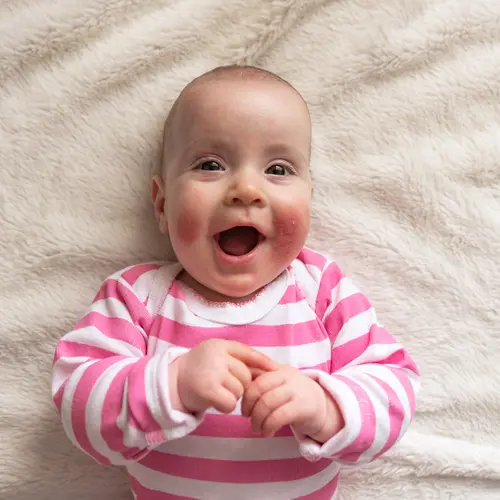
Did you have eczema as a kid and now get hay fever as an adult? Does your child have red, itchy rashes while you or your partner has seasonal allergies or asthma? If so, it's no coincidence. The eczema rash on your child's skin can sometimes be linked with allergies, hay fever, and asthma.
Studies show that if one or both parents have eczema, asthma, or seasonal allergies, their child is more likely to have eczema. What's more, children with the disease may be more at risk for getting allergies or asthma.
Scientists are still studying the link between the conditions. But understanding the connection can help you manage the disease. There are things you can do to soothe the itch and maybe cut the chance of having allergies.
What Is Eczema, and Who Gets It?
Eczema is the term for a few different skin conditions. But most of the time, it refers to a common skin disease called atopic dermatitis, which causes a dry, itchy, red rash. If you scratch it, it can start to ooze and crust over. Do it over time, and your skin can get thick and dark.
Most people with eczema get it as children. Symptoms often improve by age 5 or 6, and flare-ups stop for more than half of kids by their teenage years. But many people still have the disease as adults, though their symptoms tend to be milder. It’s less common to get eczema for the first time as an adult.
The Eczema-Allergy Connection
Doctors used to think eczema was just a sign of an allergic reaction -- your body overreacting to a harmless allergen, like pollen or dander. Now, most agree that eczema is actually a problem with the outer layer of your skin.
Still, they know it's connected to allergic conditions like food allergies, hay fever, and asthma.
- Up to 80% of kids with eczema get hay fever or asthma later in childhood.
- Thirty-five percent of adults with asthma or nasal allergies had eczema when they were kids.
- If a mom has allergies, there's almost a 1 in 3 chance their baby will have eczema.
- Thirty-seven percent of kids with moderate to severe eczema also have food allergies.
Most types of eczema are not allergies. But the disease can flare up when you’re around things that cause an allergic reaction. You might get hives, itching, swelling, sneezing, and a runny nose. Allergens can include:
- Dust mites
- Pollen
- Pet dander
- Some foods
- Makeup and other cosmetics
- Mold
- Soaps
Try to avoid the things that set off your skin symptoms. One way to know if you have an allergy is to see if your skin flares up when you're exposed to something.
Your doctor can also test you for allergies by putting a little bit of a substance on or under your skin. If you're allergic, a red bump will pop up. Your doctor may also do a blood test to check for immunoglobulin E (IgE), which is something your body makes when you come into contact with something you’re allergic to.
Food Allergies and Eczema
Children with eczema are also more likely to have food allergies. They often make eczema symptoms worse for kids but not for adults. If you have eczema, eating -- or just touching -- certain foods can make your skin flare up. Food allergies linked to eczema may include:
- Cow's milk and other dairy products
- Eggs
- Nuts
- Soy
- Wheat
How can you tell which foods cause flare-ups? Sometimes, the best way is to look for skin symptoms after you eat that food. Your doctor can also give you a test called a food challenge. You eat the food that you think may cause the symptoms, and your doctor watches for a reaction.
Research on the Link
Researchers are still uncovering details about the causes of eczema that may lead to better treatments. Some recent areas of study include:
Genes. Genes seem to play a role. Kids who have a parent, brother, sister, or other family members with allergies or asthma are more likely to get eczema. Researchers have found that some people with the condition have a gene flaw that causes a lack of proteins called filaggrin and loricrin in their skin. They help form the protective outer layer of our skin and keep out germs and more. A lack of filaggrin dries out and weakens that skin barrier. People who don't make enough of these proteins lose more water from their skin, which causes the dryness and itchiness of eczema. This makes skin vulnerable to irritants, like soaps and detergents. It also makes it easier for allergens to get into the body. Scientists believe that that makes people more sensitive to those allergens and even some foods. One study found that infants with eczema had a breakdown in their skin barrier that made them more likely to get food allergies. That breakdown exposed immune cells in their skin to proteins in foods like eggs and cow's milk. These proteins caused their immune system to react.
How the body reacts to allergens. Small gaps in the skin make it dry out quickly and let germs and allergens into the body. When allergens enter the skin, they prompt the body to make chemicals that lead to redness and swelling, called inflammation. Research also points to a problem with a type of white blood cell that releases chemicals that help control allergic reactions in the body. This may help explain why people with eczema have outbreaks when they’re around allergens.
Too many antibodies. Immunoglobulin E (IgE) is a type of antibody that plays a role in the body's allergic response. People with eczema have higher-than-normal levels of it. Researchers are working to understand why people with the skin condition make too much IgE and what role this may play in the disease.
Tips to Prevent Flare-Ups
To manage eczema, you need to moisturize daily and take your medication as your doctor prescribed it. It also helps to avoid allergy triggers. Try these tips:
- Get allergy testing. If you can pin the problem on a specific thing, you can figure out ways to avoid it.
- Keep an eczema journal. Write down where you were and what you were doing when your symptoms flared up. It can help you figure out what things might be triggering them. Share the journal with your doctor during appointments.
- Stay away from things that irritate your skin. Common ones include wool, soaps and detergents (always use unscented soap and laundry detergent), perfume, chemicals, sand, and cigarette smoke.
- Avoid allergy triggers.Pollen, mold, pet dander, dust mites, and other allergens may make eczema flare up. You could try a dust-proof mattress and pillow covers, remove carpets, avoid contact with animals, and stay indoors when pollen counts are high. Keep your windows closed and the heat or air conditioning on to keep pollen out of your house.
- Keep the humidity in your house below 45% to prevent mold growth.
- Use an exhaust fan while you shower or take a bath to stop mold from growing on your bathroom walls.
- Use a moisturizer. Go for thick creams and ointments that stop skin from drying out.
- Breastfeed. There's some evidence that doing this for the first 6 to 12 months of your child’s life may lower their chance of having allergies or asthma later.
- Diet changes. If your baby has a high risk of allergies, some doctors recommend changes in diet. You might hold off on solid foods until your baby is at least 6 months old.
- Keep fingernails short. Your child will do less damage to their skin when they scratch.
- Watch for problems. If your child's eczema seems to be getting worse, or they have allergy symptoms like congestion or a runny nose, see a doctor. The sooner you get treatment, the better.
You can also ask your doctor about allergy shots. These slowly expose your body to more and more of something that triggers your allergies. Over time, these shots can stop allergy symptoms. They can also help some people with their eczema.