What Is Vitiligo?
Vitiligo is a condition in which white patches develop on the skin. Any location on the body can be affected, and most people with vitiligo have white patches on many areas.
Vitiligo Causes and Risk Factors
The skin doesn't have its characteristic color because it has lost its melanin. For some reason, the pigment-forming cells known as melanocytes have been destroyed.
We don't know why this happens. It might be an autoimmune condition, where your body's defenses turn on your own cells instead of attacking invading germs.
Although vitiligo affects all races equally, it's more noticeable in dark-skinned people.
.image-container-right { width: 100%; margin-bottom: 1rem; } @media screen and (min-width: 25rem) { .image-container-right { float: right; margin-left: 2rem; width: 17.5rem; } }
Who Is Likely to Get It?
Up to 2% of the population and an estimated 2 to 5 million Americans have the condition. It doesn't matter if you're a man or a woman.
In most cases, it develops early in life, between ages 10 and 30. It will almost always show up before age 40.
Vitiligo may run in families. You're more likely to get it when someone else in your family has it, too, or when people in your family get gray hair prematurely.
Autoimmune diseases, such as autoimmune thyroid disease (Hashimoto's thyroiditis) or type 1 diabetes, can also raise your odds.
Vitiligo Symptoms
You'll often lose pigment quickly on several areas of your skin. After the white patches appear, they may stay the same for a while, but later on, they might get bigger. You may have cycles of pigment loss and stability.
Vitiligo commonly affects:
- Body folds (like armpits)
- Places that have been injured in the past
- Areas exposed to sun
- Around moles
- Around body openings
- Mucous membranes (tissues that line your nose and mouth)
It can also affect eyelids and hair.
It's rare for pigment to return once the white patches have developed.
Vitiligo Types
There are five types of vitiligo. Which type you have depends on where you have it.
Generalized is the most common type. This is when discolored patches show up all over your body.
Segmental is when your vitiligo is confined to one area of your body, like your face or your hands.
Focal happens when the discoloration stays in one spot and doesn't spread.
Trichrome is when there is an area of heavy discoloration, followed by an area of lighter discoloration, followed by regular-color skin.
Universal is a rare type. If you have this, at least 80% of your skin is discolored.
Vitiligo Diagnosis
Your doctor can usually make a diagnosis of vitiligo by looking at your skin during a physical exam. You might also have other tests, including blood tests and:
- Module: image
Skin biopsy, where a sample of your skin is sent to a laboratory for further examination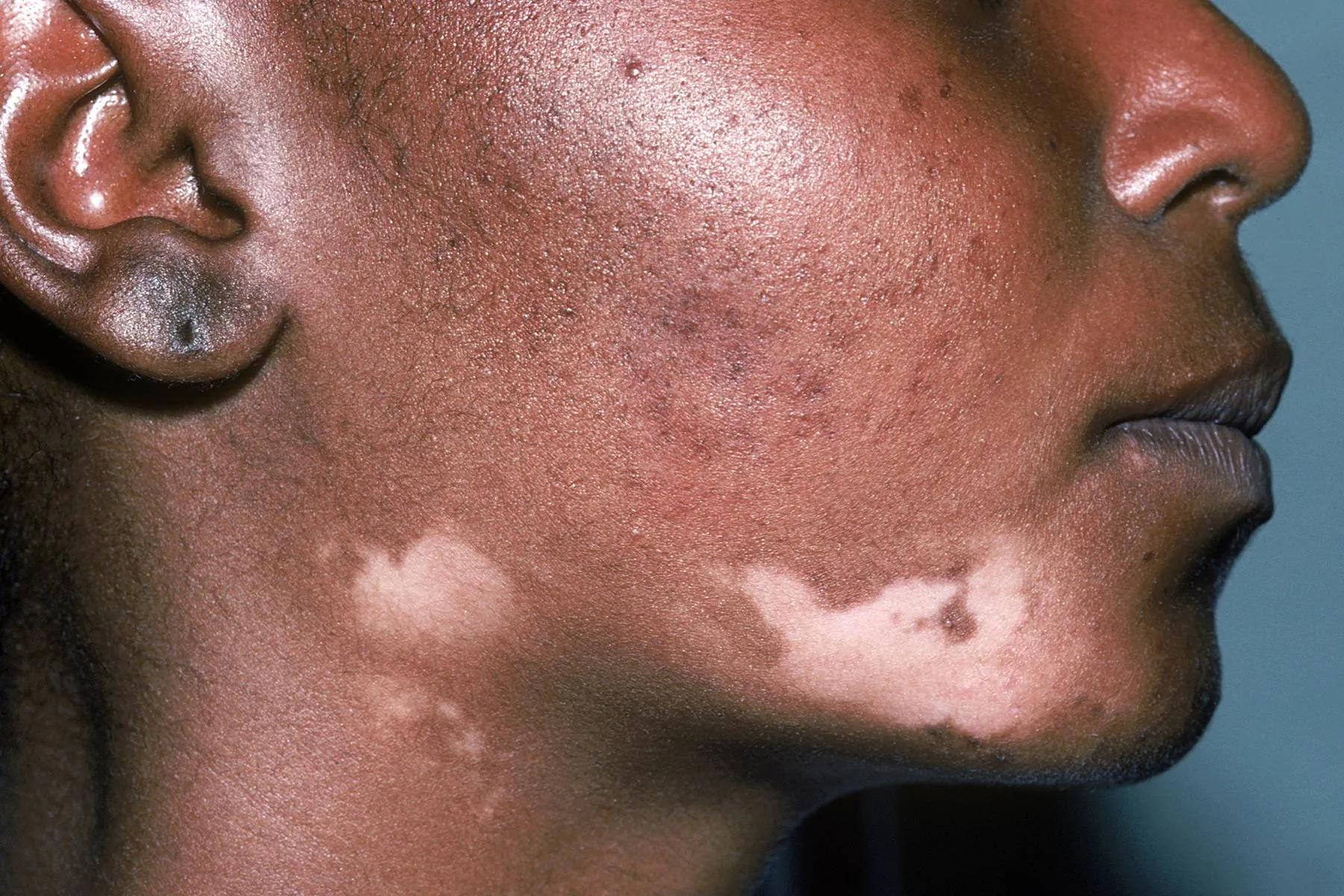
- A Wood's lamp test, where a doctor looks at your skin under UV light
Vitiligo Treatment and Home Remedies
There's no known way to prevent or cure vitiligo. But you can make your affected skin look better. Which treatment may work best for you depends on how old you are, how much skin needs improving, and how much your vitiligo affects you.
Medications for vitiligo
The FDA has approvedruxolitinib (Opzelura) cream for the treatment of nonsegmental vitiligo in adult and pediatric patients 12 years of age and older. It has shown success in repigmentation when applied twice daily for 6 months on vitiligo areas up to 10% body surface area.
Otherwise, your doctor may prescribe a corticosteroid cream to put on affected skin to try to give it its color back. It may take months to see changes in your skin. You might also see some streaks or lines on your skin, or your skin may get thinner.
If your vitiligo is progressing quickly, your doctor might suggest a corticosteroid pill or injection.
In rare cases, they may suggest an ointment called a calcineurin inhibitor ointment. It affects your immune system to ease inflammation. You might get it if your vitiligo is in a small area, usually around your face and neck. Doctors don't prescribe these often, as these medicines are linked to skin cancer and lymphoma.
Therapies for vitiligo
There are a few different techniques that can help.
Phototherapy, or light therapy, using UVA light can slow or stop the progression of your vitiligo. In most cases, you'll do this in combination with any medicines your doctor prescribes. Usually, you'll get this therapy a few times a week in a doctor's office. But there are portable devices that can allow you to get treatment at home. Ask your doctor about it.
Sometimes, doctors use light therapy along with a substance called psoralen. You would take psoralen by mouth or as an ointment, then get light therapy using UVA light. While this therapy is effective, it's much more difficult to give than regular phototherapy.
If other treatments haven't worked and your vitiligo covers a lot of your body, your doctor may recommend a procedure called depigmentation. A substance goes on the unaffected areas of your skin once or twice a day for about 9 months. Gradually, that skin will permanently lighten so that it matches the rest of your skin.
Side effects can include:
- Swelling
- Redness
- Itching
- Dry skin
Talk to your doctor about which of these treatments might be right for you.
Alternative medicine forvitiligo
A few studies suggest that ginkgo biloba can give you some of your skin color back.
Some experts also say some supplements can help phototherapy be more effective, including:
- Alpha-lipoic acid
- Folic acid
- Vitamin C
- Vitamin B12
Be sure to talk with your doctor before you take any supplement. They could affect any medicines you're already taking.
Home remediesforvitiligo
There are some things you can do at home to help your skin look better:
- Cover affected skin with makeup or tanning products.
- Use sunscreen (at least SPF 30) when you’re outside, and reapply it every 2 hours.
- Stay away from tanning beds.
- Don't get tattoos. The damage they do to your skin can cause more vitiligo.
Surgery for vitiligo
If other treatments haven't worked for you, your doctor may recommend surgery. The goal of these procedures is to even out the tone of your skin.
Skin grafting is where a surgeon transfers healthy portions of your skin to the discolored areas. Your doctor might suggest this if you have small patches of vitiligo.
In blister grafting, your surgeon will use suction to create blisters on your healthy skin, then move the top of those blisters to your discolored skin.
A cellular suspension transplant is when your doctor takes tissues of your healthy skin, puts them into a solution, and moves them onto your discolored skin. Results of this may take weeks to show up.
Your doctor will let you know if one of these procedures can help you.
Complications of vitiligo
If you have vitiligo, you may be more likely to get:
- Sunburn
- Eye issues
- Hearing loss
The changes in your appearance can also make you feel down, stressed, or self-conscious. A lot of things can help, including:
- Talking about it with friends and family
- Finding a support group, either in person or online, so you can talk with people going through the same things you are.
- Seeing a doctor who knows a lot about the condition, so they can find the best treatment and help for you.
Be sure to tell your doctor if you feel depressed. They can recommend a mental health professional who can help you feel better.