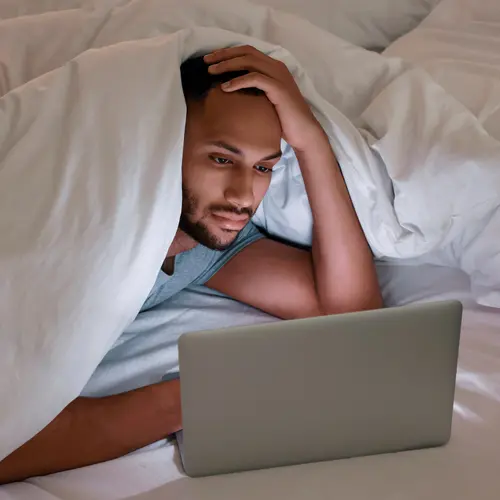
The same sleep strategies used by world-class athletes are all good for regular folks. There's no doubt about the importance of sleep.
"We know that sleep loss is going to create significant detriments in performance," says Mark Rosekind, PhD, president of Alertness Solutions and a former NASA scientist. "There are lab studies that show that if you're an eight-hour sleeper and you get six hours of sleep, that two-hour difference can impact your performance so that it equates to how you would perform if you had a 0.05 blood-alcohol level."
World-class athletes competing in the Olympics obviously need their sleep if they're going to bring home the gold. For those of us who can only dream of speed skating and downhill ski courses called the Super G, counting sheep is just as important -- even if there isn't a medal at the end of the rainbow.
Optimum Sleep Environment
With the Winter Olympics in Torino just around the corner, U.S. athletes are focused on one thing: gold. To give them an extra edge, officials at the Olympic training facility in Colorado Springs, Colo., brought Rosekind in to evaluate the athletes' sleeping conditions. From lighting to beds to alarm clocks, Rosekind made changes that, while seemingly simple, can only have a positive impact on performance.
"First, we looked at environmental factors for the room, for example, light, temperature, and noise," says Rosekind, who is a board member for the National Sleep Foundation.
Light involves the use of blackout curtains, Rosekind explains, to keep the room sufficiently dark but not so dark that when you wake up in the middle of the night to go to the bathroom you stub your toe on a chair. For a figure skater, that's not good.
"Temperature-wise, cool is better than warm," says Rosekind. "You need to have some kind of accurate control, like a thermostat, or have things like extra blankets so you can control the temperature during the night."
Noise Control and Comfortable Beds
Noise is another factor that can have an impact on sleep.
"With noise, what most people need to know is that it's the intrusive noise events, like doors banging, that are the most disruptive for peoples' sleep," Rosekind tells WebMD. This problem, however, is easily solved by masking the intrusive sounds with background noise, like a fan or sound machine.
Next, Rosekind tackled the beds.
"The second big area had to do with the beds and personal comfort," says Rosekind. "With the Olympic program, the training rooms originally had twin beds, which you can imagine for some athletes could be a problem."
Out went the tiny twins and in came full size plush-top mattresses and box springs with extra pillows (some of which were hypoallergenic), cotton sheets, and blankets -- all an easy fix for athletes who were simply too big for their own beds.
Finally, Rosekind considered the other end of the spectrum -- waking up. For athletes who tend to burn the Olympic torch at both ends, a reliable alarm clock is essential.
"The third thing which is so often overlooked is an alarm clock," says Rosekind. "Hilton [Hotel] has a new alarm clock that you can trust to go off and it's easy to operate."
Taking Care of the 'Extras'
After making major changes to the Hilton Hotel sleep environment at the Olympic Training Center, Rosekind looked at amenities in the athletes' rooms that affect sleep.
"The extra things we looked at were lighting in the room, like a floor lamp and desk lamp, and a very comfortable desk chair," says Rosekind, which reminds people to work at their desk, not in their bed.
So after all of the renovations Rosekind made to the rooms, have the athletes seen any improvements in performance?
"We know optimal sleep translates into optimal performance," says Rosekind. "Given the amount of 'measurement' that Olympic athletes undergo, it became clear that an independent and focused evaluation on just the sleep changes was not going to be possible. However, there is no question that improving sleep will lead to enhanced performance."
Anecdotally, Rosekind says speed skater Apolo Ohno is pleased with the results.
"The first room was for speed skater Apolo Ohno," says Rosekind. "After the first couple of nights he was already saying that he could feel a difference, not only a good night's sleep but how it was affecting his performance. When all the other athletes saw his room, they wanted to know when their's was being done because it was going to translate into a performance difference for them."
Sleep is a critical factor in ensuring Olympians stay at the top of their game, and the changes Rosekind made help optimize their ability to fall asleep, sleep well, and wake up rested.
"Not only do athletes need sleep to improve on their athletic skills, but the restoration that occurs within muscles during deep sleep is important," says Sara Mednick, PhD, a sleep researcher at the Salk Institute in La Jolla, Calif. "If you don't get enough sleep it can be detrimental to your performance."
Sleep Like an Olympian
With all 160 Hilton rooms now redesigned to ensure the athletes are getting an optimal night's sleep, the question is, how can we sleep like an Olympic athlete?
"Eight hours of sleep is the standard," says Mednick. "There is a range, but 7.5 to eight hours of sleep is the optimal amount."
Like the athletes' rooms, all of the same rules apply: low light, cool temperatures, and background noise.
"Sleeping in low light is important," says Mednick. "You need the hormone melatonin to sleep, and melatonin is only released under low-light conditions."
Cool temperatures, as Rosekind arranged for the athletes, are just as important for those of us who will watch the Winter Games from our couch.
"The room temp needs to be on the cooler side," says Daniel McNally, MD, director of the Sleep Disorders Center at the University of Connecticut Health Center. "Your body temperature tracks your circadian rhythm, so as night begins, your body temp falls and it reaches a minimum right after you go to bed. If you are in an environment where you can't lose body heat, for instance if it's hot and humid, you won't sleep well."
And while most of us love to hit it, stay away from the ever-popular snooze button.
"Snooze alarms are the enemy of good sleep," says McNally. "It feels better, but it's not good in terms of keeping your internal circadian clock strong so your brain knows when it should sleep, and when it should get up."
The Impact of Alcohol
Alcohol is another no-no when it comes to sleeping like an Olympian. Even though we think that glass of wine will knock us out, not so.
"It makes you sleepy at first, but then as your alcohol levels fall, your sleep is more disrupted and fragmented then normal," McNally tells WebMD. "It makes things worse rather than better."
Without sleep, the analogy of a blood alcohol level of 0.05 rings true -- even if you skip the glass of merlot.
"You're going to be sluggish, not have enough energy, and have an irritable mood," says Mednick. "It's difficult to stay focused and make decisions because your body is not in its optimal state."
Personalize Your Sleep
The art of sleep, while a crucial part of sports performance and everyday life, can be easy.
"I use to work at NASA so I can say this, but this is not rocket science," says Rosekind. "It's kind of amazing that this is not high-level stuff, but most people have not evaluated their own sleep environment, even though they spend a third of their lives asleep."
When it comes to catching Zzz's -- whether you're a superstar athlete who's ready to go for the gold at the Winter Games, or an average skier who avoids moguls like the plague -- the key to sleep is to optimize your sleep environment, but also go with what works for you.
"You need to control and create a sleep environment that is personally the most comfortable for you," says Rosekind. "You want your sleep surface and the accouterments, like pillows, blankets, etc., to be as comfortable as possible for you."