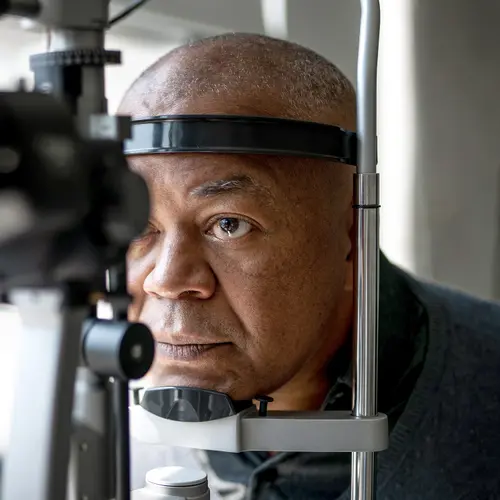
What Is Age-Related Macular Degeneration?
Age-related macular degeneration (AMD) is an eye disease that may get worse over time. It’s the leading cause of serious, permanent vision loss in people over 50, with about 1 in 10 people in the U.S. affected by the condition.
It happens when the central portion of your retina, called the macula, wears down. The retina is the light-sensing nerve tissue at the back of your eye.
Because the disease happens as you get older, it’s often called age-related macular degeneration. It usually doesn’t cause blindness but might cause serious vision problems.
Another form of macular degeneration, called Stargardt disease or juvenile macular degeneration, affects children and young adults.
Symptoms of Age-Related Macular Degeneration
Early on, you might not have any noticeable signs of macular degeneration. It might not be diagnosed until it gets worse or affects both eyes.
Symptoms of macular degeneration may include:
- Worse or less clear vision. Your vision might be blurry, and it may be hard to read fine print, drive, or recognize faces.
- Dark, blurry areas in the center of your vision
- Straight lines look wavy
- Worse or different color perception
If you have any of these symptoms, see an eye doctor as soon as possible.
Types of Age-Related Macular Degeneration
There are two main types of age-related macular degeneration:
Dry AMD. People with this most common type may have yellow deposits, called drusen, in their macula. A few small drusen may not cause changes in your vision. But as they get bigger and more numerous, they might dim or distort your vision, especially when you read.
The condition causes gradual vision loss. As it gets worse, the light-sensitive cells in your macula get thinner and eventually die. In the atrophic form, you may have blind spots in the center of your vision. If that gets worse, you might lose central vision.
Wet AMD. This is a less common type of late-stage AMD. It tends to cause faster vision loss. Unstable blood grow from underneath your macula. These blood vessels leak blood and fluid into your retina, distorting your vision. You may also have blind spots and loss of central vision. These blood vessels and their bleeding can eventually form a scar, leading to permanent loss of central vision.
Most people with macular degeneration have the dry form, but that can lead to the wet form. Only about 20% of people with macular degeneration have the wet form.
If you have macular degeneration, you’ll need to see your eye doctor regularly and let them know whenever you notice changes in your vision.
Causes of Age-Related Macular Degeneration
Experts aren't sure why some people develop AMD and others don't. They believe that your genes and your environment may play a role.
People who get wet AMD always have dry AMD first. But those with dry AMD don't always go on to develop the wet type.
Age-Related Macular Degeneration Risk Factors
Risk factors for both types of AMD include:
- Smoking
- High blood pressure or high cholesterol
- Eating lots of saturated fat
- Having obesity
- Being assigned female at birth
- Having light skin
AMD epidemiology
AMD is the leading cause of permanent blindness in the industrialized world (with over 170 million people affected), and the third cause globally. Some other AMD facts and figures:
- Among different racial groups, non-Hispanic White European people are at highest risk of getting AMD, followed by Hispanic, Black, and Asian people.
- People over 75 are nearly 15 times more likely to get AMD than those 50-59 years old.
- Women are slightly more likely than men to get AMD. But this may be simply because they tend to live longer.
Age-Related Macular Degeneration Diagnosis
Your doctor can check you for age-related macular degeneration when you see them for a routine eye exam and have your eyes dilated.
Tests for AMD
These tests can help your doctor diagnose the condition:
Retinal exam. During your eye exam, the doctor will examine your retina. They'll look for drusen under the retina.
Amsler grid. Your doctor may also ask you to look at an Amsler grid, a pattern of straight lines that's like a checkerboard. If some of the lines appear wavy or are missing, that could be a sign of macular degeneration.
Angiography. If your doctor finds AMD, you may have a procedure called angiography or one called optical coherence tomography (OCT). In angiography, your doctor injects dye into a vein in your arm. They take photographs as the dye flows through blood vessels in your retina. If there are new vessels, or if vessels are leaking fluid or blood in your macula, the photos will show their location and type. OCT is an imaging scan that can show fluid or blood underneath your retina without dye.
It’s important to see your eye doctor regularly to find signs of macular degeneration early. Treatment can slow the condition or make it less serious.
Stages of Age-Related Macular Degeneration
There are three stages for dry AMD:
- Early. In this stage, you have no symptoms.
- Intermediate. Some people have no symptoms in this stage. Or, you may notice minor symptoms like central vision blurriness or trouble seeing things in dim light.
- Late. In this stage, you will likely start to see straight lines as wavy. You may also have blurring in the center of your vision that can expand or get worse over time. Colors may look less bright, and it's even harder to see in low light.
Wet AMD is always considered late stage. But dry AMD may turn into the wet form during any stage.
Age-Related Macular Degeneration Treatment
Treatment may slow the condition down and help preserve your vision. But there’s no cure for macular degeneration.
Supplements and Medications for AMD
Right now, there are no medicines or procedures for dry AMD. Your treatment options include:
Supplements. A large study by the National Eye Institute, called AREDS (Age-Related Eye Disease Study), found that a certain combination of vitamins and nutrients may protect the eyes of some people with intermediate or late-stage AMD. The supplements may slow intermediate AMD's progression to advanced and might help some people keep their sight longer, too. Researchers later tweaked the formula, giving it the name AREDS2.
If you have a lot of drusen in your eyes, your doctor might recommend you take AREDS2 supplements. If you’ve lost vision in one eye, the supplements may also lower your chances of getting wet AMD and vision loss in your other eye.
AREDS2 supplements are sold over the counter. They're a combination of:
- Vitamin C (ascorbic acid)
- Vitamin E, lutein, zeaxanthin, and zinc (as zinc oxide)
- Copper (as cupric oxide)
These supplements don’t help everyone with dry AMD, though. Ask your eye doctor if they might be right for you. If your doctor gives you the green light, ask them to recommend a brand. Also ask your doctor to explain all the possible benefits and risks before you start taking the supplements. They may be part of some people’s treatment for wet AMD, too.
These supplements don't work to prevent AMD, so there's no need to take them if you don't have the condition.
If you have wet AMD, your treatments might include:
Anti-angiogenesis drugs. These medications block the creation of blood vessels and leaking from the vessels in your eye that cause wet AMD. You usually get them as injections into your eye.
The main protein causing that growth is vascular endothelial growth factor (VEGF). VEGF inhibitors include: aflibercept (Eylea), bevacizumab (Avastin), pegaptanib (Macugen), and ranibizumab (Lucentis).
Blocking angiopoietin-2 (Ang-2), another protein involved in forming blood vessels, helps stabilize fragile new vessels so they don't leak. It also makes vessels less sensitive to the effects of VEGF.
VEGF/Ang-2 inhibitors include:
- Faricimab-svoa (Vabysmo).
Many people who’ve taken these drugs got back some vision that was lost. You might need to have these treatments multiple times.
Procedures for AMD
Several options are available for AMD:
Laser therapy. High-energy laser light can destroy abnormal blood vessels growing in your eye.
Photodynamic laser therapy. Your doctor injects a light-sensitive drug – verteporfin (Visudyne) – into your bloodstream, and it’s absorbed by the abnormal blood vessels. Your doctor then shines a laser into your eye to trigger the medication to damage those blood vessels.
Researchers are also studying experimental treatments for age-related macular degeneration. They include:
- Submacular surgery. This procedure removes abnormal blood vessels or blood.
- Retinal translocation. This destroys abnormal blood vessels under the center of your macula, where your doctor can’t use a laser beam safely. In this procedure, your doctor moves the center of your macula away from the abnormal blood vessels to a healthy area of your retina. This keeps you from getting scar tissue and more damage to your retina. Then, your doctor uses a laser to treat the abnormal blood vessels.
Alternative options for AMD
There's no scientific proof that any type of alternative treatments work for AMD, and they can't replace medical treatments. But some people use supplements or alternative therapies along with standard treatments. Always ask your doctor before you try an alternative treatment, as some could interact with your medications or cause side effects.
Herbs. Among the herbs that may have some benefits to eye health are:
Gingko. This herb contains flavonoids, a substance known to promote eye health. A couple of studies found that people who took gingko were able to slow down vision loss.
Milk thistle. Milk thistle contains a substance called silymarin that's good for your liver. Because your liver stores certain vitamins, it plays a role in eye health.
Bilberry and grape seeds. These are also high in flavonoids.
Alternative therapies. While there's no real evidence to show these practices are effective, some people try them for AMD symptoms:
Acupuncture. This treatment involves placing tiny needles into specific points of your body. Some people who practice acupuncture think it helps with AMD by increasing blood flow to the eyes.
Microcurrent stimulation. This involves applying a slight electric current in the area around your eyes. The idea is that it could help cells in the retina get rid of waste products
Age-Related Macular Degeneration Health Disparities
While White people of European descent appear more likely to get AMD than other groups, anyone can get it. Research has found differences in how people of color are diagnosed with and treated for the condition.
Studies have shown that Black people with AMD were 23% less likely than White AMD patients to be treated with anti-VEGF injections, the main treatment for dry AMD. Latino and Asian American people are also less likely to be given this treatment.
Studies also show that Black people are 18% less likely than their White counterparts to get regular eye exams, which are important for detecting AMD.
Other research shows that people of color are under-represented in clinical studies of new treatments for eye diseases. The rate at which Black people take part has been decreasing over the past 20 years, even as more Latino and Asian people take part.
The reasons for these disparities aren't clear, but may involve a number of things, including access to health care, cultural mistrust of the health care system, and bias.
Complications of Age-Related Macular Degeneration
Age-related macular degeneration doesn't cause total blindness, even though it can affect central vision and cause permanent damage to your eye. Your vision loss might make it hard to:
- Drive
- Read
- Recognize faces
- Do household tasks like cooking or yardwork
Serious AMD can cause you to become legally blind.
Living with Age-Related Macular Degeneration
When you have AMD, you may need to seek help or change the way you do some of your everyday activities. But with the right support, you should be able to remain independent and maintain a good quality of life.
AMD and diet
When you're diagnosed with AMD, your doctor may tell you to eat a balanced diet that’s rich in antioxidants and includes eye-friendly foods like:
- Fish high in omega-3 fatty acids such as salmon, anchovies, mackerel, and trout (aim for two to three times weekly)
- Nuts, which are rich in vitamin E, selenium, and zinc (about a handful weekly)
- Dark leafy greens like kale and spinach (daily)
- Yellow/orange veggies like peppers and carrots (daily)
- Antioxidant-rich fruits, like berries (daily)
Costs of AMD
AMD can bring extra costs in several areas, including:
- Doctor visits, treatments, and vision therapy
- Low-vision aids and technology
- Home modifications
- Pay for caregivers
- Lost productivity at work
AMD treatments can be expensive, though how much you pay out-of-pocket depends on your insurance. Without insurance, a 2-year course of treatment could cost between $9,000 and $65,000 per year, depending on what your doctor prescribes. Some drug companies and other groups offer programs to help low-income people with the costs.
Managing AMD
Some things that can help you adapt to the vison limits that may come with AMD include:
Low-vision aids. These include devices that have special lenses or electronic systems to create larger images of nearby things. They help people who have vision loss from dry or wet macular degeneration make the most of their remaining vision. Your doctor may also prescribe glasses or contacts to help you see better.
Better lighting. Bright, consistent lighting throughout your environment helps with things like reading and cooking, and also helps prevent falls.
Vision rehabilitation. A low-vision specialist can help you learn to make the most of your side (peripheral) vision and rely more on your other senses. They can help you learn to use low-vision devices and provide advice tailored to your own needs.
Mental health and AMD
Any illness can be distressing, especially one that could cause major changes in your everyday life. If your AMD causes you to lose central vision, you're at higher risk of becoming depressed or socially isolated.
Your doctor can recommend a therapist, counselor, or social worker or help you find a support group. Family and friends can also provide emotional support as well as help you take care of everyday tasks.
Macular Degeneration Prognosis
Macular degeneration usually gets worse over time. But not everyone who has AMD develops it in both eyes or progresses to the late stages.
The dry form of age-related macular degeneration tends to progress slowly over a period of years. The wet type, though, can come on suddenly.
Since early treatment can help keep symptoms from getting worse, it's important to have regular doctor appointments and eye exams. Wet macular degeneration will likely need repeated treatments. If you don't get follow-up treatments often enough, your vision may get worse than before you started treatment.
What to expect with AMD
Most people with AMD will maintain good eyesight. Even those who lose central vision usually keep their side vision. Talk to your doctor about how your condition might progress.
If you develop advanced AMD, you might lose your ability to do things that require sharp eyesight, like driving or reading.
Age-Related Macular Degeneration Prevention
If you don’t have AMD, you can practice some healthy habits that may help you lower your chances of getting it:
- If you smoke, consider quitting.
- Take charge of any other health conditions you have, like high blood pressure.
- Stay at a healthy weight and get regular exercise.
- Eat a balanced diet full of fruit, vegetables, and foods with omega-3 fatty acids (which are in certain fish and nuts).
Conditions That Are Similar to Age-Related Macular Degeneration
Some other eye conditions have symptoms similar to those of AMD, including:
- Macular hole. This is a small hole that forms in the macula, leading to distorted vision.
- Myopic macular degeneration. This only affects people with serious myopia (nearsightedness).
- Stargardt disease. This is also known as juvenile macular degeneration. It's a hereditary condition that affects young people.
- Diabetic retinopathy. This is a complication of diabetes that causes damage to blood vessels in the retina.
Takeaways
Having age-related macular degeneration doesn't mean you'll lose your sight. Timely treatment and healthy lifestyle changes can help protect your central vision. Even if you do lose some vision, steps like low-vision aids and therapy can help you stay independent and keep doing the things you enjoy.