What Is Heart Valve Disease?
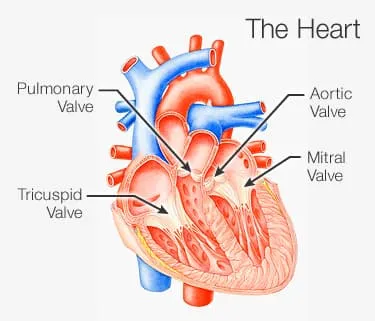
Heart valve disease is when one or more of your heart valves don't work the way they should. Your heart has four valves: pulmonary, tricuspid, aortic, and mitral. Your heart valves open and close like doors as your heart beats to keep your blood flowing in the right direction.
About 2.5% of the population in the U.S. has heart valve disease. It's more common in older adults.
How Do Heart Valves Work?
Like one-way doors, your heart valves connect the chambers of your heart and blood vessels. They open and close with each heartbeat to keep your blood flowing in one direction, at the right time, through each chamber.
Each valve is made up of strong flaps of tissue called leaflets or cusps. Healthy leaflets open and close fully and allow blood to flow through the opening. However, if any of your heart valves don't open or close fully, your blood might leak between chambers or not flow well through the opening.
Your four valves are:
Pulmonary valve. This connects your right ventricle and pulmonary artery. Your pulmonary artery is a branched vessel that leads to your lungs. When your right ventricle is full of blood, your heart squeezes (contracts), which opens the pulmonary valve and pushes the blood up and into your pulmonary artery. As it travels through the artery and veins in your lungs, it dumps the carbon dioxide it was carrying from your tissues and picks up oxygen to carry back. Your pulmonary veins then empty this oxygen-rich blood into your left atrium.
Mitral valve. This connects your left atrium and left ventricle. When your heart relaxes, your mitral valve opens and allows freshly oxygenated blood to flow from your left atrium into your left ventricle. It also keeps blood from flowing backwards from your left ventricle into your left atrium. When your left ventricle is full of blood, your heart contracts, which closes your mitral valve and, at the same time, opens your aortic valve.
Aortic valve. This connects your left ventricle to your aorta (pronounced ay-or-tuh). Your aorta is the biggest blood vessel in your body, and it carries oxygenated blood from your heart to the rest of your body. It also keeps blood from flowing backwards from your aorta into your left ventricle.
Tricuspid valve. This connects your right atrium and right ventricle. Blood that's full of carbon dioxide from your body tissues flows into your right atrium through two large veins called your superior vena cava (pronounced vay-nuh-kaa-vuh) and inferior vena cava. Your superior vena cava brings blood from your upper body tissues, and your inferior vena cava brings blood from your lower body tissues to the right atrium of your heart. When your heart is relaxed, your tricuspid valve is open, and blood flows into your right ventricle until it's full. Once it's full, your heart squeezes, which closes your tricuspid valve and, at the same time, opens your pulmonary valve.
This pattern is repeated over and over with each heartbeat, which sends your blood continuously through your heart, lungs, and body.
Types of Valvular Heart Disease
There are three types of heart valve disease. The type you have depends on which of your valves has been affected and in what way. Sometimes, one of your valves has more than one problem or more than one of your valves has the same problem.
These are the problems that can affect any of your four heart valves:
Atresia (pronounced uh-TREE-zhuh). This is when one of your heart valves is missing. Since you have no opening between two of your heart's chambers, it can't do it's job of pumping blood continuously through your lungs and body. It's more common to be born with this condition, but you can develop it later, as well. The two main types are:
- Pulmonary atresia, which affects your pulmonary valve. This blocks flow from your heart to your lungs through your pulmonary artery.
- Tricuspid atresia, which affects your tricuspid valve. This blocks flow from your right atrium to your right ventricle.
Regurgitation. This is when one of your heart valves doesn't close tightly, so blood can leak backward through the opening. Therefore, not all your blood flows forward through the valve and your heart has to work harder to make up for the leaky valve. Less blood flows to the rest of your body. Your valves may not close tightly for a few different reasons, including that your valve is stretched, not the right size, or not the right shape.
The most common reason for regurgitation is mitral valve prolapse. Prolapse is when one or both of the leaflets that make up your mitral valve flop or bulge backward. So the valve can't close completely. As with artesia, you may be born with this condition or develop it later.
Stenosis. This is when one of your heart valves has an opening that's too narrow. It may be because the opening is too small or the leaflets that make up your valve didn't form correctly before you were born. One example is bicuspid aortic valve stenosis. This happens when your aortic valve forms with two leaflets instead of three. Your heart may have to work harder to pump blood through this narrowed opening.
Heart Valve Disease Causes
Heart valve disease can develop before birth (congenital) or sometimes over the course of your lifetime.
There are several causes of valvular heart disease including:
Congenital heart valve disease. This is a malformation that you are born with in one or more of your heart valves.
Rheumatic disease. You may develop scars on your heart valves after a case of strep throat that wasn't treated with antibiotics. This is a very common cause of valve disease in the world, but it's not as common in the U.S. because most strep infections are treated with antibiotics early in the infection. It's a more common cause in adults born in the U.S. before 1943, when antibiotic use became more widespread.
Endocarditis. You may get an infection in the lining of your heart because of a serious infection in your blood. This infection can damage the leaflets that make up your heart valves. One cause of endocarditis is intravenous drug use.
Other types of heart disease, such as:
- Heart failure, when your heart can't pump enough blood and oxygen to support your other organs.
- Atherosclerosis of your aorta, when you have a buildup of fat, calcium, and cholesterol deposits on the inside of your aorta.
- Aortic aneurym, when you have a ballooning where your aorta attaches to your heart.
- High blood pressure.
- Heart attack, which can damage the muscles that pen and close your heart valves.
Other conditions, such as:
- Autoimmune diseases, such as lupus
- Marfan syndrome, which is a connective tissue disease that can affect your heart valves.
- Exposure to high-dose radiation, which may lead to calcium deposits on the valve.
- The aging process, which can cause calcium deposits to develop on your heart valves, making them stiff or thickened and less efficient with age.
Age-related valve disease, such as calcification due to aging or slow degeneration over time.
Heart Valve Disease Risk Factors
Some congenital heart valve diseases run in families.
You may develop heart valve disease as you age due to:
Family history. You can develop some heart valve problems because they run in your family. Also, a family history of early coronary heart disease can also raise your risk of developing a heart valve disease.
Lifestyle. Risk factors for other types of heart disease may also increase your risk for heart valve disease. Some of these risk factors include a lack of physical activity, unhealthy eating patterns, smoking, and obesity.
Medical devices. If you have a defibrillator or pacemaker, it can rub against a valve and create scar tissue or make your heart beat out of rhythm, which can stretch a heart valve.
Other conditions, such as high blood pressure, diabetes, autoimmune disorders, and other heart conditions.
Radiation treatment for cancer. Radiation can thicken and narrow your heart valves.
Sex assigned at birth. People assigned male at birth (AMAB) are more likely than people assigned female at birth (AFAB) to get some heart valve conditions.
Heart Valve Disease Symptoms
Your symptoms can vary depending on the type of heart valve disease you have.
Symptoms in adults.
You may not notice any symptoms, or you may mistake some of your symptoms for normal signs of aging. Your symptoms may also develop slowly. Your symptoms may not relate to the seriousness of your condition. You may have no symptoms at all and have severe valve disease, which needs prompt treatment. Or, as with mitral valve prolapse, you may have noticeable symptoms, yet tests may show the valve leak is not significant.
Symptoms of heart valve disease can include:
- Breathing problems. This can include rapid breathing or shortness of breath. You may notice these symptoms most when you are exerting yourself, such as when you climb stairs or move fast.
- Dizziness or fainting. Sometimes, you may faint when you stand up.
- Discomfort in your chest (angina). You may feel pressure, squeezing, tightness, or burning in your chest. It may spread to your shoulders, arms, neck, jaw, or back. It may also feel like an upset stomach. This can happen when you are working hard or when you are resting.
- Feeling more tired than usual (fatigue).
- Fever if you have an infection, such as myocarditis.
- Palpitations. This may feel like a rapid heart rhythm, irregular heartbeat, skipped beats, or a flip-flop feeling in your chest.
- Swelling around your eyes or in your ankles, feet, or abdomen. This is called edema. Swelling in your belly may cause you to feel bloated.
- Rapid weight gain. A weight gain of 2 or 3 pounds in a day is possible.
Symptoms in newborns and young children.
Sometimes, your baby or child may have symptoms of a heart valve problem since birth. But sometimes, they may not appear until weeks or months after birth. These symptoms may be detected by your pediatrician during a newborn screening. These symptoms may include:
- Not gaining weight or growing as they should. You may notice they have problems eating. If your child has trouble eating, call your doctor.
- Blue skin tone, especially their lips, fingers, and toes. If you child has a blue skin tone, call 911 right away.
- Low levels of oxygen.
- Pale skin, rapid heartbeat, or cool, clammy hands. These are signs of shock. This is a medical emergency. Call 911 right away.
- Weak pulse.
Heart Valve Disease Stages
The stage depends on your symptoms, disease severity, the structure of the valve or valves, and blood flow through your heart and lungs. The American College of Cardiology and American Heart Association Joint Committee recommends the following stages:
- Stage A (at risk). You have risk factors for heart valve disease
- Stage B (progressive). You have mild or moderate valve disease, but you have no symptoms.
- Stage C (severe, asymptomatic). You have severe valve disease, but you have no symptoms.
- Stage D (severe, symptomatic). You have severe valve disease and you have symptoms.
How Are Heart Valve Diseases Diagnosed?
Your heart doctor can tell if you have heart valve disease by:
Talking to you about your symptoms and medical history. Your doctor will ask about your risk factors and any related heart valve conditions that run in your family.
Performing a physical exam. Your doctor will listen to the sounds your heart makes as your valves open and close. A murmur is a swishing sound made by blood flowing through a stenotic or leaky valve. Your doctor can also tell if your heart is enlarged or if your heart rhythm is irregular. They will also feel the strength of your pulse in your arm or neck. Also, your pediatrician may check your newborn's belly for signs of a swollen liver.
The doctor will listen to the lungs to hear if you are retaining fluid there, which shows the heart is not able to pump as well as it should.
Performing other tests, such as:
- Echocardiography. This is the most common test to diagnose heart valve problems. It's a painless test that uses sound waves to make a video of your heart. It shows the size and shape of your heart and how well your heart is pumping blood. Your doctor can use Doppler ultrasound to see how well your blood flows through your heart's chambers and valve. It can find blood clots in you heart, fluid buildup in the sac around your heart, tumors, and problems with your arota. Echocardiography can also help your doctor find the cause of abnormal heart sounds, such as heart murmurs.
- EKG. An EKG records your heart's electrical activity through electrodes on your chest, arms, and legs. This can show how fast your heart is beating, if your heartbeat is steady or irregular, and the strength and timing of the electrical impulses passing through each part of your heart.
- Chest X-ray. This imaging test lets your doctor look at the structures in and around your chest. It can help diagnose and monitor conditions such as pneumonia, heart failure, lung cancer, tuberculosis, sarcoidosis, and lung tissue scars (fibrosis). Your doctor may also use X-ray to check for complications after some procedures and surgeries. Your doctor may also recommend cardiac catheterization before your chest X-ray. Cardiac catheterization uses dye to make your arteries show up more clearly on X-ray.
- Stress test. This measures how healthy your heart is and how well it works during physical stress. You will usually do this by walking on a treadmill or riding on a stationary bike.
Heart Valve Disease Treatment
Heart valve disease treatment depends on the type of disease and how severe it is. Heart valve disease is a lifelong condition, and if you leave it untreated, it can lead to heart failure or other life-threatening conditions.
To begin with, your doctor may recommend you follow a healthy lifestyle and prescribe medicine to treat your symptoms. A healthy lifestyle includes:
- Choose heart-healthy foods.
- Take steps to reach and maintain a healthy weight.
- Manage your stress.
- Exercise regularly.
- Quit smoking.
Medicines may ease your symptoms, prevent your heart vale disease from getting worse, or treat other heart problems that can affect your valves. Such medicines include:
- High-blood pressure medicines such as diuretics (water pills) and vasodilators. Diuretics remove extra fluid from your tissues and bloodstream. They may reduce your symptoms of heart failure. Vasodilators (such as ACE inhibitors) reduce the amount of work your heart has to do to pump blood. They encourage your blood to flow forward rather than backward through a leaky valve.
- Anti-arrhythmic medications such as beta-blockers. These help regulate your heart's rhythm.
- Anticoagulants (blood thinners). These slow the rate at which your blood clots.
- Antibiotics for infections that cause heart inflammation or to prevent rheumatic fever.
- Prostaglandin for newborns to keep some pathways of the heart open and maintain blood flow.
Follow your doctor's orders when taking these heart disease drugs. Know the names of your medications, what they are for, and how often to take them. Keep a list in your wallet or purse with this information.
You may be able to stop taking some drugs after you have had heart valve surgery to correct the problem. You may need to take other medications all your life.
Heart valve repair
If you have new symptoms of heart valve disease or your symptoms get worse, your doctor may recommend heart valve repair surgery. Some surgeries can be done using minimally invasive techniques, which can reduce your blood loss, trauma, and how much time you spend recovering in the hospital after surgery. The most common procedures include:
- Valvuloplasty, which is when your surgeon sews leaflets together, reshapes leaflets, patches a tear, reattaches loose leaflets, or splits apart leaflets that have fused. This could also be done using a balloon to stretch a valve opening.
- Annuloplasty, which is when your surgeon tightens or strengthens the base of your heart valve to prevent sagging or leaking.
- Stent placement. Stents are tubes placed into hollow structures in your body, such as heart vessels, to hold them open. This can allow blood flow or plug a leaky valve.
- Implant a device. This is often done for people who have mitral valve regurgitation and can't have open heart surgery.
- Remove obstructions such as calcium deposits, clumps of bacteria, or tumors.
- Repair supporting structures. Your surgeon can replace or shorten the cords that support your valve and allow it to close completely.
Heart valve replacement
Sometimes, your heart valve can't be repaired, so it must be replaced. Your surgeon can replace your valve with a mechanical or biological heart valve. Which one of these is best for you depends on your age, risk factors, and other medical conditions.
Your valve may be replaced during open heart surgery or a minimally invasive procedure using a catheter. An example of a minimally invasive procedure is transcatheter aortic valve replacement or transcatheter aortic valve implantation. This may be used to treat aortic stenosis, for example.
Heart valve replacement pros and cons
Mechanical heart valves. The advantage to mechanical heart valves is their sturdiness. They are designed to last for many years. There are also drawbacks. Due to the artificial material involved, people who receive these valves will need to take lifelong blood thinner medication (anticoagulants) to prevent clots from forming in the mechanical valve. These clots can increase the risk for a stroke. Also, some people report a valve ticking sound that is usually not bothersome. It is the sound of the valve leaflets opening and closing.
Biological heart valves. The advantage of biological heart valves is that most people do not need to take lifelong blood thinners unless they have other conditions (such as atrial fibrillation) that warrant it. Biologic valves, traditionally, were not considered as durable as mechanical valves, especially in younger people. Previously available biologic valves usually needed to be replaced after about 10 years. However, some studies show that some biologic valves may last at least 17 years without decline in function. This represents a new milestone in the durability of biologic valves.
Homograft heart valves. Homografts are ideal heart valves for aortic valve replacement, especially when the aortic root is diseased or there is infection. The heart's natural anatomy is preserved and patients do not need to take lifelong blood thinners. However, the limited availability is a drawback in some settings.
Your doctors will work with you to decide which surgery and heart valve is right for you.
Heart Valve Disease Complications
If heart valve disease is left untreated, you can get serious or life-threatening complications, such as the following conditions:
- Acute respiratory distress syndrome. This is when fluid builds up in your air sacs and prevents your lungs from filling with air.
- Irregular heartbeats or heart block, where there's a problem with the electrical system that controls your heart rate and rhythm.
- Blood clots.
- Blood infections such as septic shock.
- Expanding, bulging, or tearing of your aorta.
- Heart failure.
- Infective endocarditis (heart inflammation).
- Liver damage.
- High blood pressure specifically in your lungs.
- Stroke.
- Heart attack.
Heart valve repair and replacement can improve your symptoms, but you may get complications from surgery, including:
- Valve damage or leaks
- Blood vessel injury or bleeding
- Cardiac compression
- Stroke
- Blood clots
- Injuries to your kidneys or the heart
Living With Heart Valve Disease
When you have heart valve disease, it is important to protect yourself from future heart problems, even if your valve has been repaired or replaced with surgery. Here are some tips to stay healthy:
- Don't smoke.
- Manage your blood pressure and cholesterol.
- Eat a heart-healthy diet that includes a lot of vegetables and fruit and is low in saturated and trans fat.
- Exercise regularly.
- Know the type and extent of your heart valve disease.
- Tell all your doctors and dentist you have valve disease.
- Call the doctor if you have symptoms of an infection.
- Take good care of teeth and gums.
- Take antibiotics before you undergo any procedure that may cause bleeding.
- Carry a wallet card that you can get from the American Heart Association with specific antibiotic guidelines.
- Take your medications. Your medicines control your symptoms and help your heart pump blood more efficiently. Follow your doctor's instructions about how and when to take your medicines.
- See your heart doctor for regular visits, even if you have no symptoms. Follow up once a year or more often, depending on what your doctor says.