What is Barrett's Esophagus?
Barrett's esophagus is a condition in which normal tissue lining of your esophagus – the tube that carries food from the mouth to the stomach – becomes more like the lining of your intestine, or thicker and red. Experts suspect that damage from acid reflux may be linked to the condition.
A few things happen in your body that result in Barrett's esophagus. Between the esophagus and the stomach, there is a valve called the lower esophageal sphincter (LES). It keeps stomach contents from rising up into the esophagus and prevents a back flow (reflux) of stomach acid. Over time, the LES can begin to stop working and lead to acid and chemical damage of the esophagus, called gastroesophageal reflux disease (GERD).
In people with chronic symptoms of GERD, the acid reflux of GERD can then damage the esophageal lining, causing Barrett's esophagus.
Who gets Barrett's disease?
In North America, there are about 30 million people who have GERD, the most common long-term gastrointestinal disease. Barrett's esophagus will happen in about 5% of patients with ongoing GERD or esophagus inflammation.
Most people with acid reflux don't develop Barrett's esophagus. But in patients with frequent acid reflux, the normal cells in the esophagus may eventually be replaced by cells that are similar to cells in the intestine to become Barrett's esophagus.
Also, not everyone with GERD develops Barrett's esophagus. And not everyone with Barrett's esophagus has GERD. But long-term GERD is the primary risk factor.
Barrett's Esophagus Symptoms
Barrett's esophagus does not have any specific symptoms, although people with Barrett's esophagus may have symptoms similar to those who have GERD, which can include:
- Trouble swallowing food
- Frequent heartburn
- Chest pain
- A sour or burning feeling in the throat
- An ongoing cough
- Blood in their poop
- Weight loss
- Nausea
- Laryngitis
Barrett's Esophagus Risk Factors
While the condition is rare overall, there are a number of things that can make you more likely to get Barrett’s esophagus. One is the start of GERD at a younger age, if you've had heartburn symptoms for 10 years or more.
Other risk factors include:
- Obesity. High levels of belly fat, in particular, may raise your chances of Barrett's esophagus.
- Smoking. This causes more stomach acid production and causes your body to make less saliva, which offsets acid. Smoking also weakens the LES.
- Your family history. Some studies point to your genetics, or inherited genes passed down through your family, as a potential risk factor for Barrett's esophagus.
- Age. While being over 50 raises your chances of Barrett's esophagus, most people are in their 60s when they're diagnosed with the condition. The average age at diagnosis of Barrett's esophagus is 55 years.
- Long-term GERD. This is a top risk factor. Experts believe the acidic reflux irritates the lining of the esophagus, leading to changes in the tissue that can result in Barrett's esophagus.
- Your sex. Men are three to four times more likely to get Barrett's esophagus than women.
- Your race. Non-Hispanic white people are more likely to get the condition.
How Is Barrett's Esophagus Diagnosed?
Because there are often no specific symptoms linked to Barrett's esophagus, it can only be diagnosed with an upper endoscopy and biopsy. Guidelines from the American Gastroenterological Association recommend screening in people who have multiple risk factors for Barrett’s esophagus.
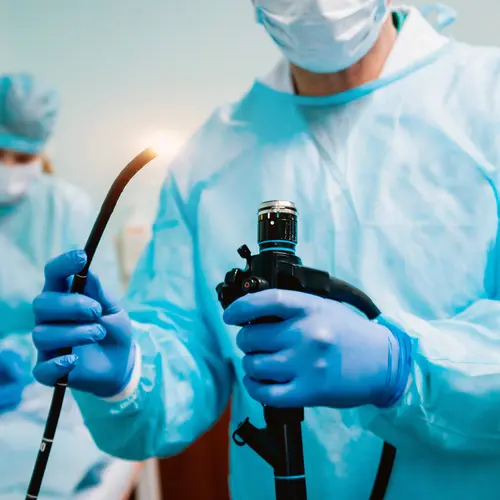
To perform an endoscopy, a doctor called a gastroenterologist inserts a long flexible tube with a camera attached down the throat into the esophagus after giving the patient a sedative. The process may feel a little uncomfortable, but it isn't painful. Most people have little or no problem with it.
Once the tube is inserted, the doctor can visually inspect the lining of the esophagus. Barrett's esophagus, if it's there, is visible on camera, but the diagnosis requires a biopsy. The doctor will remove a small sample of tissue to be examined under a microscope in the laboratory to confirm a diagnosis.
The sample will also be examined for the presence of precancerous cells or cancer. If the biopsy confirms the presence of Barrett's esophagus, your doctor will probably recommend a follow-up endoscopy and biopsy to examine more tissue for early signs of cancer.
If you have Barrett's esophagus but no cancer or precancerous cells are found, the doctor will still most likely recommend that you have periodic endoscopies. This is a precaution, because cancer can develop in tissue years after Barrett's esophagus is diagnosed. If precancerous cells are present in the biopsy, your doctor will discuss treatment options with you.
Complications
A diagnosis of Barrett's esophagus is not a cause for major alarm. But Barrett's esophagus can lead to precancerous changes in a small number of people.
If you have Barrett's esophagus, there is a very small increase in the risk of getting esophageal adenocarcinoma, which is a serious, potentially fatal cancer of the esophagus (less than 1% of people with Barrett's esophagus).
You'll want to have regular checkups so your doctor can look for precancerous and cancercells early, before they can spread and when the disease is easier to treat.
Barrett's Esophagus Treatments
A main focus of treatment for Barrett's esophagus is to prevent or slow the development of the condition, which can be achieved with certain procedures and medications.
Several treatments, including surgery, are designed specifically to focus on the abnormal tissue. They will vary, depending on your overall health and the presence of precancerous cells, or dysplasia, in your esophagus.
No dysplasia
Normal endoscopy. This is a procedure in which your doctor will send a lighted tube with a camera at the end – also known as an endoscope – down your throat to check your esophagus. Your doctor will likely want you to have an endoscopy every 2 to 3 years.
Your doctor may also prescribe medications or other things that are commonly used to treat GERD to help, which could include:
- Proton pump inhibitors (PPIs) that block the production of stomach acid and help control GERD symptoms long-term. They can also prevent further damage to your esophagus and, in some cases, heal existing damage.
- Antacids to neutralize stomach acid. These are particularly helpful for occasional reflux. Antacids can worsen the problem if taken too much, because they tend to cause your body to make more acid.
- Histamine 2 (H2)blockers that lessen the release of stomach acid. These also heal esophagus damage in about 50% of people.
- Promotility agents, which are drugs that speed up the movement of food from the stomach to the intestines. They may be coupled with antacids.
- Baclofen, which is a muscle relaxer, may reduce how often you have acid reflux.
- GERD treatment. Your doctor may consider anti-reflux surgery if you have GERD symptoms and medicines aren't working for you. This could include procedures to correct hiatal hernia or to tighten the LES.
Low-grade dysplasia
If you're diagnosed with low-grade dysplasia – the early stage of precancerous changes – it means only some of your cells are abnormal, but most are not. Your doctor could recommend more checkups, about every six months to a year, to check for more changes. They may also suggestablation therapy, which is a minimally invasive procedure to destroy abnormal tissue.
High-grade dysplasia
This form of dysplasia is known as the precursor to esophageal cancer. Your doctor may recommend more frequent checkups and treatment to remove damaged tissue, including:
Radiofrequency ablation (RFA). This most common procedure uses radio waves delivered through an endoscope inserted into the esophagus to destroy abnormal or cancerous cells in the Barrett's tissue while protecting the healthy cells underneath.
Endoscopic mucosal resection (EMR). EMR lifts the abnormal lining and cuts it off the wall of the esophagus before it's removed through the endoscope. The goal is to remove any precancerous or cancer cells contained in the lining. If cancer cells are present, an ultrasound is done first to be sure the cancer hasn't moved deeper into the esophagus walls.
Endoscopic spray cryotherapy. This is a newer technique that applies cold nitrogen or carbon dioxide gas through the endoscope to freeze and destroy the abnormal cells.
Photodynamic therapy (PDT). A laser through an endoscope kills abnormal cells in the lining without damaging normal tissue. Before the procedure, the patient takes a drug known as Photofrin, which causes cells to become light-sensitive. Your doctor may combine this with endoscopic mucosal resection.
Surgery. There are a couple of ways your doctor could use surgery as treatment. They may remove the affected part of your esophagus, then rebuild it from part of your stomach or large intestine. Removing most of the esophagus is an option in cases where severe precancer (dysplasia) or cancer has been diagnosed. The earlier the surgery is done after the diagnosis, the better the chance for the cure.
Lifestyle and Home Remedies
Another treatment goal is to control acid reflux, which can be done with lifestyle changes. You can try to:
- Make changes in your diet. Fatty foods, chocolate, caffeine, spicy foods, and peppermint can aggravate reflux.
- Avoid alcohol, caffeinated drinks, and tobacco.
- Lose weight. Being overweight increases your risk of reflux because extra weight around your belly can compress the stomach and cause acid to rise into the esophagus.
- Sleep with the head of the bed elevated. Sleeping with your head raised may help prevent the acid in your stomach from flowing up into the esophagus.
- Rework your eating schedule. Eat multiple small meals often instead of a few large ones, and wait at least 3 hours after you eat before you lie down.
- Take all medicines with plenty of water.