What Is Lung Cancer?
It’s cancer that starts in your lungs and can spread to other parts of your body. Although it’s the top cause of cancer deaths for U.S. men and women, it’s also one of the most preventable kinds, by not smoking and avoiding other people’s secondhand smoke.
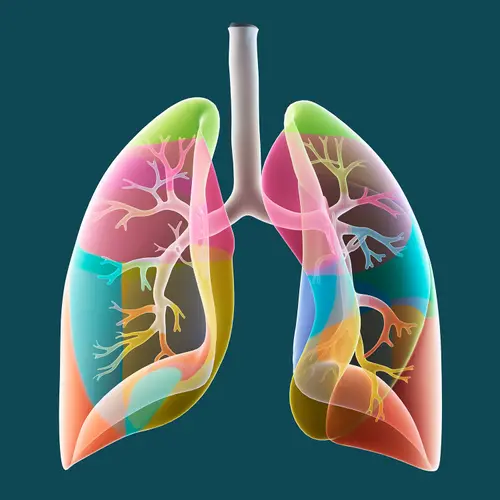
The disease almost always starts in the spongy, pinkish gray walls of the lungs’ airways (called bronchi or bronchioles) or air sacs (called alveoli).
There are more than 20 kinds of lung cancer. The two main types are non-small-cell lung cancer and small-cell lung cancer.
Non-Small-Cell Lung Cancer (NSCLC)
Adenocarcinoma is the most common kind of NSCLC. It makes up 40% of lung cancer cases. It mainly happens in people who smoke or who used to. It’s also the No. 1 type of lung cancer among nonsmokers.
More women get it than men. People with this type tend to be younger than those with other kinds.
Adenocarcinoma can spread to the lymph nodes, bones, or other organs such as the liver.
Squamous cell carcinoma usually starts in the lung’s largest branches, which doctors call the central bronchi.
This type accounts for 30% of lung cancers, and it’s more common in men and people who smoke. It may form a cavity within the tumor. It often involves the larger airways. It may make you cough up some blood.
Squamous cell carcinoma can also spread to the lymph nodes, bones, and other organs such as the liver.
Large-cell carcinomas are a group of cancers with large cells that tend to start along the lungs’ outer edges. They're rarer than adenocarcinoma or squamous cell carcinoma, making up 10%-15% of lung cancers. This type of tumor can grow faster and often spreads to nearby lymph nodes and distant parts of the body.
Small-Cell Lung Cancer
This is the most aggressive form of the disease. It usually starts in the large, central bronchi. Almost all people who get it are smokers. It spreads quickly, often before symptoms appear. Many times, it spreads to the liver, bone, and brain. Small-cell lung cancer makes up 10%-15% of lung cancers.
The outlook for someone with lung cancer depends on a lot of things, including what type they have, their overall health, and how advanced the disease is when doctors find it.
Lung Cancer Causes
Smoking is the biggest reason. It’s responsible for about 85% of all cases.
Quitting cuts the risk. Former smokers are still slightly more likely to get it than nonsmokers.
There are also other reasons. Some genetic glitches may put some people at higher risk.
Secondhand tobacco smoke is also a cause. People who live with someone who smokes are 20% to 30% more likely to get lung cancer than those who live in a smoke-free home. People exposed to radiation therapy can also have a higher risk.
Some other chemicals are risky, too. People who work with asbestos or are exposed to uranium dust or the radioactive gas radon are more likely to get lung cancer, especially if they smoke.
Lung tissue that was scarred by a disease or infection, such as scleroderma or tuberculosis, becomes at risk for tumors in that tissue. Doctors call this a scar carcinoma. The risk is also higher in people that have pulmonary fibrosis or HIV infection.
Some researchers think that diet may also influence your risk. But that’s not clear yet.
Lung Cancer Symptoms
There often aren't any symptoms in the early stages. For other people, red flags that can be linked to lung cancer include:
- Shortness of breath
- Coughing that doesn't go away
- Wheezing
- Coughing up blood
- Chest pain
- Fever
- Weight loss with or without loss of appetite
- Hoarse voice
- Shoulder or arm pain or weakness
- Trouble swallowing
- Unusual bone pain
Talk to your doctor if you have those symptoms. There could be other explanations.
Diagnosing Lung Cancer Early
A type of CT scan, called spiral or helical low-dose CT scanning, has helped to find the disease early in smokers and former smokers when combined with other tests.
The U.S. Preventive Services Task Force recommends an annual CT scan for adults ages 55-80 who are heavy smokers or who have quit within the past 15 years.
Lung Cancer Treatments
Treatment depends on what type of lung cancer you have and how advanced it is.
Sometimes, doctors can do surgery to remove a tumor if the disease hasn’t spread. You may get radiation or chemotherapy, too.
If your lung cancer is advanced -- for instance, if it has spread to distant parts of your body -- there are still treatments that can control the disease and prevent further symptoms. You might get radiation and chemotherapy to shrink tumors and help control symptoms.
Newer treatments, called targeted therapy and immunotherapy, may be something that your doctor can recommend depending on your tumor type.
Pain management is also key. At any point in your treatment, tell your doctor if you’re in pain.
If your doctor mentions “palliative care,” that includes helping you feel comfortable, managing pain, and improving your life as much as possible. It’s not the same as hospice care, which focuses on preparing for the end of life.
Pay attention to your emotions, too. Dealing with cancer is hard. It’s normal to feel a lot of strong emotions, including fear, anger, and sadness. It can help to talk with a counselor or join a support group to help you work through those feelings and face the many challenges that come with a cancer diagnosis.
Before recommending which treatment or combination of treatments is right for you, your doctor will determine how advanced your lung cancer is, a process called staging. This usually involves getting a CT scan of the chest and abdomen, and possibly a PET scan. You may also get a bone scan, a CT or MRI scan of the brain, and other tests.