There are many teeth whitening systems and products, including whitening toothpastes, over-the-counter gels, rinses, strips, trays, and whitening products you get from a dentist.
Teeth whitening is ideal for people who have healthy, unrestored teeth (no fillings) and gums. Individuals with yellow tones to their teeth respond best. But this cosmetic procedure is not recommended for everyone.
Whitening Systems
It's never been easier to brighten your smile at home. There are all kinds of products you can try: rinses, gels, chewing gum, toothpastes, and strips.
If you decide to try whitening at home, the American Dental Association suggests that you talk with your dentist first, especially if you have:
- Sensitive teeth
- Dental restorations
- Very dark stains or a single dark tooth
- Lots of fillings or crowns
At-home whiteners have peroxides, typically carbamide peroxide, in amounts ranging from 10% to 20%.
Choose a product with a peroxide level in the middle of that range. If the product doesn’t bother your mouth but doesn’t give the lightening effect you want, you can choose a higher level. If you have any questions, your dentist can help you find the whitener that best fits your needs.
Whitening toothpastes
All toothpastes remove surface stains because they contain mild abrasives. Some whitening toothpastes contain gentle polishing or chemical agents that provide additional stain removal effectiveness. You might spend $1 to $20, though any prices may vary.
Whitening toothpastes remove surface stains only and do not contain bleach; over-the-counter and professional whitening products contain carbamide peroxide or hydrogen peroxide that lightens the color deep in the tooth. Whitening toothpastes can lighten the tooth's color by about one shade. In contrast, prescription strength whitening conducted in your dentist's office can make your teeth three to eight shades lighter.
Over-the-counter whitening strips and gels
Whitening gels are clear, peroxide-based gels applied with a small brush directly to the surface of your teeth. Instructions vary depending on the strength of the peroxide. Follow the directions on the product carefully. Initial results are seen in a few days, and final results last about 4 months. A full course takes between 10 and 14 days. You may need to apply them twice a day. You can buy whitening strips and gels from your pharmacy, dentist, or online for around $10 to $55.
Whitening strips are very thin, virtually invisible strips that are coated with a peroxide-based whitening gel. The strips should be applied according to the instructions on the label. Initial results are seen in a few days, and final results last about 4 months.
Whitening rinses
Among the newest whitening products available are whitening rinses. Like most mouthwashes, they freshen breath and reduce dental plaque and gum disease. But these products also include ingredients, such as hydrogen peroxide in some, that whiten teeth. Manufacturers say it may take 12 weeks to see results. You just swish them around in your mouth for 60 seconds twice a day before brushing your teeth. However, some experts say that rinses may not be as effective as other over-the-counter whitening products. Because a whitening rinse is only in contact with the teeth for such a short time -- just 2 minutes a day compared to 30 minutes for many strips -- it may have less of an effect. To give whitening mouthwashes a boost, some people rinse first and then brush their teeth with a whitening toothpaste. Be ready to spend around $5 per bottle.
Tray-based tooth whiteners
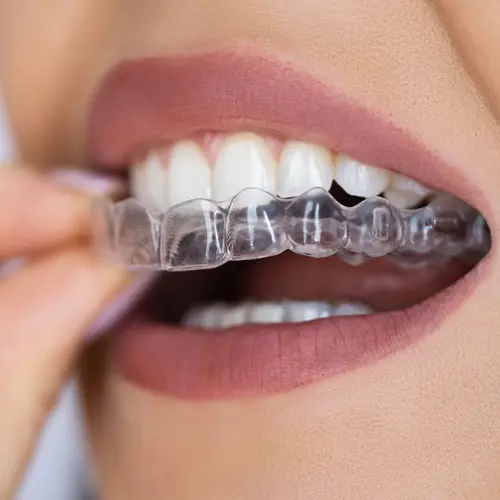
Tray-based tooth whitening systems, purchased either over-the-counter or from a dentist, involve filling a mouth guard-like tray with a gel whitening solution that has a peroxide-bleaching agent. The tray is worn for a period of time, generally from a couple of hours a day to every day during the night for up to 4 weeks and even longer (depending on the degree of discoloration and desired level of whitening). You can buy tray-based tooth whitening systems from your nearest pharmacy for around $30 or get a custom-fitted tray from your dentist for $150 to $600.
Teeth Whitening Safety Tips
Follow directions. Don’t leave the strips or gels on longer than the directions say, or you might wind up with sore gums and set yourself up for other problems. After you whiten, avoid soda, sports drinks, or other acidic beverages for a couple of hours to protect your teeth.
Protect sensitive teeth. Your teeth may be a little sensitive after you whiten, but it’s usually brief. It might be less of an issue if your teeth and gums are in good shape. If it bothers you, stop the treatment and talk to your dentist. Gel-filled trays, which you wear over your teeth like a mouth guard, can also bother your gums if they don't fit well. It’s a good idea to stop using the product if you start having this problem.
Don’t overdo it. How much whitening is too much? If you follow a product’s directions and get a good result, a once-a-month touch-up session is usually enough. When your teeth reach a shade you like, you’ll need to repeat the multiple bleaching sessions twice a year or less.
In-Office Whitening
In-office bleaching provides the quickest way to whiten teeth. With in-office bleaching, the whitening product is applied directly to the teeth. These products can be used in combination with heat, a special light, or a laser. Results are seen in only one, 30- to 60-minute treatment. But to achieve dramatic results, several appointments are usually needed. However, with in-office bleaching, dramatic results can be seen after the first treatment. This type of whitening is also the most expensive approach.
Get a professional cleaning and mouth exam first, even if you decide to whiten your teeth at home. You might need only a thorough cleaning to restore your smile's sparkle.
Your dentist will also look for cavities and check the health of your gums during the exam. Treating any problems before you whiten is safer for your mouth.
Ask your dentist about which over-the-counter system to use and how much lightening you can expect. Teeth do darken with age, and the amount of color change varies from person to person.
How Long Do Whitening Effects Last?
Teeth whitening is not permanent. People who expose their teeth to foods and beverages that cause staining may see the whiteness start to fade in as little as 1 month.
The degree of whiteness will vary from person to person depending on the condition of the teeth, the level of staining, and the type of bleaching system used.
Here are some tips to keep your teeth bright:
- Avoid foods and drinks that stain. Just about anything with acids or tannins can dull your teeth. To keep your smile bright, go easy on white and red wine, sports drinks, carbonated beverages (light and dark), black tea and coffee, berries and other strongly colored foods, as well as sauces such as soy, curry, and tomato.
- Brush or rinse immediately after having stain-causing beverages or foods.
- Follow good oral hygiene practices. Brush your teeth at least twice daily, floss at least once daily to remove plaque, and rinse with an antiseptic mouthwash at least once a day to kill bacteria that cause plaque. Use a whitening toothpaste (once or twice a week only) to remove surface stains and prevent yellowing. Use a regular toothpaste the rest of the time.
- Dig in to produce and calcium-rich foods. When you munch on fruits and veggies, it can help “scrub” your teeth. Think about how clean your mouth feels after eating a crisp apple. High-calcium foods such as cheese can aid in keeping your teeth white.
- Avoid tobacco. Cigarettes, cigars, pipes, and chewing tobacco can yellow your teeth. Kick tobacco, and you'll have whiter teeth as well as a healthier heart.
- Get regular cleanings at your dentist's office. Professional cleanings will remove plaque, which can pick up stains from what you eat and drink. Your dental hygienist can help keep teeth looking and feeling great.
- Sip through a straw. This will reduce your teeth's exposure to staining liquids.
- Consider touch-up treatments. Depending on the whitening method used, you may need a touch-up every 6 months or after a year or two. If you smoke or drink lots of stain-causing beverages, you may need a touch up more often.
At Home vs. Dentist Supervised
Do-it-yourself methods aren't the same as getting your teeth whitened by a professional. You'll want to consider a few important differences.
Strength of bleaching agent. Over-the-counter products and dentist-supervised at-home products usually contain a lower strength bleaching agent, with about a 10% to 22% carbamide peroxide content, which is equivalent to about 3% hydrogen peroxide. In-office, professionally applied tooth whitening products contain hydrogen peroxide in concentrations ranging from 15% to 43%.
Mouthpiece trays. With dentist-supervised at-home bleaching products, your dentist will take an impression of your teeth and make a mouthpiece tray that is customized to exactly fit your teeth. This customization allows for maximum contact between the whitening gel, which is applied to the mouthpiece tray, and the teeth. A custom-made tray also minimizes the gel's contact with gum tissue.
Over-the-counter whitening products also contain a mouthpiece tray, but the "one-size-fits-all" approach means that the fit will not be exact. Ill-fitting trays can irritate the gum and soft tissue by allowing more bleaching gel to seep onto these tissues. With in-office procedures, you'll get the bleaching agent applied directly to your teeth.
Additional protective measures. In the office setting, your dentist will apply either a gel to the gum tissue or use a rubber shield (which slides over the teeth) prior to treatment to protect your gums and oral cavities from the effects of the bleaching. Over-the-counter products don't provide these extra protective measures.
Costs. Over-the-counter bleaching systems are the least expensive option, with in-office whitening being the costliest.
Supervised vs. unsupervised process. First, your dentist can perform an oral exam and consider your complete medical history, which can be helpful in determining if bleaching is an appropriate course of treatment based on the type and extent of stains, and the number and location of restorations. Your dentist can then better match the type of stain with the best treatment, if appropriate, to lighten those stains.
When your dentist does it, they'll likely want to see you a couple of times to clear up any questions about the directions, to make sure the customized tray fits properly, to check your gums for signs of irritation, and to generally see how the process is working. With over-the-counter bleaching products, you're on your own.
Should You Whiten Your Teeth?
Whitening is not recommended or will be less successful in the following circumstances:
Age and pregnancy issues. Bleaching is not recommended in children under the age of 16. This is because the pulp chamber, or nerve of the tooth, is enlarged until this age. Teeth whitening under this condition could irritate the pulp or cause it to become sensitive. Teeth whitening is also not recommended in pregnant or lactating women.
Sensitive teeth and allergies. Individuals with sensitive teeth and gums, receding gums, or defective restorations should consult with their dentist prior to using a tooth-whitening system. Anyone allergic to peroxide (the whitening agent) should not use a bleaching product.
Gum disease, worn enamel, cavities, and exposed roots. Individuals with gum disease or teeth with worn enamel are generally discouraged from undergoing a tooth-whitening procedure. Cavities need to be treated before undergoing any whitening procedure. This is because the whitening solutions penetrate into any existing decay and the inner areas of the tooth, which can cause sensitivity. Also, whitening procedures will not work on exposed tooth roots, because roots do not have an enamel layer.
Fillings, crowns, and other restorations. Tooth-colored fillings and resin composite materials used in dental restorations (crowns, veneers, bonding, bridges) do not whiten. Therefore, using a whitening agent on teeth that contain restorations will result in uneven whitening -- in this case, making the teeth without restorations appear lighter than those with restorations. Any whitening procedure should be done prior to the placement of restorations.
People with numerous restorations that would result in uneven whitening may be better off considering bonding, veneers, or crowns rather than a tooth whitening system. Ask your dentist what strategy is best for you.
Unrealistic expectations. Individuals who expect their teeth to be a new "blinding white" may be disappointed with their results. Smokers need to be aware that their results will be limited unless they refrain from continued smoking, particularly during the bleaching process. A healthy guide is to achieve a shade slightly whiter than the whites of your eyes.
Darkly stained teeth. Yellowish teeth respond well to bleaching, brownish-colored teeth respond less well and grayish-hue or purple-stained teeth may not respond to bleaching at all. Blue-gray staining caused by the antibiotic tetracycline is more difficult to lighten and may require up to six months of home treatments or several in-office appointments to successfully lighten.
Teeth that have dark stains may be better candidates for another lightening option, such as veneers, bonding, or crowns. Your dentist can discuss the options best suited for you.
Risks Associated With Whitening
The two side effects that occur most often with teeth whitening are a temporary increase in tooth sensitivity and mild irritation of the soft tissues of the mouth, particularly the gums. Tooth sensitivity often occurs during early stages of the bleaching treatment. Tissue irritation most commonly results from an ill-fitting mouthpiece tray rather than the tooth-bleaching agent. Both of these conditions usually are temporary and disappear within 1 to 3 days of stopping or completing treatment.
If you do experience sensitivity, you can reduce or eliminate it by:
- Wearing the tray for a shorter period of time (for example, two 30-minute sessions vs. two 60-minute sessions).
- Stop whitening your teeth for 2 to 3 days to allow teeth to adjust to the process.
- Ask your dentist or pharmacist for a high fluoride-containing product, which can help remineralize your teeth. Apply the fluoride product to the tray and wear for 4 minutes prior to and following the whitening agent.
- Brush teeth with a toothpaste made for sensitive teeth. These toothpastes contain potassium nitrate, which helps soothe the teeth's nerve endings.
Whitening Product Safety
Some whitening products you get through dentists' offices as well as professionally applied (in-office) bleaching products have the American Dental Association (ADA) Seal of Acceptance, which tells you that the product meets ADA guidelines for safety and effectiveness. Currently, only dentist-dispensed home-use products containing 10% carbamide peroxide and office-applied products containing 35% hydrogen peroxide have this seal.
Over-the-counter bleaching products are not endorsed by the ADA, because the organization believes that professional consultation is important to ensuring safe and effective use. No whitening products using lasers are on the ADA's list of accepted products.
Several whitening toothpastes available in drugstores have received the seal, too. You can find a list at www.ada.org.
Not all manufacturers seek the ADA's Seal of Acceptance. This is a voluntary program that requires considerable expense and time on the part of a manufacturer. Just because a product doesn't have the seal does not necessarily mean that the product isn't safe and effective.
Teeth whiteners are not drugs and therefore aren't regulated by the FDA.
Choosing an Over-the-Counter Whitening Kit
Try to select a product that allows the mouthpiece to be customized. Some kits come with a tray that can be molded to some degree. These are better than others that come with a standard mouthpiece.
Look for online reviews and ask around to find out what others who may have already tried the kit you're considering think about it.
If at any time you experience a prolonged change in the color of your gums or an increased tooth sensitivity to hot or cold foods and beverages, stop wearing the mouthpiece and see your dentist immediately.
Frequently Asked Questions About Teeth Whitening
Does insurance cover the cost of teeth whitening procedures?
No, not typically.
Do teeth whiteners damage tooth enamel?
Studies of teeth whitening products using 10% carbamide peroxide showed no effect on the hardness or mineral content of a tooth's enamel surface.
Do teeth whiteners damage dental restorations?
Over 10 years of clinical use of teeth whitening products containing 10% carbamide peroxide have not shown any damage to existing fillings.
Do teeth whiteners damage a tooth's nerve?
There's no evidence that the teeth whitening process has a harmful effect on the health of a tooth's nerve. One study reported that at both a 4.5- and 7-year follow up, no one who used a teeth whitening system needed a root canal procedure on any teeth that had been whitened.