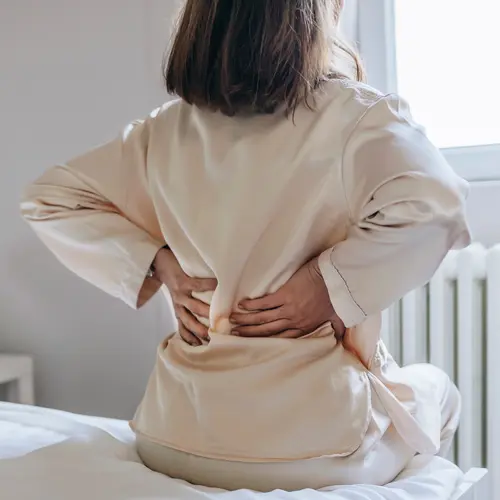
If you think of your body as a building, your bones are the framing. Without strong bones the whole thing would collapse. And that's a good analogy for what happens when we don't take good care of our bones. Over time, the body loses more and more bone, until we develop osteoporosis and it "collapses," in the form of bones fracturing.
About half of all women over 50, and about one out of every four men, will break a bone because of osteoporosis, a condition of weakening bone that affects about 10 million Americans, with some 34 million more at risk.
Why Do Bones Weaken as We Age?
During childhood and adolescence, your body makes bone tissue (formation) faster than you lose it (resorption). By the time you're 18 to 20 years old, you've built up about 90% of all the bone you'll ever have. Most people continue to build bone faster than they lose it until about age 30, a point that's known as “peak bone mass.” From then on, the rate of bone building slows down and the rate of bone loss picks up.
You can't get back bone once it's lost, but you can help maximize bone formation and minimize bone loss, which can lead to osteoporosis. Researchers estimate that things you have no control over -- such as genetic factors, sex, age, and race -- control about 50% to 90% of your bone mass. But you can help protect your bones and reduce the risk of osteoporosis in two key ways: nutrition and exercise.
Nutrition for Strong Bones
If you want to build stronger bones, you need three key elements: calcium, protein, and vitamin D. Bones are largely made up of a protein -- collagen -- bound together by calcium and other trace minerals). Vitamin D helps your body absorb calcium so it can do its job building strong bones.
In 2010, the Institute of Medicine released new guidelines as to just how much calcium and vitamin D people need. Most adults, should get between 600 and 800 international units (IUs) of vitamin D every day, and between 1,000 and 1,300 milligrams (mg) of calcium daily The higher levels are for postmenopausal women, adolescent girls, and women who are pregnant or nursing.
“It's pretty easy to figure out how much calcium you're getting,” says Deborah Sellmeyer, MD, medical director of the Johns Hopkins Metabolic Bone Center. “Just from eating random, non-calcium-rich foods, your diet contains about 250 mg of calcium daily. To get up to what you need -- whether it's about 1,000 for the average adult, or higher for adolescent girls and postmenopausal women -- you'll need to add more calcium-rich foods.”
There are lots of ways to get plenty of calcium in your diet. Dairy products like milk, yogurt, and cheese have plenty of calcium, as well as protein. “But you don't have to be a dairy person to get good dietary sources of calcium,” Sellmeyer says. Other options include:
- Fortified juices, cereals, and oatmeal
- Beans and legumes
- Dark leafy greens, like broccoli and bok choy
- Salmon and sardines with bones
- Certain nuts, such as almonds
“You can pick and choose from a wide variety of sources, and can vary it day by day. On the days when you don't get as much calcium, you can take a supplement, such as calcium citrate,” says Sellmeyer.
For vitamin D, often called the key that unlocks calcium in your body, the Institute of Medicine recommends between 600 and 800 IU per day. That's harder to get, because our bodies mostly synthesize vitamin D in response to sunlight. “Between November and March, most places anywhere north of, say, Oklahoma, don't get enough UV rays to make vitamin D even if you stay out all day on a sunny winter day,” Sellmeyer says. Good sources of vitamin D include:
- Eggs
- Fatty fish like salmon, mackerel, and tuna
- Cod liver oil
- Fortified dairy products
- Fortified cereals
- Beef liver
- Fortified orange juice
The IOM's recommendations about vitamin D have, in fact, been somewhat controversial. Many bone experts suggest that they're on the low end of optimal. “They're a good place to start, and probably good recommendations for the general public,” says Sellmeyer. “But if you have bone issues -- a history of fractures, say, or long-term steroid use, or a lot of osteoporosis in your family -- you may need to see a doctor and get your D levels checked.”
Don't forget the third nutritional building block of strong bones: protein. Your diet should contain plenty of lean protein sources, such as lean meats and fish, beans, and cheese.
Exercise Your Right to Strong Bones
One way to see just how important exercise is to bone health is to look at what happens to bone strength when people don't exercise.
“People who have been put on bed rest, people who undergo limb immobilizations, and astronauts, who have very reduced physical activity because of the minimal actions of gravity and muscles pulling on the bone -- they all see a rapid and profound effect on the skeletal system,” says Wendy Kohrt, PhD, a professor of medicine and the director of research for geriatric medicine at the University of Colorado. “People confined to bed rest for even four months lose about 10% of their bone density in critical regions of the skeleton. It takes a very long time to get that back.”
Kohrt says the evidence shows that weight-bearing exercise can build about 1% to 3% of bone. That may not sound like a lot, but exercise may also strengthen existing bone in ways that are harder to quantify. Research from the landmark Nurses' Health Study (NHANES) shows that women who walk at least four hours per week reduce their risk of hip fracture by about 40%.
Weight-bearing exercises include walking, dancing, jogging, playing tennis. Swimming, although it's a wonderful exercise in many ways, doesn't particularly benefit bone health because it isn't a weight-bearing activity.
“I think that just being physically active, being up on your feet and doing a variety of things, probably has benefits that we can't necessarily measure if we study a small group of subjects over a brief interval of time like one year,” says Kohrt. “But if we look at a large population of people followed for many years, that level of activity has benefits for your bones.”
There are also things you shouldn't do if you want to take care of your bones. Tops on the no-no list: smoking. “That's definitely bad for your skeletal health,” says Kohrt. Significant bone loss has been found in men and women who smoke, and the more and longer you smoke, the greater your risk of fracture. Some studies even suggest that secondhand smoke exposure in youth can increase the risk of low bone mass as an adult.
If you're wondering about your bone health, there's a quick at-home test you can take that will assess your overall risk of fracture. Called FRAX, it was developed by the World Health Organization to help evaluate bone fracture risk. Just plug a few numbers into the calculator -- like your age, height, weight, and some information such as whether you smoke or take steroid medications -- and it will give you a percentage risk of having a bone fracture within the next 10 years.
No matter what number you get, however, it's always worth trying to bring it even lower with healthy lifestyle habits. Your bones support you, and they need you to support them.