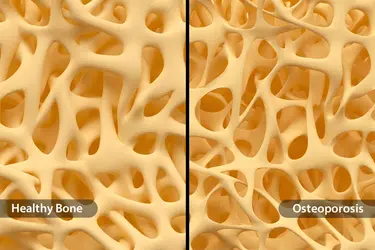
Slideshow: A Visual Guide to Osteoporosis
What Is Osteoporosis?
Osteoporosis means "porous bones." Our bones are strongest at about age 30, then begin to lose density. More than 10 million Americans have osteoporosis, which is significant bone loss that increases the risk of fracture. About half of women 50 and older will have an osteoporosis-related fracture in their lifetime.
Symptoms of Osteoporosis
You might not even realize you have osteoporosis until you have a fracture or an obvious change in your posture. In fact, you could have significant bone loss without even knowing it. Back pain, caused by changes in the vertebrae, may be the first sign that something is wrong.
Osteoporosis and Fractures
Osteoporosis is the underlying cause of 1.5 million fractures every year. Spinal compression fractures are the most common -- tiny fractures that can cause the vertebrae to collapse and alter the shape of the spine. Hip fractures can cause lasting mobility problems and even increase the risk of death. Wrist, pelvic, and other fractures are also common in people with osteoporosis.
What Causes Osteoporosis?
Our bones are constantly being rebuilt throughout our lifetime. Bones are made up of collagen, a protein that provides the basic framework, and calcium phosphate, a mineral that hardens the bone. As we age, we lose more bone than we replace. The greatest change in a woman's bone density comes in the five to seven years after menopause.
The green, oblong shape in the illustration is an osteoclast, a cell that breaks down bone.
Does Everyone Get Osteoporosis?
Bone loss is a natural part of aging, but not everyone will lose enough bone density to develop osteoporosis. However, the older you are, the greater your chance of having osteoporosis. Women's bones are generally thinner than men's and bone density has a rapid decline for a time after menopause, so it's not surprising that about 80% of Americans with osteoporosis are women.
Risk Factors You Can't Control
Women who are thin and have a small frame are more likely to develop osteoporosis. Heredity plays a role, and so does ethnicity. It is more common among whites and Asians, though African-Americans and Hispanics may still be at risk. Some conditions, such as type 1 diabetes, rheumatoid arthritis, inflammatory bowel disease, and hormonal disorders are also linked to bone loss.
Risk Factors You Can Control
Smoking, an inactive lifestyle, and a diet low in calcium and vitamin D place you at greater risk for osteoporosis. Excess drinking is linked to bone loss and a risk of fractures. Corticosteroids, anti-inflammatory drugs used to treat asthma and other conditions, increase your risk of bone loss. Eating disorders (anorexia nervosa or bulimia) can also take a toll on bone health.
Testing: DXA Bone Density Scan
Your doctor may recommend a bone mineral density test if:
- You're over 50 and have broken a bone
- You are a woman over 65, or a man over 70
- You are in menopause or past menopause and have risk factors
- You are a man age 50-69 with risk factors
DXA (dual X-ray absorptiometry) uses low-dose X-rays to measure bone density in the hip or spine. The test takes less than 15 minutes.
Testing: What Your T-Score Means
Testing compares your bone mineral density (BMD) with that of a healthy 30-year-old, since that's when bone mass is at its peak. The results come as a T-score in these ranges:
- -1.0 and higher is normal bone density
- Between -1.0 and -2.5 shows low bone density (osteopenia) but not osteoporosis
- -2.5 or below indicates osteoporosis
As your bone density decreases, your T-score gets lower.
Treatment: Bone-Boosting Drugs
If you are diagnosed with osteoporosis, you may be prescribed a biophosphonate: Actonel, Boniva, Fosamax, or Reclast. They can reduce bone loss and fracture risk and may actually help build some bone density. Those taken by mouth can cause gastrointestinal problems such as ulcers in the esophagus, acid reflux, and nausea. Injectable bisphosphonates, given one to four times a year, can cause brief flu-like symptoms. Bisphosphonates may increase risk of jaw bone death.
Treatment: Hormones
Calcitonin is a naturally occurring hormone in the body that slows bone loss. Two synthetic versions, Miacalcin and Fortical, are used against osteoporosis. Given as a nasal spray or injection, they can slow bone thinning in postmenopausal women and reduce risk of spine fractures. Side effects include a runny nose, headache, back pain, or nosebleed. The injection may cause flushing, nausea, allergic reactions, or skin rashes. Forteo, a synthetic parathyroid hormone, requires daily injections and actually builds new bone. Leg cramps and dizziness have been reported with Forteo use.
Treatment: Estrogen Agents
Hormone replacement therapy, once used widely for menopause symptoms, is an option for osteoporosis, but it's used less than other medications because of concerns about the risk of cancer, blood clots, heart disease, and stroke. Evista is not a hormone but can provide similar bone-strengthening effects to estrogen without the cancer risks. Risks include blood clots and increased hot flashes.
Treatment: A Biologic Alternative
Prolia is a lab-produced antibody that slows the breakdown of bone. Given as an injection twice a year, it is for postmenopausal women at high risk for fractures who can't tolerate other osteoporosis drugs or who haven't been helped by other drugs. Side effects include back pain, muscle pain, bone pain, a higher risk of infections, and lower calcium levels.
Bone-Building Foods
Eating calcium-rich foods can help protect your bones no matter what your age. You need the equivalent of about three and a half 8-ounce glasses of milk a day. Fish such as salmon, tuna, and herring also contain vitamin D, which helps us absorb calcium, and leafy green vegetables also provide magnesium, which helps maintain good bone quality. Some foods and drinks are also fortified with calcium and vitamin D.
Foods That Are Bad to the Bone
Some foods can sap your body's calcium. Minimize salty foods such as canned soups and processed meats. Most Americans get much more sodium than they need. Caffeine can decrease your body's absorption of calcium, but the effect is minimal unless you drink more than three cups of coffee a day. Heavy alcohol use can also lead to bone loss.
Which Foods Have the Most Calcium?
Drinking a glass of vitamin D-fortified milk is one of the best ways to get your calcium. Other dairy products vary in their calcium content. Yogurt and cheese are better choices than ice cream or frozen yogurt. Fish, such as sardines and salmon, are good sources. Fortified foods, such as cereals and orange juice, can also provide a lot of calcium.
Supplements for Healthy Bones
Most Americans get enough calcium, except girls ages 9-18. Two types of calcium supplements are commonly available: calcium carbonate and calcium citrate, which are equally beneficial. Splitting your dose -- taking half in the morning and half later in the day -- improves absorption. Check with a doctor about the upper limit for calcium. Too much can lead to kidney stones. Getting adequate vitamin D aids the absorption of calcium.
Build Strong Bones With Weight
Weight-bearing exercise can help you build bone and maintain it. That includes walking, jogging, tennis, and other activities where you move the full weight of your body. Using small weights in many different activities helps bones. Women who walk just a mile a day have four to seven more years of bone reserve, researchers have found.
Exercise Caution
While yoga and Pilates can help with balance, too much twisting or forward-bending can increase the risk of spinal compression fractures in people who have osteoporosis. High-impact activities also can be risky for people with low bone density. Swimming and bicycling can be great exercise, but they are not weight-bearing and won't provide bone-health benefits.
Osteopenia: Borderline Bone Loss
If you have bone loss but not enough to be osteoporosis, you may have a condition called osteopenia. As with osteoporosis, there are no physical symptoms. Osteopenia can progress to osteoporosis, but with changes in diet and exercise, you can slow the bone loss. Your doctor will evaluate you to see if you need medication.
Can Osteoporosis Be Reversed?
Most medications for osteoporosis reduce bone loss or slightly increase bone density. Forteo helps build new bone, but requires daily injections and can only be used for two years because of potential side effects. But there's a glimmer of hope for a cure for osteoporosis. New research in animals indicates that an experimental drug that blocks serotonin from being synthesized in the gut could actually build new bone and reverse bone loss.
Build Bones in Your Youth
Healthy habits as a child or teenager can pay off years later with stronger bones. Young people can build their bones by eating calcium-rich foods, getting enough vitamin D (through sunshine or diet), and exercising regularly. Here are the recommended daily intakes for calcium by age:
Under 1 year: 200-260 mg
1-3 years: 700 mg
4-8 years: 1,000 mg
9-18 years: 1,300 mg
19-50 years : 1,000 mg
51-70 men: 1,000 mg
51+ women: 1,200 mg
71+ years: 1,200 mg
By age 30, the average woman has built 98% of her peak bone mass.
Preventing Falls: The Basics
Avoiding fractures is also key to keeping your bones healthy, whether you have bone loss or not. To prevent a fall that could cause a fracture, minimize clutter and be sure that your area rugs are anchored to the floor. Eliminate throw rugs and loose cords. Wearing sturdy, rubber-soled shoes also can reduce the risk of falling.
It's Never Too Late for Bone Health
Many people don't find out about their bone loss until they are in their 60s or older. But you can still benefit from boosting a low calcium intake to recommended levels and exercising regularly. Exercises such as tai chi improve balance, which can help prevent falls.
Living With Osteoporosis
Osteoporosis doesn't have to interfere with your life. In fact, being inactive or immobile will worsen your bone health. So get out and walk, and enjoy leisure activities. Ask for help carrying heavy grocery bags or other items, and use railings or a cane or walker if you need stability.
Reviewed by Varnada Karriem-Norwood, MD on October 07, 2011
IMAGES PROVIDED BY:
1) Scott Camazine/Phototake, Alan Boyde/Visuals Unlimited
2) Alfred Pasieka/Photo Researchers Inc
3) Du Cane Medical Imaging Ltd. / Photo Researchers, Inc.
4) Hans-Ulrich Osterwalder / Photo Researchers, Inc
5) Three Images/Stone
6) Digital Vision
7) Bambu Productions/Iconica
8) Brick House Pictures/Iconica
9) Olivier Voisin / Photo Researchers, Inc.
10) VOISIN/PHAINE/Photo Researchers
11) iStock
12) Comstock
13) Comstock
14) iStock
15) Leigh Beisch/FoodPix
16) Photodisc
17) DigitalVision
18) Steve Cohen/FoodPix
19) Digital Vision
20) Macduff Everton/Stone
21) Airelle-Joubert / Photo Researchers, Inc.
22) Reggie Casagrande/Workbook Stock
23) Paul Bradbury/OJO Images
24) AAGAMIA/Iconica
25) Tim Platt/Iconica
26) Peter Dazeley/Photographer's Choice
REFERENCES:
Bell, N.H. The Journal of Clinical Investigation, April 2003.
Ethel S. Siris, MD, director, Toni Stabile Osteoporosis Center, Columbia University Medical Center, New York.
Gerard Karsenty, MD, PhD, chairman, department of genetics and development, Columbia University College of Physicians and Surgeons, New York.
Institute of Medicine web site.
International Osteoporosis Foundation.
McIlwain, H. and Bruce, D. Reversing Osteopenia: The Definitive Guide to Recognizing and Treatment Early Bone Loss in Women of All Ages, Henry Holt, 2004.
National Institute of Arthritis and Musculoskeletal and Skin Diseases.
National Institutes of Health.
National Osteoporosis Foundation.
News release, Amgen.
News release, Columbia University.
News release, FDA.
National Institutes of Health's Office of Dietary Supplements web site.
Office of the Surgeon General web site.
Robert R. Recker, MD, MACP, FACE, professor of medicine and director, Osteoporosis Research Center, Creighton University School of Medicine, Omaha, Neb.
Yadav, V.K., Nature Medicine, published online Feb. 7, 2010.
This tool does not provide medical advice. See additional information:
THIS TOOL DOES NOT PROVIDE MEDICAL ADVICE. It is intended for general informational purposes only and does not address individual circumstances. It is not a substitute for professional medical advice, diagnosis or treatment and should not be relied on to make decisions about your health. Never ignore professional medical advice in seeking treatment because of something you have read on the WebMD Site. If you think you may have a medical emergency, immediately call your doctor or dial 911.
© 2011 WebMD, LLC. All rights reserved.
WebMD Slideshows
View our slideshows to learn more about your health.
-
Heart Foods 24 foods that can save your heart. -
Bad Hair? What your hair says about your health. -
Understanding Depression Sadness, or something more serious? -
Pet Inspiration 20 things you can learn from your pet. -
Sleep Disorders All about insomnia and sleep issues. -
Slideshows A-Z Browse WebMD's slideshow library.
Popular Reading on WebMD
Advertisement
Health Solutions From Our Sponsors
©2005-2013 WebMD, LLC. All rights reserved.
WebMD does not provide medical advice, diagnosis or treatment. See additional information.