Abscess: a collection of pus caused by a bacterial or viral infection, fungus, or parasite.
Active surveillance: a treatment approach for prostate cancer that involves close monitoring with exams and tests.
Acute: abrupt onset of a medical condition that is usually severe; happens for a limited period of time.
Acute bacterial prostatitis: also called infectious prostatitis, a bacterial infection of the prostate gland that causes inflammation and swelling of the prostate. Acute bacterial prostatitis requires prompt treatment as the condition can lead to cystitis, abscesses in the prostate, or blocked urine flow in extreme cases. In severe cases, acute prostatitis requires hospitalization.
Adjuvant therapy: treatment provided in addition to the primary treatment for cancer.
Adrenal glands: two glands that sit on top of the kidneys that make and release hormones such as epinephrine (adrenaline), which raises heart rate and blood pressure; norepinephrine, which causes constriction of blood vessels; and steroid hormones, including cortisone, which help reduce inflammation and control how the body utilizes fat, protein, carbohydrates, and minerals. Other steroid hormones produced in the adrenal gland are called androgens, or male sex hormones.
Adverse effect: negative or harmful effect.
Alpha-adrenergic blocker: class of drugs used to treat benign (noncancerous) prostate enlargement. These medications tend to relax the prostate muscles and improve urine flow. They are also used to treat hypertension.
Analgesic: medicine used to relieve pain.
Androgen: a hormone, such as testosterone and androsterone, responsible for the development of male sex characteristics.
Anemia: a condition when blood is deficient in one of three ways: 1) not enough red blood cells, 2) not enough hemoglobin, or 3) not enough total volume of blood. Hemoglobin is a substance in the red blood cells that enables the blood to transport oxygen through the body.
Anterograde ejaculation: normal forward ejaculation.
Antiandrogen drug: any medication that reduces or blocks the normal activity of an androgen hormone.
Antibiotic: medication used to inhibit the growth of or kill microorganisms. It is used for treating bacterial infections.
Anti-inflammatory: medication used to reduce pain, swelling, or other irritation, often caused by prostatitis.
Antimicrobial: a drug that kills microorganisms or prevents them from multiplying; antibiotics are naturally occurring antimicrobials. Antimicrobial medications are used to treat acute infectious prostatitis and chronic prostatitis.
Antibodies: proteins produced by the body to protect itself from foreign substances (such as bacteria or viruses).
Antigens: Foreign substances that cause an immune response in the body. The body produces antibodies to fight antigens, or harmful substances.
Antispasmodics: drugs that help decrease involuntary muscle spasms that may occur in the bladder.
Asymptomatic: no symptoms that disease is present.
Atrophy: wasting of tissue or organ due to disease or lack of use (as in muscle atrophy). The testicles can become atrophic due to disease, cancer, or abnormal development.
Axumin: a radiotracer which is used in conjunction with a PET scan to help pinpoint the location of any recurrent prostate cancer.
Azoospermia: the absence of sperm in the ejaculate.
Benign tumor: a noncancerous growth that does not spread to nearby tissues or other parts of the body.
Biofeedback: a method of learning to modify a particular bodily function, by monitoring it with the aid of an electronic device that may produce sight or sound signals. Pelvic floor biofeedback may help some patients who have an underlying pelvic floor neuromuscular dysfunction.
Biological therapy: treatment to stimulate or restore the ability of the immune system to fight infection and disease. This is also called immunotherapy, in some cases.
Biopsy: removal of a sample of tissue for study, usually under a microscope. A physician uses ultrasound to guide a small needle into areas of the prostate where abnormalities are detected. The needle is used to collect cells or tissue samples of the prostate. Usually six to fourteen biopsies are taken to sample various areas of the prostate. The tissue samples are then analyzed in a laboratory to help physicians diagnose a variety of disorders and diseases in the prostate.
Benign prostatic hyperplasia (BPH): also known as benign (noncancerous) enlargement of the prostate. Almost all men with normal hormonal function (those who produce the male hormone testosterone) will develop some enlargement of the prostate as they age.
Brachytherapy: Also called image-directed irradiation (and internal radiation therapy), a form of radiation therapy for prostate cancer. There are two types of brachytherapy for prostate cancer: low-dose rate (LDR) and high-dose rate (HDR). The most commonly used one is LDR. During this procedure, radioactive seeds are implanted into the prostate gland under ultrasound guidance. The number of seeds and their locations are determined by a computer-generated treatment plan for each patient. The seeds remain in place permanently and become inactive after a period of months. HDR brachytherapy is a newer treatment and involves the temporary placement of hollow needles in the prostate. These are filled with a radioactive substance for a period of minutes and then removed. This is repeated two to three more times over several days.
Cancer: a general term for more than 100 diseases marked by an uncontrolled, abnormal growth of cells. Cancer cells can spread through the bloodstream and lymphatic system to other parts of the body.
Cannulas: tubes that are used to help deliver something into the body or allow access into the body. Examples include a tube to hold an instrument called a laparoscope (see below) and other instruments that allow access to the abdominal cavity for laparoscopic surgery.
Carcinoma: malignant (cancerous) growth that begins in the lining or covering of an organ and tends to invade surrounding tissue and metastasize (spread) to other regions of the body.
Carcinoma in situ: cancer that involves only the tissue in which it began; it has not spread to other tissues.
Catheter (urinary): a thin, flexible, plastic tube that is inserted into the bladder through the penis/urethra to drain urine.
CAT scan: an X-ray technique using computer technology to produce a film showing a detailed cross-section of tissue. A CAT scan may be recommended so your doctor can check for swollen or enlarged lymph nodes, which might mean the cancer has spread. Generally, a CAT scan is only used if the cancer is large, of a high grade, or associated with a very high PSA level.
Chemotherapy: in cancer treatment, refers to the use of drugs whose main effect is either to kill or slow the growth of rapidly multiplying cells. Chemotherapy usually includes a combination of drugs, since this is more effective than a single drug given alone. There are several drug combinations used to treat prostate cancer.
Chronic: persisting over a long period of time.
Chronic prostatitis: a form of prostatitis that is usually caused by bacteria. Chronic prostatitis is the main reason men under the age of 50 visit a urologist. In some cases, chronic prostatitis follows an attack of acute prostatitis. The condition causes recurrent bouts of bladder and urinary infection.
Clear margins: areas of normal tissue that surround cancerous tissue, as seen during a microscopic examination.
Clinical trial: a research program conducted with patients to evaluate a new medical treatment, drug, or device. The purpose of clinical trials is to find new and improved methods of treating different diseases and special conditions.
Combined hormonal therapy or maximal androgen deprivation: a treatment method that combines suppression of testosterone production and androgen production by the adrenal glands. (See also: hormone therapy.)
Contraindication: a factor that makes use of a drug or other treatment inadvisable.
Cryobank: a place where cells, sperm, or embryos are frozen and then stored.
Cryopreservation: the process of freezing and storing sperm or embryos for later use.
Cystectomy: removal of the bladder.
Cystitis: an inflammation or infection of the bladder. When it is due to bacteria it is referred to as a urinary tract infection. When caused by inflammation it is called interstitial cystitis.
Cystoscopy: also called cystourethroscopy, a procedure where a tube is inserted into the urethra through the opening at the end of the penis. It allows the doctor to visually examine the complete length of the urethra and the bladder for polyps, strictures, abnormal growths, and other problems.
Cystoscope: tube-like device containing a light and viewing lens. A cystoscope is inserted into the urethra to examine the urethra, bladder, and prostate.
Digital rectal exam (DRE): a manual exam of the prostate. Because the prostate is an internal organ, the physician cannot look at it directly. Since the prostate lies in front of the rectum, the doctor can feel it by inserting a gloved, lubricated finger into the rectum. They will feel the prostate for hard, lumpy, or abnormal areas and to estimate whether the prostate is enlarged.
Dysuria: painful urination.
Ejaculate: fluid and sperm (semen) ejected from the penis during male orgasm.
Ejaculation: discharging semen from the penis during orgasm.
Ejaculatory duct: tube in the body where semen is deposited into the urethra.
Electrovaporization: a surgical procedure that uses electrical current to destroy excess prostate tissue.
Enuresis: involuntary urination.
Epididymis: a long tube-like coiled structure where sperm collect, mature, and pass. The epididymis is located above and behind the testicles. Matured sperm leave the epididymis through the vas deferens when they are ejaculated or reabsorbed by the body.
Epididymitis: inflammation of the epididymis.
Epidural catheter: a small tube passed into the space between the spinal cord and spinal column. Pain medication can be delivered through the tube.
Erectile dysfunction: See impotence.
Flow study: a test that measures the flow of urine.
Gene: the basic unit of heredity found in all cells.
Gleason score: a rating system that indicates how aggressive a cancer is. The higher the Gleason score, the more likely it is that the cancer will grow and spread rapidly. Pathologists often identify the two most common patterns of cells in the tissue, assign a Gleason grade to each, and add the two grades. The result is a number between two and 10. A Gleason score of less than six indicates a less aggressive cancer. A grade seven and up is considered more aggressive.
Grade: a labeling system indicating how quickly a cancer is growing.
Hormones: chemicals produced by glands in the body. Hormones control the actions of certain cells or organs.
Hormone therapy: also called hormonal therapy. The use of hormone medications to treat cancer patients by removing, blocking, or adding to the effects of a hormone on an organ or part of the body. Hormone therapy may also include surgical removal of the testicles to prevent male hormones from further stimulating the growth of prostate cancer.
Hyperthermia: treatment which uses heat as a treatment to kill cells. See transurethral microwave thermotherapy (TUMT).
Immune system: the body's natural defense system against infection or disease.
Impotence: also called erectile dysfunction, a man's inability to develop or sustain an erection satisfactory for sexual intercourse. Though prostate cancer is not a cause of impotence, some treatments for the disease can cause erectile dysfunction.
Infectious prostatitis: See acute bacterial prostatitis.
Inflammation: one of the body's defense mechanisms, results in increased blood flow in response to infection and certain chronic conditions. Symptoms of inflammation include redness, swelling, pain, and heat.
Intensity Modulated Radiotherapy: See radiation.
Interstitial Laser Coagulation (ILC): a technique used to treat an enlarged prostate. This technique uses two lasers to deliver heat to the interior of the prostate. A specially designed laser fiber is inserted into the prostate using instruments placed in the urethra. The procedure is usually done in the operating room, under local anesthesia to numb the area.
Intracavernous injection therapy: injection of medication into the penis to treat impotence. This type of therapy can be effective and successful for patients who have undergone radical prostatectomy (removal of the prostate) or who have received radiation therapy to treat prostate cancer. The overall success rate with injection therapy is up to 80%.
Intraurethral Therapy (such as medicated urethral system for erection or Muse): medication taken as a suppository placed in the urinary tube (urethra) to treat impotence. The medicine relaxes the muscle in the erection chamber, allowing improved blood flow into the penis and resulting in an erection.
Incontinence, urinary: loss of urinary control. Incontinence may be complete or partial and can result from prostate surgery or radiation therapy for prostate cancer.
Laparoscopic surgery (laparoscopy): a method of surgery that is less invasive than traditional surgery. Tiny incisions are made to create a passageway for a special instrument called a laparoscope. This thin telescope-like instrument with a miniature video camera and light source is used to transmit images to a video monitor. The surgeon watches the video screen while performing the procedure with small instruments that pass through small tubes placed in the incisions.
Laser surgery: destruction of tissue using a small, powerful, highly focused beam of light.
Local therapy: treatment that affects cells in the tumor and the area close to it.
Localized cancer: cancer that hasn't spread to other parts of the body. Localized prostate cancer is confined to the prostate.
Luteinizing hormone releasing hormone (LHRH) analog: a drug that blocks the production of testosterone by the testes to help stop tumor growth. These drugs carry a small risk of triggering diabetes, heart disease, and/or stroke. Before starting one of these drugs, patients should tell their doctor if they have a history of diabetes, heart disease, stroke, heart attack, high blood pressure, high cholesterol, or cigarette smoking.
Lymph: clear fluid that travels through the lymphatic system and carries cells that help fight infection and disease.
Lymph nodes: small glands located in many areas of the body that help defend the body against harmful foreign substances.
Lymphatic system: a circulatory system that includes an extensive network of lymph vessels and lymph nodes throughout the body. The lymphatic system helps coordinate the immune system's function to protect the body from foreign substances.
MRI: a test that produces images of the body without the use of X-rays. MRI uses a large magnet, radio waves, and a computer to produce these images. MRI may be used to examine the prostate and nearby lymph nodes to distinguish between benign (noncancerous) and malignant lesions.
Male infertility: diminished or absent ability to produce offspring.
Malignant: cancerous; can spread to other parts of the body.
Metastasize: to spread from one part of the body to another.
Nonbacterial prostatitis: the type of prostatitis that occurs when no definite infectious cause can be identified. Men with nonbacterial prostatitis often have a number of white blood cells (associated with infection) in their urine, but no bacteria are found.
Nonsteroidal anti-inflammatory drugs (NSAIDs): a class of drugs effective for reducing inflammation and pain without steroids. Examples of these drugs include aspirin, naproxen, and ibuprofen.
Obstruction: a clog or blockage that prevents fluid from flowing easily.
Occult blood: Blood in the stool that is not always visible to the naked eye. This type of bleeding is detected by performing a laboratory test on a stool sample.
Oncologist: a doctor who specializes in the medical treatment of cancer. Medical oncologists have a thorough knowledge of how cancers behave and grow. This knowledge is used to calculate your risk of recurrence as well as the possible need for and benefits of additional or adjuvant therapy (such as chemotherapy or hormonal therapy).Your medical oncologist generally manages your overall medical care and monitors your general health during your course of treatment. They check your progress frequently, reviews your lab and X-ray results, and coordinate your medical care before and after your course of treatment.
Oncologist, radiation: a doctor trained in cancer treatment using radiation therapy.
Oncologist, surgical: a doctor who performs biopsies and other surgical procedures specifically related to cancer.
Orchiectomy: surgical removal of the testes.
Palpation: a simple technique, when a doctor presses on the surface of the body to feel the organs or tissues underneath.
Patient Controlled Analgesia: a method of giving pain medication that is activated by the patient.
Pathologist: a doctor who specializes in analyzing tissue samples. In the case of prostate cancer, the doctor can examine prostate tissue samples under a microscope to detect the cellular makeup of the tumor, whether the cancer is localized or has the potential to spread, and how quickly it is growing. Pathologists can detect subtle differences in cancer cells that help your surgeon and oncologist confirm the diagnosis.
Penile prosthesis: See prosthesis.
Perineum: the area between the scrotum and anus.
Permanent radioactive seed implants: a form of radiation therapy for prostate cancer. During the procedure, radioactive implants are implanted into the prostate gland using ultrasound guidance. The number of implants and where they are placed is determined by a computer-generated treatment plan individualized for each patient. The implants remain in place permanently, and become inactive after a period of months. This technique is also referred to as low-dose rate (LDR) and allows for delivery of radiation to the prostate with limited effect to surrounding tissues.
Peyronie's disease: a condition that causes buildup of plaques and scarring along the walls of the erectile tissue of the penis. This condition causes curvature of the penis, especially when erect.
Platelets: small cell fragments or small blood cells in blood that help prevent bleeding by causing blood clots to form at the site of an injury.
Post-void residual test: a test often performed with ultrasound imaging to detect how much urine is left in the bladder after the patient completes urination.
Priapism: persistent, painful, and unwanted erection. This condition requires immediate medical attention or it may result in permanent injury to the penis.
Prognosis: the probable outcome or course of a disease; the chance of recovery.
Prostate: a muscular, walnut-sized gland that surrounds part of the urethra, the tube that transports urine and sperm out of the body. The prostate is part of the male reproductive system. It secretes seminal fluid, a milky substance that combines with sperm produced in the testicles to form semen. The muscles in the prostate push semen through the urethra and out of the penis during sexual climax.
Prostate cancer: the most common form of cancer in American men and the second leading cause of cancer death in men. Cells in the body normally divide (reproduce) only when new cells are needed. Sometimes, cells will divide for no reason, creating a mass of tissue called a tumor. Tumors can be benign (not cancer) or malignant (cancer). Prostate cancer is a malignant tumor.
Prostate enlargement: See benign prostatic hyperplasia (BPH).
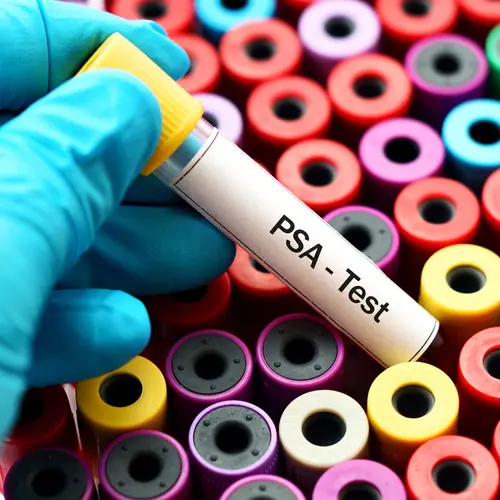
Prostate-specific antigen (PSA): a blood test used to detect elevated levels of this protein, produced by the prostate, which can indicate prostate cancer or other prostate diseases.
Prostate stripping: during a digital rectal examination, the doctor may massage, or "strip" the prostate to force prostatic fluid out of the gland and into the urethra. This fluid sample is then examined under a microscope for signs of inflammation and infection and helps to diagnose prostatitis.
Prostatic acid phosphatase: an older blood test for an enzyme produced primarily in the prostate. High levels may indicate infection, injury, or the presence or spread of cancer in the prostate.
Prostatic ducts: group of 20 to 30 tubes inside the prostate that collect and transport prostatic fluid to the ejaculatory ducts.
Prostatic fluid: fluid produced by the prostate that makes up a portion of the semen. Doctors believe the prostatic fluid contains a chemical substance that contributes to the viability of sperm for reproduction.
Prostatodynia: pain in the prostate.
Prostatectomy: See radical prostatectomy.
Prosthesis: an artificial replacement of a part of the body. A penile prosthesis may be considered if the patient has had erectile dysfunction for about one year following cancer treatment and nonsurgical therapy has either failed or is unacceptable. Prosthesis is an effective form of therapy in many patients, but it requires an operation to implant a device in the penis. Surgery can cause complications, such as mechanical failure or infection, which may require removal of the prosthesis and re-operation.
Prostatitis: an infection of the prostate. Prostatitis may also appear as an inflammation of the prostate with no documentation of infection. When no definite infectious cause can be identified, the condition is called nonbacterial prostatitis. A sudden bacterial infection of the prostate gland characterized by inflammation of the prostate is called acute bacterial or infectious prostatitis. Acute bacterial prostatitis requires prompt treatment to prevent other health problems. Chronic (long-lasting) prostatitis is the most common form of this disease, usually caused by bacteria.
Pulse oximetry: photoelectric device that measures the percent of oxygenation in the blood using a clip on the finger. It also measures the heart rate.
Radiation therapy: a form of cancer treatment that uses high levels of radiation to kill cancer cells or keep them from growing and dividing while minimizing damage to healthy cells.
Radical prostatectomy: surgery that removes the entire prostate gland plus some tissue around it. Radical prostatectomy is used most often if the cancer is thought not to have spread outside of the gland.
Radioactive Seed Implants: See brachytherapy.
Radiology: a branch of medicine that uses radioactive substances and visual devices to diagnose and treat a wide variety of diseases.
Radiologist: a doctor who reads and interprets X-rays and other radiographic images.
Recurrence: the return of a disease after a period of remission.
Remission: disappearance of any evidence of cancer. A remission can be temporary or permanent.
Renal: relating to the kidneys.
Renal threshold: the point at which the blood is holding so much of a substance, such as glucose, that the kidneys allow the excess to "spill" into the urine. This is also called "kidney threshold," "kidney spilling point," or "leak point."
Renovascular disorders: diseases of the blood vessels of the kidney.
Retrograde ejaculation: ejaculation of semen backward into the bladder instead of through the urethra and out of the penis.
Risk factor: a factor that increases a person's chance of developing a disease or predisposes a person to a certain condition.
Scrotum: the sac of skin that contains the testes.
Semen: the fluid, containing sperm, which comes out of the penis during sexual arousal.
Semen analysis: test that provides information about the number and quality of the sperm.
Seminal vesicles: small glands near the prostate that produce some of the fluid for semen.
Sentinel lymph node: the first lymph node to which a tumor drains, making it the first place where cancer is likely to spread.
Sexually transmitted disease (STD): a disease that is spread by having sex with someone who has an STD. You can get an STD from sexual activity that involves the mouth, anus, or vagina. STDs are serious illnesses that require treatment. Some STDs, such as AIDS and genital herpes, cannot be cured.
Sildenafil: See Viagra.
Sperm: the microscopic cells produced in the testicles and transported by semen to aid in reproduction.
Stage: a labeling system indicating how far the cancer has spread, or the extent of the cancer. The stage of prostate cancer depends on the size of the cancer and whether it has spread from its original site to other parts of the body.
Systemic therapy: treatment that reaches and affects cells all over the body.
Temporary brachytherapy: a form of radiation therapy for prostate cancer during which hollow needles are placed into the prostate gland. These needles are filled with a substance that gives off radioactivity for a period of minutes. This is repeated for two to three additional treatments over a couple of days. This technique is also referred to as high-dose rate (HDR) and allows for delivery of radiation to the prostate while sparing its effect on the surrounding tissues.
Testes (testicles): a pair of rounded glands that lie in the scrotum that produce sperm for reproduction and the hormone testosterone.
Testosterone: the male sex hormone produced by the testes.
Thermotherapy: See transurethral microwave thermotherapy (TUMT).
Transurethral incision of the prostate (TUIP): surgical treatment for benign prostate enlargement. An instrument passed through the urethra makes cuts in the prostate to clear any blockages, but does not remove tissue.
Transurethral microwave thermotherapy (TUMT): also called transurethral hyperthermia. Used to treat benign enlargement of the prostate. During this procedure, microwave energy delivers temperatures above 45 degrees C (113 degrees Fahrenheit) to the prostate by way of an antenna positioned in the prostate using a special catheter.
Transrectal ultrasonography: See ultrasound, prostate.
Transurethral resection of the prostate (TURP): surgical removal of the tissue blocking the urethra, with no external skin incision. This is the most common treatment for symptomatic benign enlargement of the prostate.
Trocar: sharp, pointed instrument used to make a puncture incision in the abdominal wall. Used for placement of cannulas.
Tumor: an abnormal mass of tissue.
Ultrasound: a test used to diagnose a wide range of diseases and conditions. High-frequency sound waves, inaudible to the human ear, are transmitted through body tissues. The echoes vary according to the tissue density. The echoes are recorded and translated into video or photographic images that are displayed on a monitor.
Ultrasound, prostate: also called transrectal ultrasound. A probe about the size of a finger is inserted a short distance into the rectum. This probe produces harmless high-frequency sound waves, inaudible to the human ear, that bounce off the surface of the prostate. The sound waves are recorded and transformed into video or photographic images of the prostate gland. The probe can provide images at different angles to help the doctor estimate the size of the prostate and detect any abnormal growths or lesions.
Urethra: the tube that carries urine (from the bladder) and semen (from the prostate and other sex glands) out through the tip of the penis.
Urethral stricture: a narrowing or blockage of the canal leading to the bladder, discharging the urine externally.
Urethritis: inflammation of the urethra, which may be due to infection
Urinalysis: a test that evaluates a urine sample to detect abnormalities. Urinalysis is important for diagnosing prostatitis, urinary infections, bladder and kidney cancer, diabetes and other conditions.
Urinary catheter: See catheter.
Urinary tract: the path that urine takes as it leaves the body. It includes the kidneys, ureters, bladder, and urethra.
Urinary tract infection: an infection of the urinary tract, usually caused by bacteria. The infection most often occurs in the urethra and bladder. It can also travel from the bladder into the ureter and kidneys.
Urination: discharge of liquid waste from the body.
Urologist: a doctor who specializes in treatment of the urinary tract for men and women, and the genital organs for males.
Vacuum constriction device: a cylinder that is placed over the penis to treat impotence. The air is pumped out of the cylinder, which draws blood into the penis and causes an erection. The erection is maintained by slipping a band off the base of the cylinder and onto the base of the penis.
Viagra: a drug used to treat erectile dysfunction.
Void: to urinate.
Voiding dysfunction: difficulty urinating.
Watchful waiting: an approach used for localized, slow-growing prostate cancer involving regular checkups instead of immediate treatment. See "Active surveillance" above.
X-ray: high-energy radiation used in low doses to diagnose diseases and used in high doses to treat cancer.