Dermatitis simply means skin inflammation, but it embraces a range of ailments. In most people, the early stages of dermatitis are characterized by red, dry, and itchy skin. More serious dermatitis may result in crusty scales, painful cracks, or blisters that ooze fluid. Since many things can irritate the skin, a doctor will try to narrow the diagnosis to a specific category of dermatitis, even though treatment is similar for most types of skin irritation and inflammation.
Types of Dermatitis
Contact dermatitis, including allergic contact dermatitis and irritant contact dermatitis. Contact dermatitis typically causes a pink or red itchy rash. Pinpointing the exact cause of contact dermatitis can be difficult.
Allergic contact dermatitis is a skin allergy to something that touches the skin, even if only briefly. An example of allergic contact dermatitis is poison ivy. It only has to touch the skin for a brief moment to cause dermatitis. Many other plants can cause allergic contact dermatitis, such as certain flowers, herbs, fruits, and vegetables. Other causes of allergic contact dermatitis include: fragrances, hair dyes, metals, rubber, formaldehyde (used as a preservative in many products), and skin care products.
Irritant contact dermatitis is caused when a harsh substance aggravates the skin by repeatedly contacting it. The most common example of irritant dermatitis is dry, damaged skin due to over-washing of the hands. In this case, the irritant is the water that is drying out and damaging the skin with repeated exposure.
Nummular dermatitis consists of distinctive coin-shaped red plaques that are most commonly seen on the legs, hands, arms, and torso. It is more common in men than in women, and the peak age of onset is between 55 and 65. Living in a dry environment or taking frequent very hot showers can cause this condition.
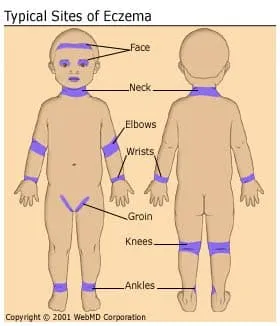
Atopic dermatitis is the most common form of eczema. It causes the skin to itch, scale, swell, and sometimes blister. This type of eczema usually runs in families and is often associated with allergies, asthma, and stress. Defects in the skin barrier, allowing moisture out and germs in, may also come into play.
Seborrheic dermatitis, called cradle cap in infants, consists of greasy, yellowish or reddish scaling on the scalp, face, or genitals. When on the face, it is typically in or near the eyebrows, hairline, or along the sides of the nose. Seborrheic dermatitis may be aggravated by stress. Seborrheic dermatitis on the scalp of adults is also known as dandruff.
Stasis dermatitis is caused by poor circulation in the legs and can happen in people with varicose veins, congestive heart failure, or other conditions that cause chronic leg swelling. Veins in the lower legs fail to return blood efficiently, causing pooling of blood and fluid buildup and swelling. This swelling leads to skin irritation and darkening, especially around the ankles.