
Diverticular disease consists of three conditions that involve the development of small sacs or pockets in the wall of the colon, including diverticulosis, diverticular bleeding, and diverticulitis.
Diverticulosis
Diverticulosis is the formation of numerous tiny pockets, or diverticula, in the lining of the bowel. Diverticula, which can range from pea-size to much larger, are formed by increased pressure on weakened spots of the intestinal walls by gas, waste, or liquid. Diverticula can form while straining during a bowel movement, such as with constipation. They are most common in the lower portion of the large intestine (called the sigmoid colon).
Diverticulosis is very common and occurs in 10% of people over age 40 and in 50% of people over age 60. Most people will have no or few symptoms from diverticula.
Complications can occur in about 20% of people with diverticulosis. One of these complications is rectal bleeding, called diverticular bleeding, and another is diverticular infection, called diverticulitis.
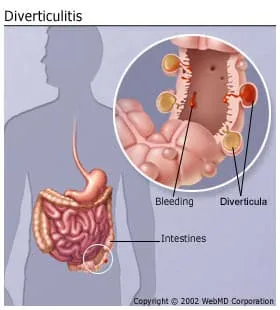
Diverticular Bleeding
Diverticular bleeding occurs with chronic injury to the small blood vessels that are next to the diverticula.
Diverticulitis
Diverticulitis occurs when there is inflammation and infection in one or more diverticula. This usually happens when outpouchings become blocked with waste, allowing bacteria to build up, causing infection.
What Are the Symptoms of Diverticulosis?
Diverticulosis does not cause any troublesome symptoms.
What Are the Symptoms of Diverticulitis?
Diverticulitis, infection and inflammation of diverticula, can occur suddenly and without warning.
Symptoms of diverticulitis may include:
- Diarrhea and/or constipation
- Painful cramps or tenderness in the lower abdomen
- Chills or fever
How Is Diverticulosis Diagnosed?
Because people with diverticulosis do not have any symptoms, it is usually found through tests ordered for an unrelated reason. They usually include barium enema, sigmoidoscopy and colonoscopy.
How Is Diverticulitis Diagnosed?
If you are experiencing the symptoms of diverticulitis, it is important to see your doctor.
Your doctor will ask questions about your medical history (such as bowel habits, symptoms, diet, and current medications) and perform a physical exam, possibly including an abdominal exam.
One or more diagnostic tests may be ordered. Tests usually include blood tests and CT scanning.
In people with rapid, heavy rectal bleeding, the doctor may order a colonoscopy to locate the source of bleeding.
How Is Diverticulosis Treated?
People who have diverticulosis without symptoms or complications do not need specific treatment, yet it is important to adopt a high-fiber diet to prevent the further formation of diverticula.
Laxatives should not be used to treat diverticulosis and enemas should also be avoided or used infrequently.
What Are the Complications of Diverticulitis?
Serious complications can occur as a result of diverticulitis. Most of them are the result of the development of a tear or perforation of the intestinal wall. If this occurs, intestinal waste material can leak out of the intestines and into the surrounding abdominal cavity causing the following problems:
- Peritonitis (a painful infection of the abdominal cavity)
- Abscesses ("walled off" infections in the abdomen)
- Obstruction (blockages of the intestine)
If an abscess is present, the doctor will need to drain the fluid by inserting a needle into the infected area. Sometimes surgery is needed to clean the abscess and remove part of the colon. If the infection spreads into the abdominal cavity (peritonitis), surgery is needed to clean the cavity and remove the damaged part of the colon. Without proper treatment, peritonitis can be fatal.
Infection can lead to scarring of the colon, and the scar tissue may cause a partial or complete blockage. A partial blockage does not require emergency surgery. However, surgery is required with complete blockage.
Another complication of diverticulitis is the formation of a fistula. A fistula is an abnormal connection between two organs, or between an organ and the skin. A common type of fistula is between the bladder and colon. This requires surgery to remove the fistula and affected part of the colon.
How Can Diverticulosis Be Prevented?
To prevent diverticular disease or reduce the complications from it, maintain good bowel habits. Have regular bowel movements and avoid constipation and straining. Eating appropriate amounts of the right types of fiber and drinking plenty of water and exercising regularly will help keep bowels regulated.
The American Dietetic Association recommends 20 to 35 grams of fiber a day. Every person, regardless of the presence of diverticula, should try to consume this much fiber every day. Fiber is the indigestible part of plant foods. High-fiber foods include whole grain breads, cereals, and crackers; berries; fruit; vegetables, such as broccoli, cabbage, spinach, carrots, asparagus, squash, and beans; brown rice; bran products; and cooked dried peas and beans, among other foods.