Do not share this medication with others.
Lab and/or medical tests (such as kidney/liver function) may be done while you are taking this medication. Keep all medical and lab appointments. Consult your doctor for more details.
Balsalazide is used to treat a certain bowel disease (ulcerative colitis). It helps to reduce symptoms of ulcerative colitis such as diarrhea, rectal bleeding, and stomach pain. Balsalazide belongs to a class of drugs known as aminosalicylates. It works by decreasing swelling in the colon.
Take this medication by mouth with or without food as directed by your doctor, usually 3 times daily. The dosage is based on your age, medical condition, and response to treatment.
Drink plenty of fluids during treatment with this medication unless otherwise directed by your doctor. This will help prevent kidney stones.
If you have trouble swallowing the capsules, you may open them and sprinkle the contents onto a spoonful of applesauce. Swallow the food/medication mixture right away. Do not prepare a supply in advance.
Use this medication regularly to get the most benefit from it. To help you remember, take it at the same times each day.
Tell your doctor if your condition does not get better or if it gets worse.
Headache, nausea, vomiting, joint pain, diarrhea, abdominal pain, fever, sore throat, trouble sleeping, or loss of appetite may occur. If any of these effects last or get worse, tell your doctor or pharmacist promptly.
Remember that this medication has been prescribed because your doctor has judged that the benefit to you is greater than the risk of side effects. Many people using this medication do not have serious side effects.
Rarely, balsalazide can worsen ulcerative colitis. Tell your doctor right away if your symptoms worsen after starting this medication (for example, if you have increased abdominal pain, rectal bleeding).
Tell your doctor right away if you have any serious side effects, including: nausea/vomiting that doesn't stop, signs of kidney problems (such as change in the amount of urine), yellowing eyes/skin, dark urine, unusual/extreme tiredness, severe stomach/abdominal pain, burning/painful urination, fast/pounding heartbeat.
A very serious allergic reaction to this drug is rare. However, get medical help right away if you notice any symptoms of a serious allergic reaction, including: fever, swollen lymph nodes, rash, itching/swelling (especially of the face/tongue/throat), severe dizziness, trouble breathing.
This is not a complete list of possible side effects. If you notice other effects not listed above, contact your doctor or pharmacist.
In the US - Call your doctor for medical advice about side effects. You may report side effects to FDA at 1-800-FDA-1088 or at www.fda.gov/medwatch.
In Canada - Call your doctor for medical advice about side effects. You may report side effects to Health Canada at 1-866-234-2345.
Before taking balsalazide, tell your doctor or pharmacist if you are allergic to it; or to other aminosalicylates (such as mesalamine, olsalazine); or to salicylates (such as aspirin, salsalate); or to sulfasalazine; or if you have any other allergies. This product may contain inactive ingredients, which can cause allergic reactions or other problems. Talk to your pharmacist for more details.
Before using this medication, tell your doctor or pharmacist your medical history, especially of: a certain stomach/intestinal condition (pyloric stenosis), liver disease, kidney disease.
This medication may make you more sensitive to the sun, especially if you have skin problems (such as atopic dermatitis, eczema). Limit your time in the sun. Avoid tanning booths and sunlamps. Use sunscreen and wear protective clothing when outdoors. Tell your doctor right away if you get sunburned or have skin blisters/redness.
Before having surgery, tell your doctor or dentist about all the products you use (including prescription drugs, nonprescription drugs, and herbal products).
This medication contains sodium. Consult your doctor or pharmacist if you are on a salt-restricted diet or if you have a condition that could be worsened by an increase in salt intake (such as heart failure).
This medication is similar to aspirin. Children and teenagers younger than 18 years should not take aspirin if they have chickenpox, flu, or any undiagnosed illness or if they have recently received a vaccine. In these cases, taking aspirin increases the risk of Reye's syndrome, a rare but serious illness.
During pregnancy, this medication should be used only when clearly needed. Discuss the risks and benefits with your doctor.
This medication may pass into breast milk. Consult your doctor before breastfeeding.
Drug interactions may change how your medications work or increase your risk for serious side effects. This document does not contain all possible drug interactions. Keep a list of all the products you use (including prescription/nonprescription drugs and herbal products) and share it with your doctor and pharmacist. Do not start, stop, or change the dosage of any medicines without your doctor's approval.
A product that may interact with this drug is: dichlorphenamide.
Balsalazide is very similar to mesalamine. Do not use mesalamine medications taken by mouth while using balsalazide.
This medication may interfere with certain lab tests (including urine normetanephrine levels), possibly causing false test results. Make sure lab personnel and all your doctors know you use this drug.
If someone has overdosed and has serious symptoms such as passing out or trouble breathing, call 911. Otherwise, call a poison control center right away. US residents can call their local poison control center at 1-800-222-1222. Canada residents can call a provincial poison control center.
Do not share this medication with others.
Lab and/or medical tests (such as kidney/liver function) may be done while you are taking this medication. Keep all medical and lab appointments. Consult your doctor for more details.
If you miss a dose, take it as soon as you remember. If it is near the time of the next dose, skip the missed dose. Take your next dose at the regular time. Do not double the dose to catch up.
Store at room temperature away from light and moisture. Do not store in the bathroom. Keep all medications away from children and pets.
Do not flush medications down the toilet or pour them into a drain unless instructed to do so. Properly discard this product when it is expired or no longer needed. Consult your pharmacist or local waste disposal company.
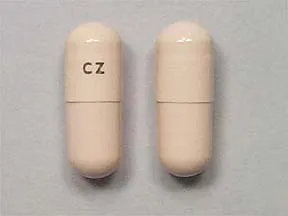
Colazal 750 mg capsule
Color: beigeShape: oblongImprint: CZThis medicine is a beige, oblong, capsule imprinted with "CZ".