
Mitral valve prolapse is a common cause of a heart murmur caused by a "leaky" heart valve. Most cases of mitral valve prolapse are not serious and only need to be monitored.
Mitral valve prolapse is associated with many other symptoms and conditions. But experts aren't sure that mitral valve prolapse is what causes them.
What Is Mitral Valve Prolapse?
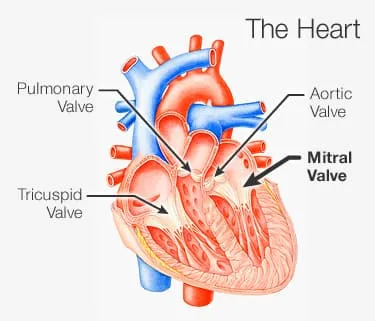
The mitral valve is a valve that lets blood flow from one chamber of the heart, the left atrium, to another called the left ventricle. In mitral valve prolapse, part of the mitral valve slips backward loosely into the chamber called the left atrium. This happens when the main heart muscle, called the left ventricle, squeezes during each heartbeat. Mitral valve prolapse differs from mitral valve stenosis. In mitral valve stenosis, the mitral valve is stiff and constricted.
In mitral valve prolapse, the valve slips backward due to the abnormal size of or damage to the mitral valve tissues. For most people with mitral valve prolapse, the cause is unknown.
Mitral valve prolapse can run in families. It can also be caused by conditions in which cartilage is abnormal (connective tissue disease). Nearly 8 million people in the U.S. have mitral valve prolapse.
Symptoms of Mitral Valve Prolapse
Most people with mitral valve prolapse have no symptoms. They also never experience any health problems due to mitral valve prolapse.
Chest pain is the most frequent symptom in people who have symptoms with mitral valve prolapse. The chest pain may be very bothersome and frightening, but it does not increase the risk of heart attack, death, or other heart problems.
Mitral valve prolapse is a common cause of mitral regurgitation. That's a condition in which some blood flows backward through the mitral valve with each heartbeat. Over years, moderate or severe mitral regurgitation can cause weakness of the heart muscle, known as congestive heart failure. Symptoms of congestive heart failure include:
- Shortness of breath with exertion
- Swelling in the legs and feet
Mitral valve prolapse has also been associated with other symptoms:
- Fluttering or rapid heartbeat called palpitations
- Shortness of breath, especially with exercise
- Dizziness
- Passing out or fainting , known as syncope
- Panic and anxiety
- Numbness or tingling in the hands and feet
When these symptoms occur together, they are sometimes called mitral valve prolapse syndrome. However, experts don't know if mitral valve prolapse itself causes these symptoms. Since these symptoms and mitral valve prolapse are so common, they could often occur together by chance.
Diagnosis of Mitral Valve Prolapse
A doctor may suspect mitral valve prolapse after listening to someone's heart with a stethoscope. The abnormal movement of the mitral valve can make a distinct sound, called a "click." If mitral regurgitation is also present, a doctor may hear a heart murmur caused by the backward flow of blood.
Definite diagnosis of mitral valve prolapse requires an echocardiogram, which is an ultrasound of the heart. A doctor can watch the abnormal valve movement on a video of the beating heart. Mitral regurgitation, if present, will also be seen with an echocardiogram.
Treatment of Mitral Valve Prolapse
Mitral valve prolapse causes no problems for most people, so treatment is usually not needed.
People who develop severe mitral regurgitation due to mitral valve prolapse often can benefit from surgery to repair or replace the leaky valve. For people with symptoms of congestive heart failure caused by mitral valve prolapse with mitral regurgitation, surgery is usually the best treatment.
If no mitral regurgitation is present on echocardiogram, symptoms of mitral valve prolapse rarely pose any risk. The best treatment for each person may vary, but can include:
- Exercise
- Pain relievers
- Relaxation and stress reduction techniques
- Avoidance of caffeine and other stimulants
Beta-blockers, which are medications to slow the heart rate, may be helpful in people who have episodes of palpitations with a rapid heartbeat, known as tachycardia, with mitral valve prolapse.
Follow-Up of Mitral Valve Prolapse
Most people with mitral valve prolapse never experience health problems related to the condition. Experts recommend that people with mitral valve prolapse see a doctor on a regular basis. That way, any developing problems can be found early:
- Most people with mitral valve prolapse should see a cardiologist every 2 to 3 years. They do not need regular echocardiograms.
- People with mitral valve prolapse and moderate or severe mitral regurgitation should see a doctor and undergo echocardiography every 6 to 12 months.
- Echocardiography and a doctor's visit are also recommended if a person develops new symptoms, or if the symptoms change.
In the past, doctors recommended that people with mitral valve prolapse take antibiotics before medical or dental procedures to prevent infection of the heart valve, known as endocarditis. The American Heart Association has determined that taking antibiotics before procedures is not helpful for people with mitral valve prolapse and is no longer recommended.