For every milestone in cancer research, there are countless men and women to thank. Through their creativity and dogged determination, people have hope in preventing, living with, even curing some forms of cancer.
Here are just a few of the milestones in the war on cancer, and some of the researchers who made them:
1954
Study shows first link between smoking and lung cancer.
1955
Researcher finds that the male hormone testosterone and the female hormone estrogen drive the growth of prostate and breast cancers, respectively. Research receives the Nobel Prize in Physiology or Medicine in 1966. Learn more about the causes ofprostateandbreast cancer.
1958
Scientist develops 5-fluorouracil (5-FU), a chemotherapy drug used to treat many cancers. It is a first-line treatment for colon cancer.
1959
Scientist discovers growth factors; substances that can help tumors grow. Research wins Nobel Prize in Physiology or Medicine in 1986.
Cancer Prevention Study I begins. Study will eventually be the first to link cigarette smoking to early death from lung cancer.
1960
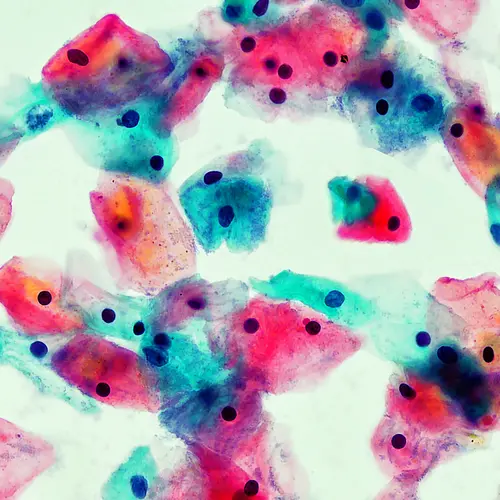
American Cancer Society advocates widespread use of thePap smear. This simple test results in more than a 70% decrease in deaths from cervical and uterine cancers.
1961
Judah Folkman, MD, of Harvard University discovers that tumors create a network of blood vessels to bring them oxygen so they can grow. He calls this process angiogenesis.
1966
Henry Lynch, MD, describes the firsthereditary cancer family syndrome.
1970
Surgeon General announces that cigarette smoking is definitely linked to cancer.
The first cancer-causing gene, or oncogene, is discovered.
Also during the '70s:
A handful of forward-thinking surgeons say thatsimple mastectomy-- removal of only the breast itself -- is just as effective as a radical mastectomy.
Surgeons begin studying lumpectomy followed by radiation therapy as an alternative to radical mastectomy.
Among those visionary breast cancer researchers: Bernard Fisher, MD, director of the National Surgical Adjuvant Breast and Bowel Project, and Umberto Veronesi, MD, researcher with the European Institute of Oncology in Milan, Italy. Both launched long-term studies of these techniques.
1971
President Richard Nixon declares a national war on cancer. The National Cancer Act is signed by President Nixon, establishing a national program to search for a cancer cure.
1972
Scientist pioneers the technique of bone marrow transplantation to treat cancer. Researchers receive the Nobel Prize in Physiology or Medicine in 1990.
1973
Paul Berg, PhD, clones the first gene. He receives Nobel Prize in Chemistry in 1980.
1974
Scientist V. Craig Jordan, PhD, shows that the drug tamoxifen prevents breast cancer in rats by binding to the estrogen receptor. Learn more abouttamoxifen.
1975
Researchers develop technology that leads to the development of a monoclonal antibody that can enhance the immune system. This research leads to the development of several promising cancer drugs in the late 1990s and early 2000s. The researchers receive the Nobel Prize in Physiology or Medicine in 1984.
Learn more aboutmonoclonal antibodies and other cutting-edge cancer treatments.
1978
Researchers develop procedures to sequence DNA, which allows scientists to study the actions of specific genes. This research receives the Nobel Prize in Chemistry in 1980.
Tamoxifen is approved by the FDA for treating estrogen receptor-positive breast cancer.
Researchers develop and carry out the first trial of tamoxifen to prevent recurrence in breast cancer survivors.
1979
Researcher finds the first cancer-causing gene - an oncogene -- in human bladder cancer. More than 50 oncogenes are known today.
Scientist discovers the p53 protein, later found to be the most frequently mutated gene in human cancer.
1980
Researchers discover the first virus that causes cancer, HTLV-1, which causes T-cell leukemia in humans.
Early detection guidelinesare set for breast cancer.
1981
Scientists develop the prostate-specific antigen (PSA) test for screening andearly detection of prostate cancer.
1982
Researcher develops the first "transgenic mouse," a mouse with a gene for rat growth hormone, opening up new ways to research how cancers are caused and treated.
1983
Scientist discovers the role of dendritic cells, which later become the basis forvaccines to treat cancer.
1984
Judah Folkman's team finds the first angiogenic factor, paving the way for new drug development.
1985
Researcher demonstrates that lumpectomy plus radiation is equivalent to mastectomy for breast cancer survival.
1986
Researcher clones the first of some 20 now-known genes that can suppress tumors, the retinoblastoma gene of a childhood eye cancer.
1988
A compound called taxol, derived from the bark of the pacific yew tree, is hailed as the most promising new cancer drug in decades. It quickly becomes the standard therapy for ovarian cancer and is also used in treating lung and breast cancers.
Dennis Slamon, MD, discovers that theHER2/neu receptoris overexpressed in 15% to 30% of breast cancers and is an unfavorable prognostic feature.
1989-1991
The race is on to discover more angiogenic factors to suppress the growth of tumors. A team of scientists discover VEGF in 1989. Folkman discovers angiostatin and endostatin in 1991.
1990-1992
The Cancer Prevention Trial II shows a lower risk of colon cancer among people who eat diets rich in fruits and vegetables. Data from the Cancer Prevention Trial II also show a lower risk in people who take aspirin regularly.
Cancer-causing agents in the environment -- such as radiation from the sun and chemicals from cigarette smoke -- became more closely linked to specific gene damage that can cause cancers.
1993
First use of stem cell transplantation to treat leukemia and lymphoma.
The rate of smoking drops from 45% of the population in 1946 to 25% of people.
1994
The first breast cancer gene (BRCA1) is discovered. BRCA1 is a tumor-suppressor gene linked to breast and ovarian cancer. Learn more about the genetics of breast cancer.
Exercise found to reduce risk of breast cancer in premenopausal women.
1995
The second breast cancer gene (BRCA2) is discovered.
Walter Willett, MD, DrPH, shows that aMediterranean diet rich in tomato sauce and olive oilmay help prevent prostate cancer.
1996
American Cancer Society Guidelines on Diet, Nutrition, and Cancer affirm that one-third of all cancer deaths can be prevented throughhealthy eating and physical activity.
Cancer Prevention Study II shows increase in lung cancer deaths amongnonsmoking spousesof smokers. It also shows that secondhand smoke causes increased death from heart disease.
Irinotecanis approved for treating advanced colon cancer.
Scientist reports thatseleniumreduces the risk of lung, colon, and prostate cancer.
1997
First overall decrease in cancer deaths is documented. Cancer deaths fell 0.5% per year between 1990 and 1995.
Researchers clone the gene for telomerase, an enzyme believed to be specific for cancer cells.
Judah Folkman, MD, and Timothy Browder, MD, cure cancer in mice by blocking the blood supply of tumors with angiostatin and endostatin (anti-angiogenesis). Testing of the anti-angiogenesis drug Avastin begins in people.
FDA approves monoclonal antibody therapy (Rituxan) for B-cell lymphoma. By 1998, the overall five-year survival rates for the disease are improved to 58%.
1998
New cases of cancer decline. Overall cancer incidence rates fell 0.7% per year between 1990 and 1995.
Scientist reports that tamoxifenreduces the incidence of breast cancerby 45% in high-risk women, the first successful study of treatments to prevent breast cancer.
Dennis Slamon, MD, PhD, shows that a genetically engineered monoclonal antibody calledHerceptinimproves survival of women with advanced breast cancer. FDA grants approval of the novel drug to treat advanced breast cancer.
1999
V. Craig Jordan, PhD, reports that Evista reduces the risk of breast cancer by 76% in postmenopausal women with bone-thinning osteoporosis.
Scientists turn a normal human cell into a cancer cell with three defined elements: an oncogene, inactivation of two suppressor genes, and the gene for telomerase.
Cancer incidence and mortality rates continue to decline.
2000
Brian Druker, MD, begins phase II trial of STI-571 (Gleevec), a drug that inhibits an enzyme present only in chronic myelogenous leukemia (9CML) cells, after it caused remission in all 31 CML patients of his phase I study.
The draft sequence of the human genome is announced.
A team of scientists announce that the combination of chemotherapy with p53 gene therapy caused tumors to shrink in 25% to 30% of head and neck cancer patients.
Researchers report that an experimental monoclonal antibody, IMC-C225 (will become Erbitux), is effective in the treatment of refractory colon and head and neck cancers.
After three years of study, arsenic (Trisenox) is approved as an orphan drug for treatment of patients with acute promyelocytic leukemia (APL). Orphan drugs treat rare medical conditions; manufacturers receive financial incentives to develop such drugs.
The Cox-2 inhibitor Celebrex is approved by the FDA for the prevention of colon cancer polyps in individuals carrying a specific gene that causes familial adenomatous polyposis, a form of colon cancer. In April 2005, the FDA asked that Celebrex carry new warnings about the potential risk of heart attacks and strokes as well as potential stomach ulcer bleeding risks. Clinical trials for prevention of sporadic colon cancer and other cancers are ongoing.
Researchers report that the first human clinical trials of endostatin(an anti-angiogenesis drug)show that it is safe and may have anticancer potential.
2001
FDA approvesGleevec(formerly STI 571) for treatment of chronic myelogenous leukemia.
Researchers report that IMC-C225 plus the drug Camptosar produced a response in colorectal cancers resistant to standard treatment in phase II trials. IMC-C225, later renamed Erbitux, is a monoclonal antibody that slows cancer growth by targeting a protein found on the surface of some cells called the epidermal growth factor receptor (EGFR). EGFR plays a role in regulating cell growth.
FDA approves a new hormone therapy drug,Femara, to treat advanced breast cancer.
Judah Folkman, MD, predicts cancerwill be "treatable"within the next decade.
2002
Researchers announce some success with avaccine to prevent cervical cancer.
DNA microarray technology (gene chip) is successful in predicting which node-negative breast cancer patients will go on to develop metastasis and thus benefit from aggressive adjuvant therapy.
Researchers announce a new screening test for colon cancer that detects specific genetic abnormalities in stool samples of up to 70% of patients with colon cancer.
2003
Studies show the potential superiority of twonew hormone therapiesfor breast cancer, Arimidex and Femara.
Study shows that Avastin improves survival for people with advanced colon cancer.
Learn about thesetwo major cancer advancements.
2004
Researchers find that a simple blood test helps predict colon cancer.
FDA approves Erbitux to treat colon cancer.
Avastin becomes the first anti-angiogenesis drug approved by the FDA for the treatment of colorectal cancer. Other anti-angiogenesis drugs are in the pipeline for approval.
2006
FDA approves Gardasil, a vaccine that protects against the virus that causes most cervical cancers.