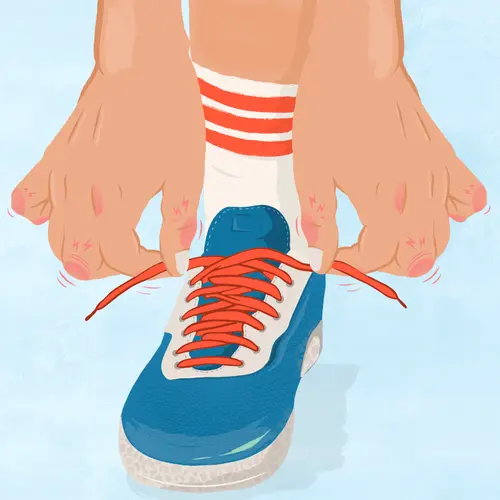
Rheumatoid arthritis (RA) happens when your body’s defenses -- your immune system -- target the synovium, a thin layer of tissue that lines your joint. Your joints are usually the most severely affected, but the inflammation can spread to other organs and systems.
RA causes ongoing pain, fatigue, and other problems. It’s different from osteoarthritis, which results from breakdown of cartilage, the squishy tissue that cushions the ends of your joints.
If you do have RA, it’s not your fault. Although there’s not a cure, there are things you can do to help manage it.
Causes and Risk Factors
Doctors don’t know exactly what causes this disease. But they know these things could be risk factors for RA:
Age. RA can affect you at any age, but it’s most common between 40 and 60. It isn’t a normal part of aging.
Family history. If someone in your family has it, you may be more likely to get it.
Environment. A toxic chemical or infection in your environment can up your odds.
Gender. RA is more common in women than men. It’s more likely in women who've never been pregnant and those who've recently given birth.
Obesity. Extra weight, especially if you’re under 55.
Smoking. If your genes already make you more likely to get RA, lighting up can raise your odds even higher. And if you do get the disease, smoking can make it worse.
Can I Do Anything to Prevent RA?
There’s no way to prevent RA, but you can lower your chances if you:
Quit smoking. It’s the one sure thing besides your genes that boosts your odds of getting RA. Some studies show it also can make the disease get worse faster and lead to more joint damage, especially if you’re ages 55 or younger. If you’re overweight and a smoker, your chances of developing RA go up.
Take care of your gums: New research shows a link between RA and periodontal (gum) disease. Brush, floss, and see your dentist for regular checkups.
Even though there’s nothing you can do to ensure you won’t get it, keep in mind that early treatment can make your symptoms less painful and save your joints from damage. Ideally, you should begin treatment within 3 to 6 months of your first symptoms.